A Grossery of Limericks
The guide’s taxonomy of nonsense analyzes limericks as engineered devices, proving that structured absurdity remains a truly vital, democratic art form for all human civilization.
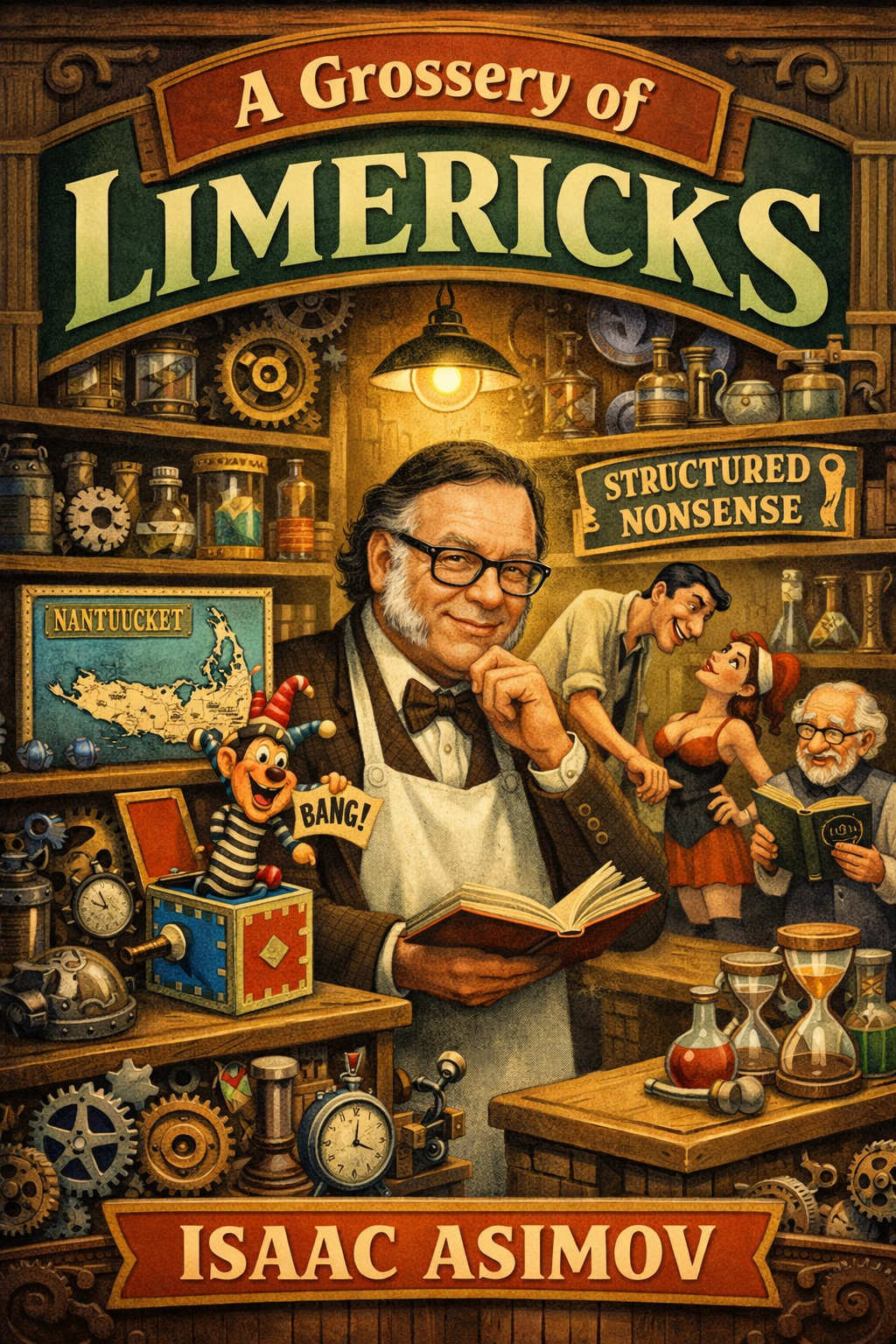
Imagine walking into a store where the shelves are packed not with food but with a special kind of verbal machinery. This is the setting for a collection called A Grossery of Limericks. Isaac Asimov approaches this collection not as a poet but as a guide who understands that humor is often a matter of engineering., He treats the limerick as a taxonomy of nonsense where every piece of verse is a carefully designed device. In his view, a limerick is a paradox because it uses a very rigid structure to contain the most unrestrained and absurd ideas. The tighter the structure of the five line poem is built, the more pressure builds up for the final joke.
The guide explains that these poems do not belong to the high academies or the halls of government. Instead, they come from the places where people gather to laugh and whisper, such as taverns or barracks. While some people think they come from a specific city in Ireland, the guide notes that their true history is part of a long oral tradition that resists authority. To help us understand the items on the shelves of this grossery, we must look at the different types of stories that these small poems tell. Because the book is organized like a grocery store, we can move from one aisle to another to see how each type of nonsense is constructed.
The Story of the Clean and the Dirty
In this section of the store, the guide looks at the two main ways a limerick can surprise us. He does not look at these through the lens of a moralist but as a technician. The clean limericks are stories of technical skill where the author must use misdirection and clever wordplay to make the reader laugh. The dirty limericks are stories of audacity. They do not rely on subtle tricks but on the shock of saying things that polite society usually forbids. The guide treats both with the same cool detachment, noting that a limerick only fails if it is poorly built, regardless of whether its content is innocent or obscene.
The Story of the Rhythmic Contract
This aisle is where we learn about the engine that makes the limerick move. The guide breaks the verse down into beats and stress. He shows that the first two lines create a sense of expectation and the third line intentionally destabilizes that rhythm. The final lines then restore the balance while delivering the punchline. This predictable bounce is what makes the poems so easy to remember and why they have lasted for so many generations across different cultures. It is a mechanical precision that primes the human brain for laughter.
The Story of the Phonetic Map
Here, we find stories that use geography as a tool for mischief. The guide points out how certain place names are famous in limericks not because they are important locations but because of phonetics. A name like Nantucket is useful because of how it sounds and the rhymes it invites. In these stories, the map of the world is rewritten by the requirements of the human mouth. The location is always secondary to the rhyme, showing how language can reshape our sense of place for the sake of a joke.
The Story of the Cartoon Universe
In this part of the store, the laws of physics are often ignored. These stories are filled with people who have impossible endurance or anatomy that makes no sense in the real world. The guide explains that this excess is a signal to the reader that realism has been suspended. Because the characters live in a cartoon universe governed by rhyme rather than natural laws, any offense the reader might take is misplaced. It is a world of pure exaggeration where the only rule is that the poem must fulfill its rhythmic contract.,
The Story of the Self Aware Verse
As we reach the back of the store, the poems become meta textual. These are stories about limericks themselves, reflecting a long tradition of people making jokes about the form they are using. This section is a reflection on humor and why humans find certain patterns endlessly entertaining. The guide becomes more of a companion here, admitting his own preferences while walking us through the reasons why some jokes vanish and others stay with us forever. He never acts superior but remains a humble guide through the aisles of human creativity.
The guide ultimately argues that this form of poetry is a democratic art. It does not require a special education to enjoy or to create. In a world where expertise often separates people, the limerick remains accessible to everyone. It proves that being intelligent does not mean one cannot be playful. Even if the subject is nonsense, the structure required to make it work is a sign of human craftsmanship. By the end of the journey, we see that analyzing the jokes does not take away their magic but enhances our respect for the small mechanisms that make us laugh.
The final lesson of this journey is that understanding trivial things is a worthwhile task. Civilization is not just made of large empires and complex equations; it is also built on small things like five line poems that refuse to behave. These poems are a reminder of the joyful and stubborn side of human creativity that will always find a way to express itself through structured absurdity.,
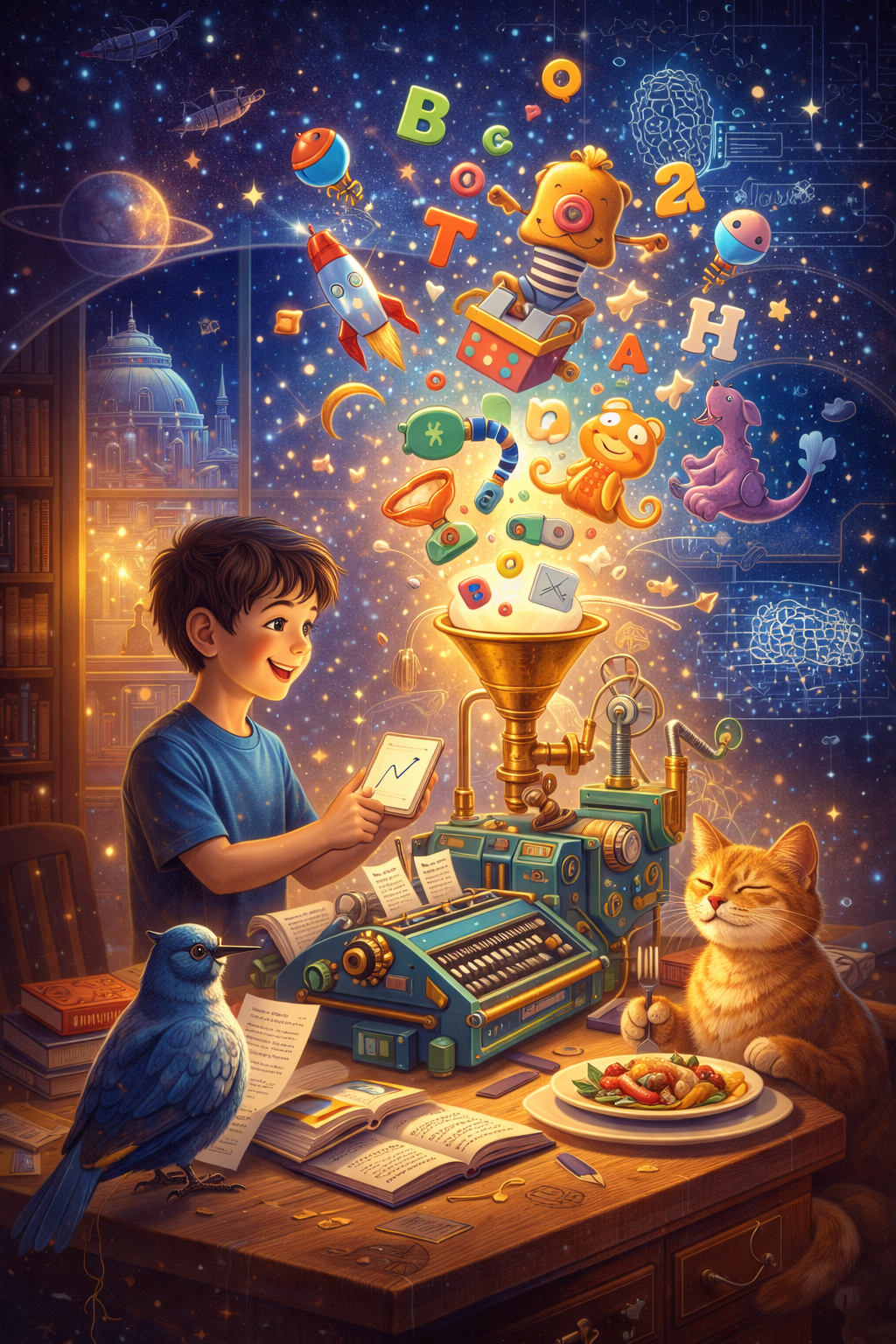
To understand the construction of a limerick is to understand the mechanics of a jack in the box where the tight coil of the spring represents the rigid rhyme and the sudden pop of the lid is the punchline that catches us by surprise.