Isaac Asimov's Limericks for Children
Isaac Asimov’s rhythmic five-line puzzles explore language and humor, transforming curious readers into creative poets by demonstrating the playful potential of sound, logic, and imagination.
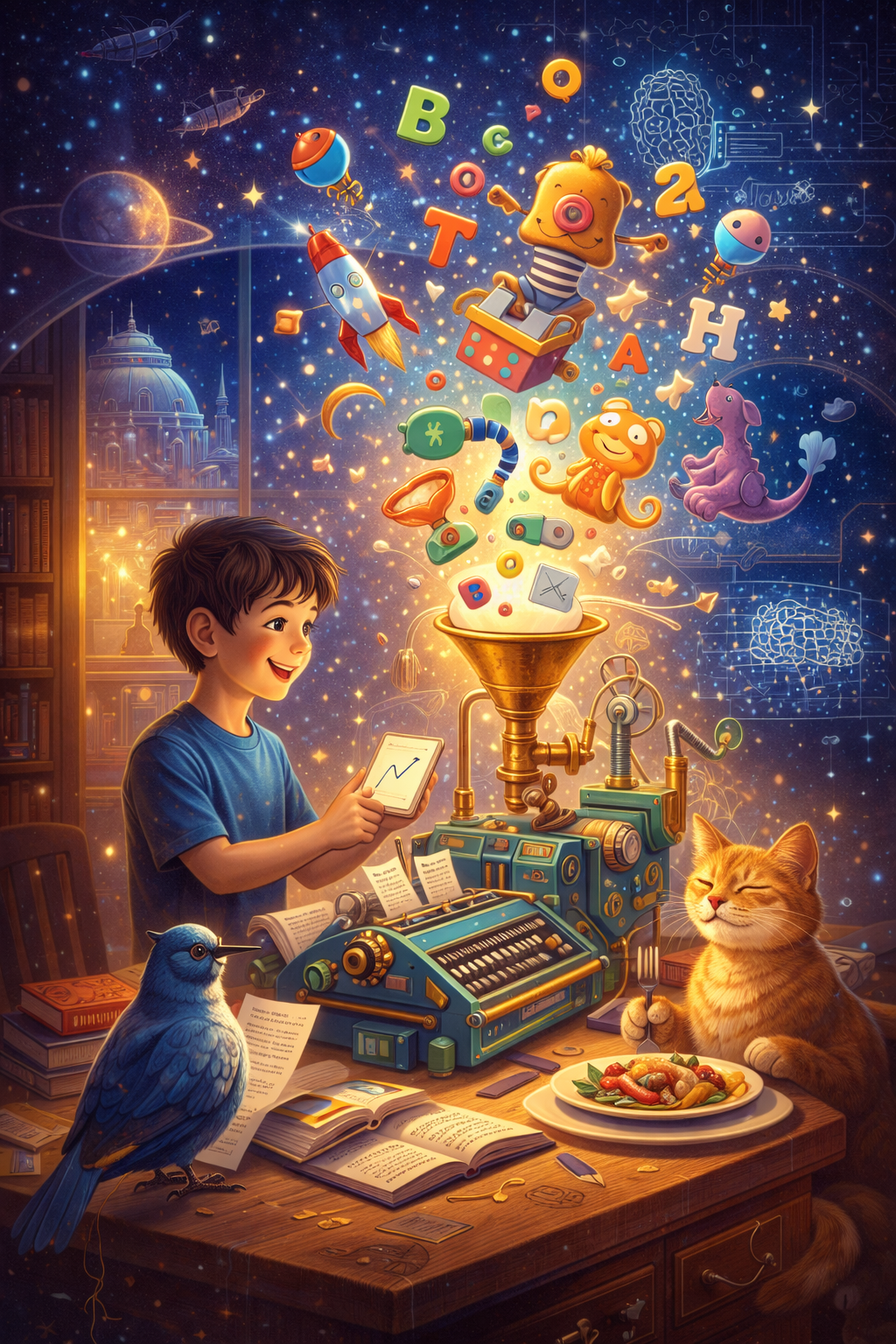
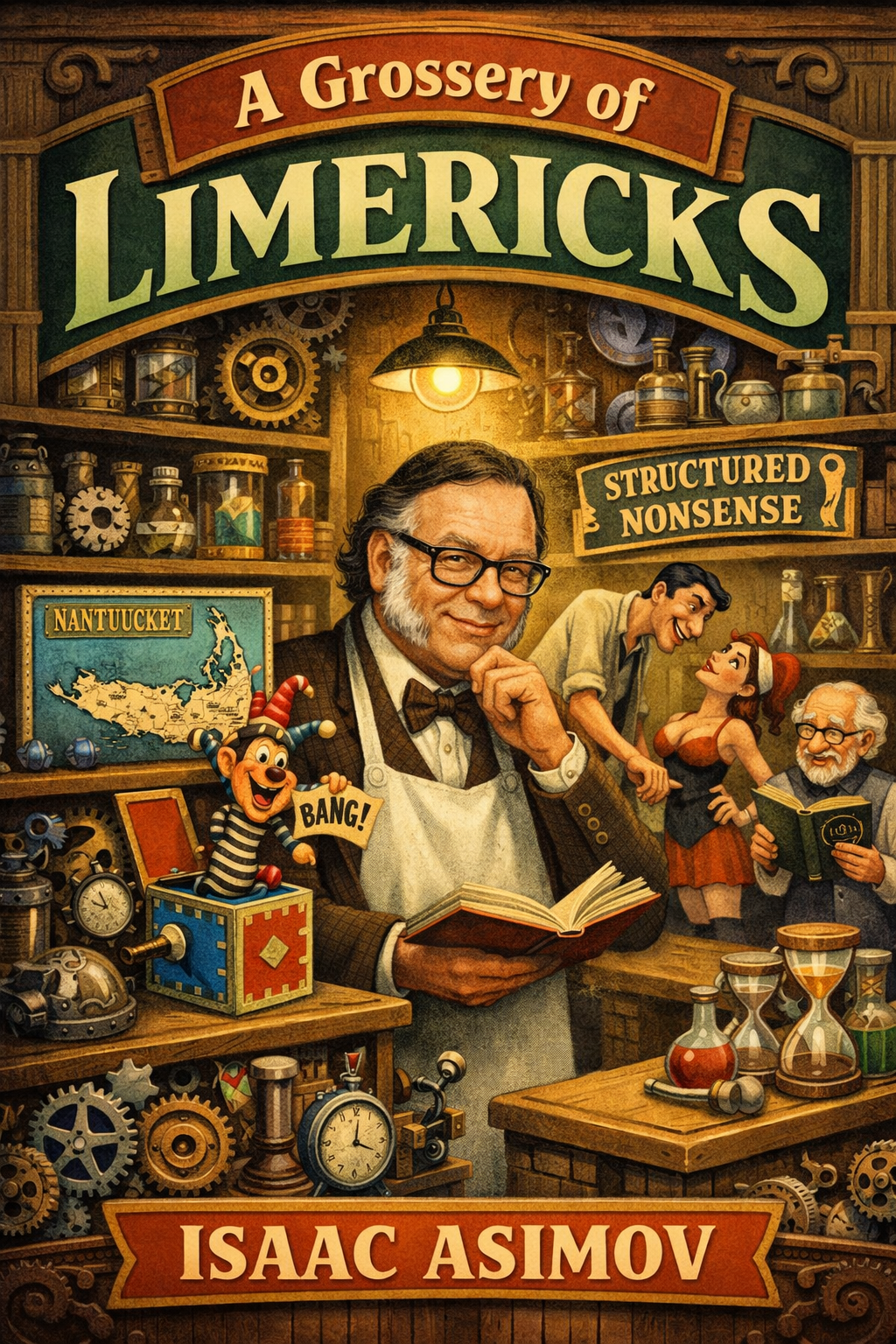
In the vast literary landscape of Isaac Asimov where positronic brains and galactic empires usually take center stage, there is a smaller and more intimate setting known as the laboratory of laughter. This is not a place where one finds cold equations, but rather a place where language is treated as a delightful toy. Asimov approaches this poetic form with the same clear curiosity that defines his scientific thinking, substituting formal proofs for a five line structure that invites both humor and invention. The limerick is a curious and old structure that functions as a small laboratory for the imagination. The logic of the form is simple and precise because the opening line introduces a character and a setting, the next lines complicate the situation, and the final line delivers a surprise. Every poem is essentially a miniature story that is compressed into a handful of playful syllables.
The early stories in this collection introduce the reader to the rules of the form. In one narrative, a child meets a peculiar creature and misinterprets the situation, which leads to a mismatch between expectation and result. Another story describes a person who sets out to accomplish something impressive but is undone by a small oversight. There is also a tale about a character who attempts a clever trick only to find that the trick produces entirely unexpected consequences. Each of these stories ends with a twist that rewards the reader for paying close attention to the rhythm and rhyme. The humor arises not from cruelty but from the delightful ways that reality deviates from what the characters intend.
As the collection continues, the experiments become increasingly imaginative. One mini story features a character who insists on counting all the numbers he sees, only to find that they multiply much faster than his patience. Another story follows an individual who attempts to invent a machine for an ordinary task, finding that the device becomes more complicated than the problem it was meant to solve. These narratives carry the echo of Asimov’s broader scientific thinking because they show how a simple premise can lead logically and sometimes absurdly to a surprising conclusion. In these verses, ideas behave like experiments where a single change in variables leads to a new outcome.
Animals appear frequently in these stories and they often behave in ways that gently mimic human traits. There is a story about a cat that develops a refined taste for unusual food, suggesting a level of sophistication beyond its species. Another narrative describes a bird that shows unexpected intelligence, while a different tale involves a dog that manages to misunderstand a perfectly clear instruction. By exaggerating familiar traits like stubbornness and curiosity, these poems transform everyday animals into comic characters and encourage children to observe the world with curiosity. These small narratives invite a closer look at the living things that share our environment.
Another group of stories focuses on the exploration of unusual places. These characters travel to small towns with improbable names or distant lands where strange habits are the norm. While these locations are not described in great detail, the names themselves suggest tiny and complete worlds. Within these settings, we find stories of people who boast too confidently and must learn humility through a harmless mishap. There are also stories of individuals who misunderstand a situation only to discover the truth in a burst of laughter. The tone remains lighthearted and invites readers to laugh at human foolishness without any sense of malice.
Language itself becomes the protagonist in several of these poetic experiments. In these stories, words that sound alike are placed in unexpected combinations and rhymes appear in places the reader least expects. The rhythm becomes almost musical and it carries the reader forward toward the punchline. These moments provide entertainment while teaching a lesson about how sound and meaning act as partners in the dance of poetry. The joy of language in these stories lies in the way it dances across the tongue.
Occasionally, the mini stories within the collection hint at deeper observations regarding human nature. One story describes a character who insists on doing things the most difficult way possible, reflecting a common tendency to complicate simple tasks. Another focuses on a child who refuses to admit a mistake, which quietly illustrates the value of honesty. These lessons are never heavy handed because they emerge naturally from the humorous twist of the final line. The predictable structure of the limerick becomes part of the pleasure for the reader as they begin to recognize the rhythm instinctively.
The first line of each story establishes the subject, the second line builds anticipation, the middle lines develop the situation, and the fifth line resolves the puzzle. Children often begin to anticipate the rhyme and try to guess the ending before it arrives. This turns each poem into a small theatrical scene where the final line resolves the pattern. One might even imagine accompanying illustrations of improbable machines or animals behaving with curious dignity to reinforce the playful spirit. Every limerick acts as a tiny puzzle that invites the reader to appreciate the creative possibilities of language.
This work reflects the intellectual playfulness found throughout the career of Isaac Asimov. Whether he was writing about robotics, galaxies, or poetry, he believed that learning and enjoyment were closely connected. The book demonstrates how a simple pattern of rhythm and rhyme can generate an endless variety of stories. By the time the reader finishes the book, the rhythm of the limerick has become familiar and almost contagious. It encourages children to not only read poetry but to create it by experimenting with their own rhymes and humor.
The journey through the book concludes with a quiet transformation of the reader. What began as a set of amusing verses concludes as a lesson in creativity. The reader who laughed at the poems may soon attempt one of their own, discovering the potential hidden within a simple structure. Ultimately, the collection reveals that the structure of the limerick, being simple and rhythmic, contains within it the endless potential of language itself. This demonstrates that even the most rigorous logic can be used to create a playground for the imagination.