Opus 300
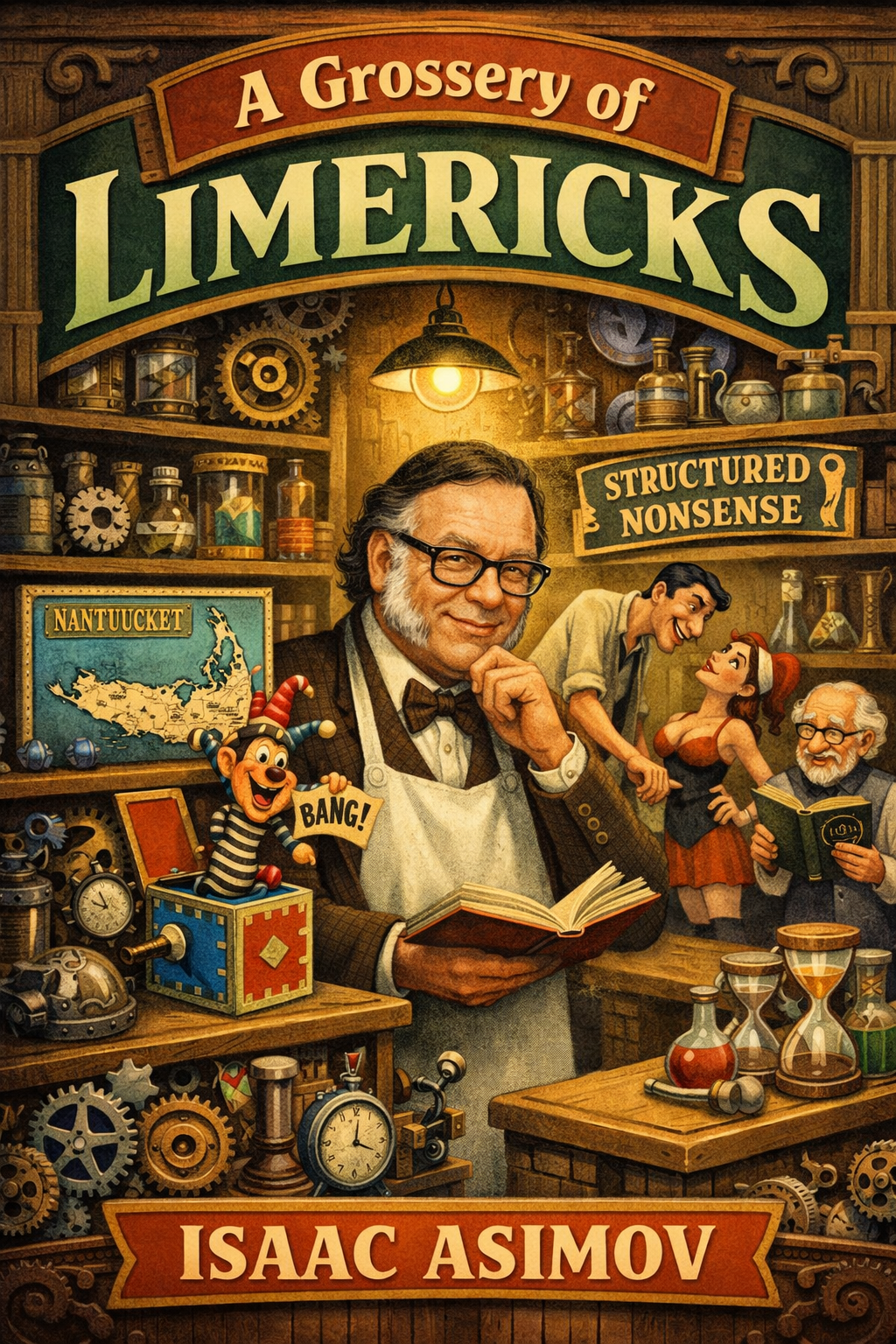
This book records a professional life using Logic and Mathematics to build a vast Architecture of three hundred works through persistent, disciplined, and sustained craftsmanship.
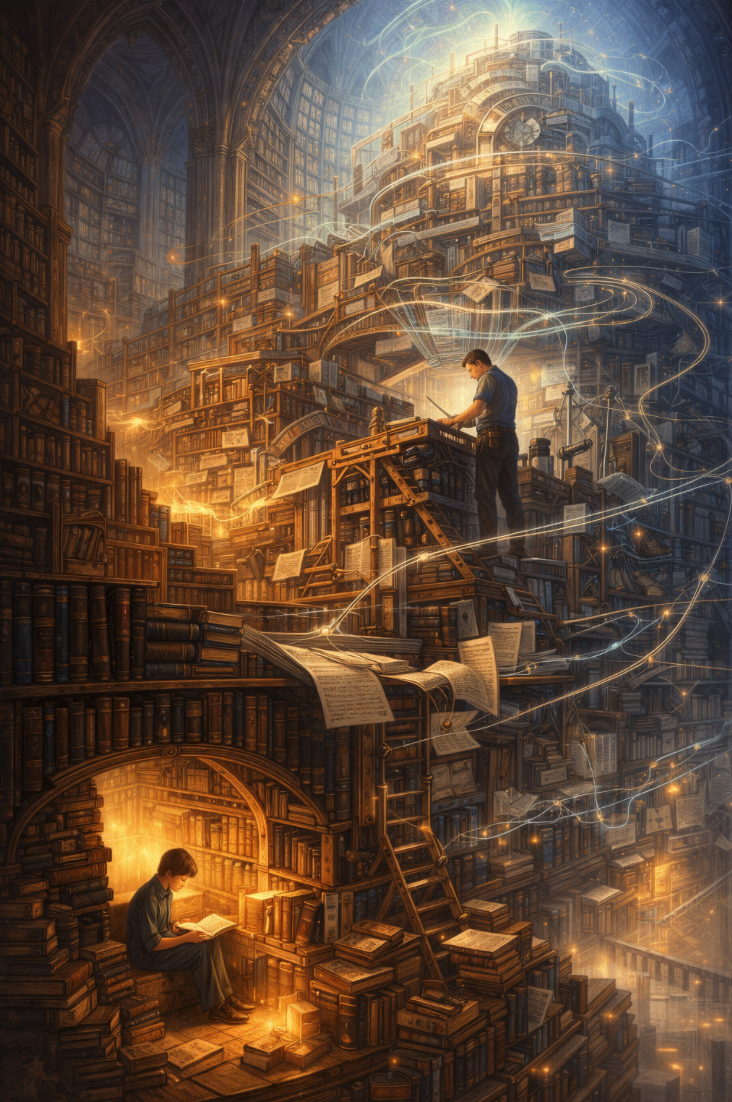
In the record of human achievement, there are moments where the sheer scale of a person's output becomes a subject of study itself. When we examine the book known as Opus 300, we are looking at a milestone that represents three hundred published works by Piers Anthony. This is not just a collection of memories, but a logical exploration of a career built on the idea of accumulation. The author approaches his life with the mindset of a dedicated worker rather than a mysterious artist, and this perspective provides a clear view into how a massive body of work is constructed over time. He views his journey as a guided tour through a lifetime of imagination and method, where each book is a step in a long process of development. Isaac Asimov always took quiet delight in milestones, not because of the simple number itself, but because of what that number implied about the person who reached it: persistence and structure.
The story begins with a young boy who finds himself in the role of an observer rather than a participant in the world around him. This sense of displacement leads him to books, which serve as both a refuge and a place to learn the craft of construction. This transition from reader to writer follows a path that any student of Physical science would recognize as a gradual acquisition of skills. He does not rely on sudden flashes of brilliance but on the steady application of effort, which he treats as a fundamental Theorem of his professional life. Like a scientist documenting an experiment, the author uses a tone that is at once conversational and analytical to explain his growth. This framing places the writer in the role of the rational outsider, the one who watches, records, and eventually constructs systems of meaning through observation. The young reader becomes the adult writer not by a sudden transformation but by a gradual absorption of technique that is as predictable as a chemical reaction.
As the narrative moves into the professional world, the author provides a detailed look at the machinery of the publishing industry. He describes the environment of contracts, advances, and deadlines with a clarity that removes all romantic notions about the writing life. For him, these elements are the variables in a complex system that must be understood and managed. This approach is a pure application of Logic to the field of art, where success is the result of knowing the rules of the system and operating effectively within them. The business of writing becomes a study in how to navigate external forces while maintaining internal production. Contracts and editorial intervention are not seen as obstacles but as the environment in which the writer must function.
Within this life story, the author shares specific mini stories that summarize how individual books came to be, acting as miniature case studies for the creative process. The first mini story concerns a book that grew from a simple play on words or a challenge from another person. This case shows how a professional can take a tiny piece of Information and expand it through disciplined work into a full volume. It is a demonstration that even the smallest idea can be the foundation for a large structure if one knows the proper methods.
The second mini story explains the history of a book born out of a contractual necessity. The author does not view the requirements of a contract as a limitation on his freedom but as a set of helpful boundaries that guide the work. This story shows how the constraints of the professional world can actually force a writer to find creative solutions that he might not have discovered otherwise. The project grew into something more substantial than originally planned, proving that working within a system can lead to unexpected growth.
The third mini story describes how a letter from a reader can spark the creation of a new narrative. This interaction shows that the audience is a vital part of the writer's world and can provide the spark for a whole new project. The author treats this response from the public as a valuable signal that helps him decide where to direct his efforts next. Each of these small stories helps to take the mystery out of how books are made, showing that every project has a clear and understandable origin.
This relationship with the audience is a central part of the author's story. He views his duty to his readers in the same way a scientist views the duty to explain facts to the public. He feels a responsibility to communicate with honesty and to clarify his ideas so that they can be understood by everyone. This creates a dialogue where the responses from the readers become new pieces of Data that help shape future work. The author treats every interaction as part of a larger Scientific method for improving his craft. He believes in the obligation to explain and to avoid any form of deception in his storytelling, ensuring a clear path between his mind and the reader.
The narrative also touches on the emotional reality of a long career. The author does not hide his experiences with rejection or financial worry, but he presents them as data points in his ongoing experiment. When something goes wrong, he does not treat it as a disaster but as an observation to be recorded. He then adjusts his method and tries again, showing that persistence is a logical response to failure. This is how he has survived in a field where many others have given up, proving that the ability to adapt is a key part of his Evolution as a writer. This persistence is not an emotional state but a calculated decision to continue working despite the challenges of the market.
As the years pass, the author deals with the realities of aging and change. He discusses his health and his family with the same clear tone he uses for his professional life. These personal reflections remind us that the work is tied to a human life that is subject to the laws of Biology. Yet the work remains a point of continuity, a way to maintain a sense of order against the Entropy of a changing world. He views his entire output as a grand Symphony where every book is a necessary movement, regardless of how successful it may be individually. The symphony of his work reflects the symphony of a life lived with purpose and dedication to the craft.
The concept of quantity is very important in this story. The author believes that doing something repeatedly is the only way to achieve true quality. One learns by doing, and doing repeatedly. By the time he reaches his three hundredth book, the number has become a symbol of adaptability and survival. He has moved between different genres and responded to different tastes, showing that he can think in a way that is similar to how a mathematician uses Mathematics to solve a variety of problems. This represents the triumph of method over inspiration, where the training of the mind leads to the creation of new ideas.
There are also moments of quiet humor in the story. The author describes the odd expectations of fans and the strange ways that books are classified. These anecdotes work like the lighter parts of a long essay, providing a break while still supporting the main idea that the world of writing follows rules that can be understood. He observes the accidents of the market with the calm of a researcher looking at Probability. Even the absurd moments of his career are treated as evidence of how the system functions in unexpected ways. Survival in the field is a matter of responding to these changes with a rational mind.
In the end, the author reflects on what this long journey has meant. He finds that the reward was not in the fame or the numbers, but in the work itself. Each project was a problem to be solved and a structure to be built. The accumulation of those structures forms an impressive piece of intellectual Architecture. The story does not really end because the process that created these three hundred books is still functioning. The reader is left with the feeling that the next step is already being planned, as the boy who read to escape has become the man who writes to construct worlds for others. Longevity in art is shown to be a matter of sustained effort rather than simple luck.
The book serves as a proof of concept for a life lived according to a rational plan. It shows that creativity and discipline are not opposites but can work together to produce something lasting. By looking at the totality of the effort, we see a single coherent Structure that has been built over decades. The story of the writer is the story of a man who always looks forward to the next challenge, asking what comes next in the long sequence of his work. Knowledge and understanding accumulate over time, and this book is the evidence of that process, showing that the steady layering of thought leads to a grand result. In this lies the deepest kinship with the philosophy of a rational mind: the understanding that we are always building toward something more.