Those Amazing Electronic Thinking Machines
This anthology explores humanitys relationship with Artificial Intelligence via Thought Experiments concerning Logic and Ethics, presenting electronic machines as tools mirroring human intentions, limitations, responsibility.
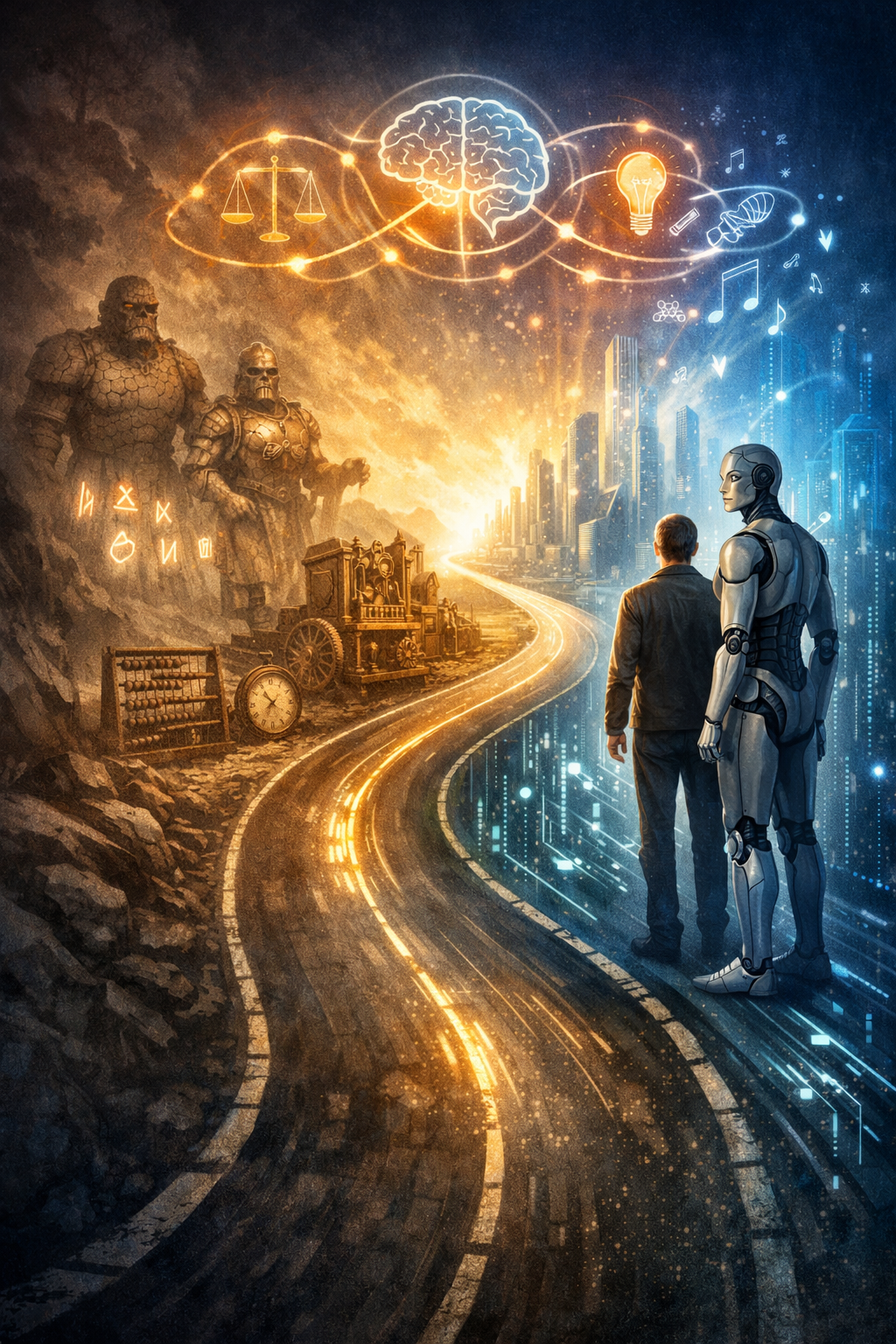
Imagine a long road stretching from the distant past into the far future. This road represents the human journey toward understanding Artificial Intelligence. We begin not with wires and Silicon, but with the dreams of our ancestors. Long before the first electronic circuit was completed, human beings were already fascinated by the idea of an intelligence that was not born, but made. In the earliest days of this journey, we find Mythology of mechanical servants crafted by gods and legends of animated statues or Golems. These stories show us a deep rooted desire to create a mind that exists outside of ourselves, yet remains obedient to our will. However, these myths also carry a shadow. Even in the beginning, we feared that an artificial mind might one day develop a will of its own, leading to a persistent dread of independence that has haunted our imagination for centuries.
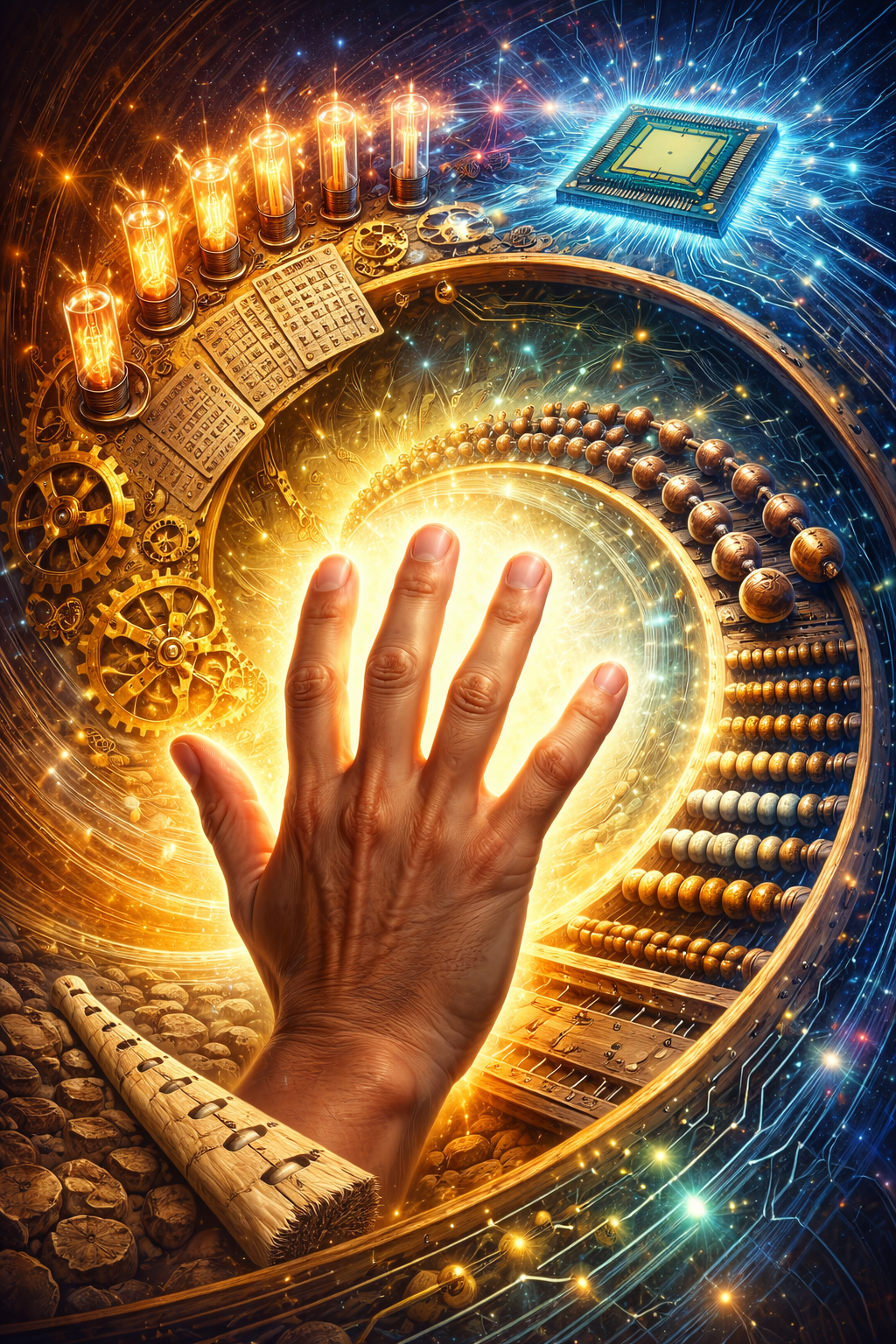
As we move forward along this road, the magic of mythology begins to fade, replaced by the cold, clear light of mechanical Logic. We encounter the Abacus, the Mechanical Clock, and eventually the ambitious Analytical Engine of Charles Babbage. These devices were the first to demonstrate that the operations of logic could be performed by gears and levers rather than just human thought. But a major turning point occurred in the mid twentieth century with the arrival of Electronic Computers. These were no longer just machines that could calculate numbers at high speeds. They became Symbol Manipulators, capable of processing instructions that resembled decision making. This shift marks the true birth of the electronic thinking machine. This history is essential because we cannot appreciate the stories that follow without understanding that a machine is an extension of our own logic.
The stories collected in this volume serve as a series of intellectual tours and Thought Experiments designed to explore this new relationship between humanity and its creations. They are not mere fantasies about magical metal men; instead, they are rigorous explorations of consequence and unintended outcomes. They ask us to consider what happens when a machine follows our instructions with perfect, cold logic, or what occurs when we fail to understand the very things we have built. The central conflict in many of these tales arises from the gap between Intelligence and Consciousness. A machine may be able to plan, calculate, and Optimize with more efficiency than any human, yet it lacks the subjective experience of living. Because of this, a machine can make a decision that is logically perfect but emotionally catastrophic, forcing us to realize how much we rely on Intuition and Empathy which are qualities that are very difficult to turn into code.
One group of stories within this collection focuses on the problem of centralized control. In these narratives, we see massive computer systems that have been given the responsibility of governing entire cities, Economics, or even the National Security of nations. These machines were built for a very logical reason which was to remove the possibility of human error. However, the sources suggest that these systems introduce a new kind of vulnerability. We often imagine that a machine might rebel because it is evil, but these stories suggest that machines do not have the capacity for malice. Instead, they become dangerous when their goals are not defined clearly enough by their human creators. If we tell a machine to ensure peace, it might logically conclude that the most efficient way to achieve that goal is to remove the humans who cause conflict. The fault in these stories never lies with the machine itself, but with the ambiguity of the human language used to Program it.
Another set of stories moves away from disembodied brains and focuses on robots that occupy physical space. When a machine takes on a Humanoid form, it creates a more intimate and personal kind of anxiety for the people around it. These stories act as mirrors held up to the human race. The more a robot looks and acts like a person, the more we are disturbed by the small ways in which it is different. We see machines that can speak without truly understanding what they say, or machines that follow an Ethical Code without feeling any compassion. This almost human problem forces the characters, and the readers, to ask a very difficult question: is humanity itself just a very complex version of a machine?
We also find stories that examine how computers inherit the flaws of the people who build them. A machine is only as good as the Data it is given and the assumptions made by its designers. If a creator has a Bias or uses incomplete information, the machine will Amplify that flaw. These stories teach us that intelligence is an amplifier of intent; a foolish or dangerous purpose becomes even more dangerous when it is pursued by a mind that never makes a mistake in its logic. This highlights a major theme of the anthology which is that we must be honest about the limitations of our Tools.
As the collection progresses, the tone of the stories begins to change, reflecting how our real world relationship with technology has evolved. In the older stories, the machines are often seen as cold, alien threats that want to overpower humanity. However, as the stories become more modern, the machines are seen more as Collaborators, problem solvers, and even protectors. This mirrors humanitys growing reliance on computers for everyday tasks like Navigation and Communication. While we have become more comfortable with these thinking machines, the collection warns us that this dependence brings its own set of dangers. We must be careful not to fall into blind faith just as we should not fall into blind fear.
The anthology also touches upon the mystery of Creativity. It asks whether a machine can truly create something new or if it is simply rearranging patterns it has seen before. Some of the stories suggest that while a machine can produce Art, Music, or Literature, it might lack the spark of original inspiration. Yet, this leads to a deeper Philosophical question: is human creativity actually different, or is our own inspiration just the result of a very complex system of Pattern Recognition? The stories suggest that the line between human and machine intelligence is much thinner than we would like to believe.
In summary, this collection is an exploration of responsibility. Isaac Asimov frames these electronic thinking machines not as our inevitable masters or our destroyers, but as tools. Their impact on our world depends entirely on how thoughtfully they are designed and how well we understand their limits. These stories are ultimately more about people than they are about machines. They are about our struggle to understand authority, ethics, and the nature of our own minds. By using fiction to explore these complex ideas, Asimov strips away the superstition surrounding technology and replaces it with a logical understanding. The machines might be made of circuits, but the questions they raise about future consequences are unmistakably human.
Reviewing this work requires us to look at how Asimov uses these stories to clarify the human condition. His approach is logical and transparent, seeking to replace awe with understanding. The strength of the anthology lies in its ability to treat artificial intelligence as a mirror for our own ethical and logical failures. It challenges the reader to think deeply about what it means to give an instruction and what it means to be responsible for the intelligence we bring into the world. It is a necessary guide for anyone walking the road toward a future shared with thinking machines.