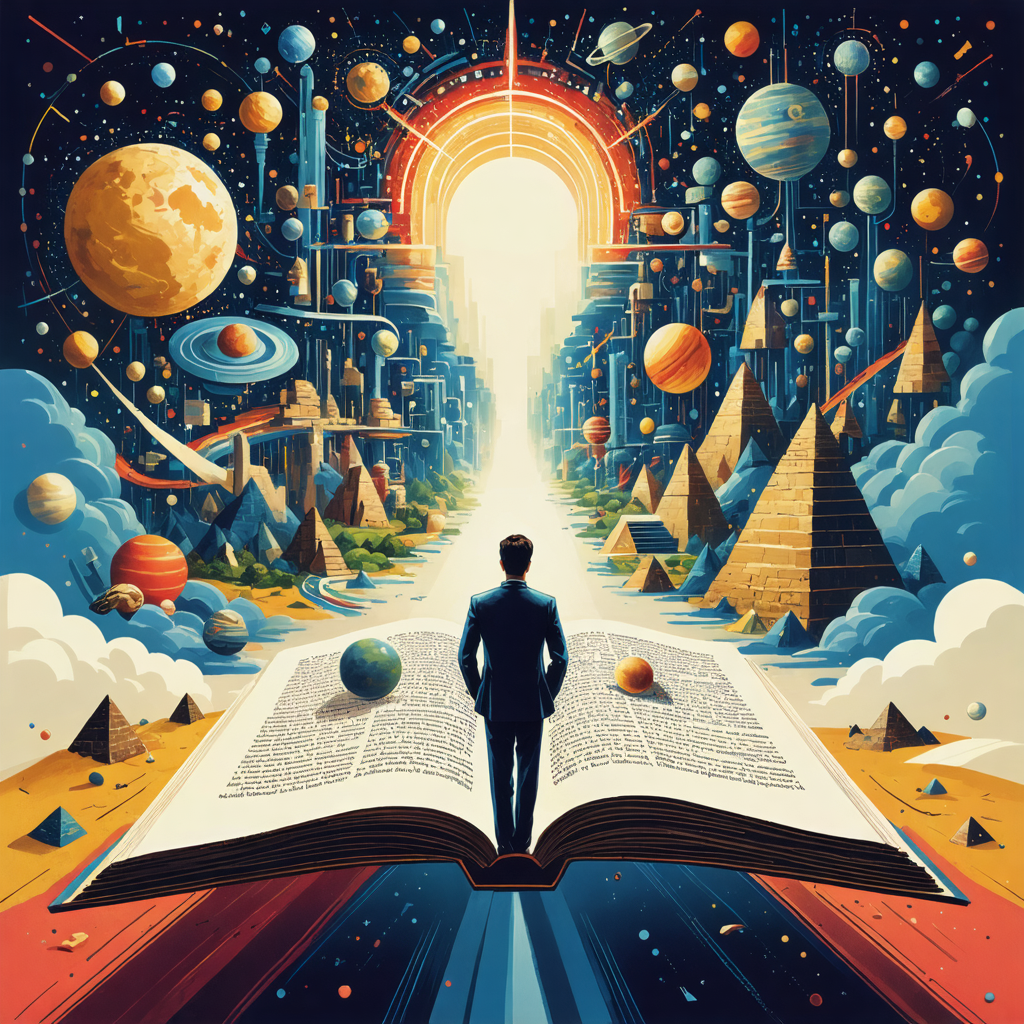
Wizards
Wizards were pre-rational scientists who used rituals and secrecy to explain the mysterious universe, eventually evolving into modern scientists as human curiosity and knowledge grew
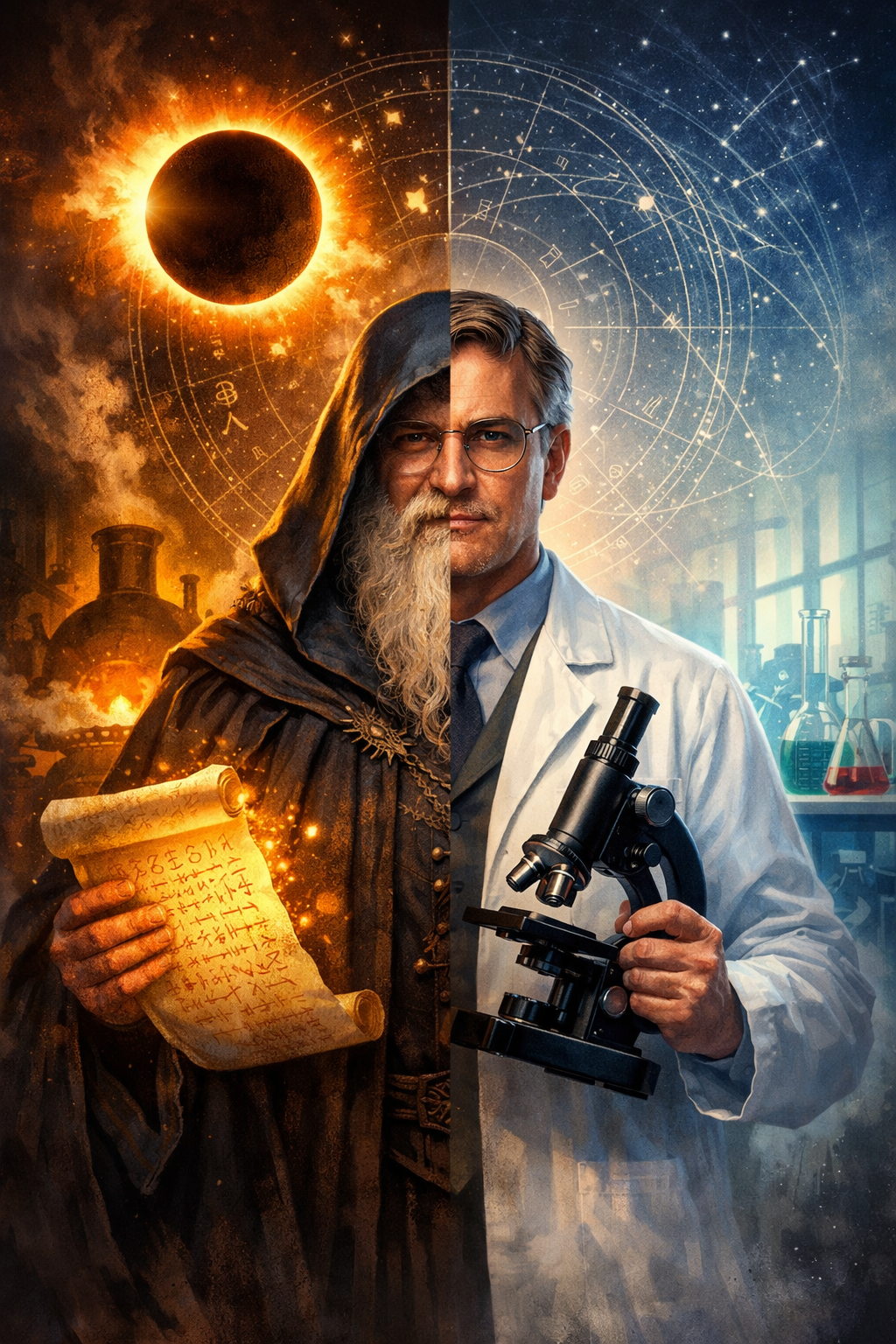
In the long history of human thought, we often look back at figures we call wizards and see only magic and myth. However, if we examine their role through the eyes of logic, we find that the wizard was actually humanity's earliest attempt at science. These individuals lived in a world where the universe seemed ordered but deeply mysterious, and they stood in the gap between what people saw and what they could explain. They were not irrational people; instead, they were pre rational thinkers working without the benefit of the scientific method or mathematical rigor.
To understand this journey, we must first see the difference between a magician and a wizard. A magician is an entertainer who uses tricks and does not claim to hold the truth. A wizard, however, claims a real authority over the physical world and believes that having the right knowledge allows a person to influence reality. This belief only appears in societies where knowledge is scarce and unevenly distributed, making the wizard the primary source of explanation for the mysteries of life.
The story of the first scientists begins when humans watched the patterns of the world, such as the cycles of the seasons or the movement of the stars, but lacked a formal way to explain them. The wizard was the first person to claim mastery over these patterns. In this era, incantations served the same purpose that a modern equation does today. While the methods were different, the intent was the same: to predict what would happen, to control the environment, and to make life feel less uncertain.
The history of secrecy shows us that many people remembered as wizards were actually early practitioners of astronomy or medicine. Because they could predict an eclipse or cure a fever with herbs, they appeared to have supernatural powers to those who were not educated. Their power did not come from magic but from the fact that knowledge confers authority when it is kept secret. As long as literacy remained rare, the wizard remained a powerful and necessary figure in society.
One of the most important steps in this evolution was the practice of alchemy. Alchemists had goals that we now know are impossible, like turning lead into gold or finding a way to live forever. But even though their goals were fantasies, their methods were based on observation. They cataloged chemicals and practiced experimentation in their labs, which eventually created the foundation for the modern study of chemistry. Their failure to make gold was actually a success because it led to the birth of a real science.
In our stories and myths, wizards represent the isolation that comes with great knowledge. The wizard is often a lonely figure because his insights set him apart from the rest of the world. This reflects a deep human conflict where we want to understand the universe but we are also afraid that new knowledge will destroy our social or moral traditions. This fear of knowledge being dangerous is a theme that has followed us from ancient myths into the modern age.
As we moved into the age of technology, the wizard did not disappear but simply changed his appearance. In science fiction, the spells of the past are replaced by advanced physics. Even though we use different words, the feeling of awe we get from seeing a violation of natural law remains the same. Any technology that is advanced enough will look like magic to someone who does not understand the principles behind it.
Even though we have formal education and scientific knowledge today, people still feel drawn to the idea of the wizard. This is because science explains the mechanics of the world but does not always provide comfort or a sense of purpose. We still look for hidden meanings and personal control over a universe that can feel indifferent to us. The wizard remains a part of our culture because he satisfies a psychological need that pure logic cannot always reach.
In the end, we must realize that the wizard was not wrong in his heart. He used the best tools he had at the time to answer the deep questions of his era. Just as we look back at the wizard as a figure of the past, future civilizations might look back at our own scientific theories as outdated frameworks. The wizard is a monument to the human refusal to accept mystery without trying to find an answer. He was the first step on the long path of human curiosity, and that path continues as we turn our ancient myths into the science of tomorrow.