After The End
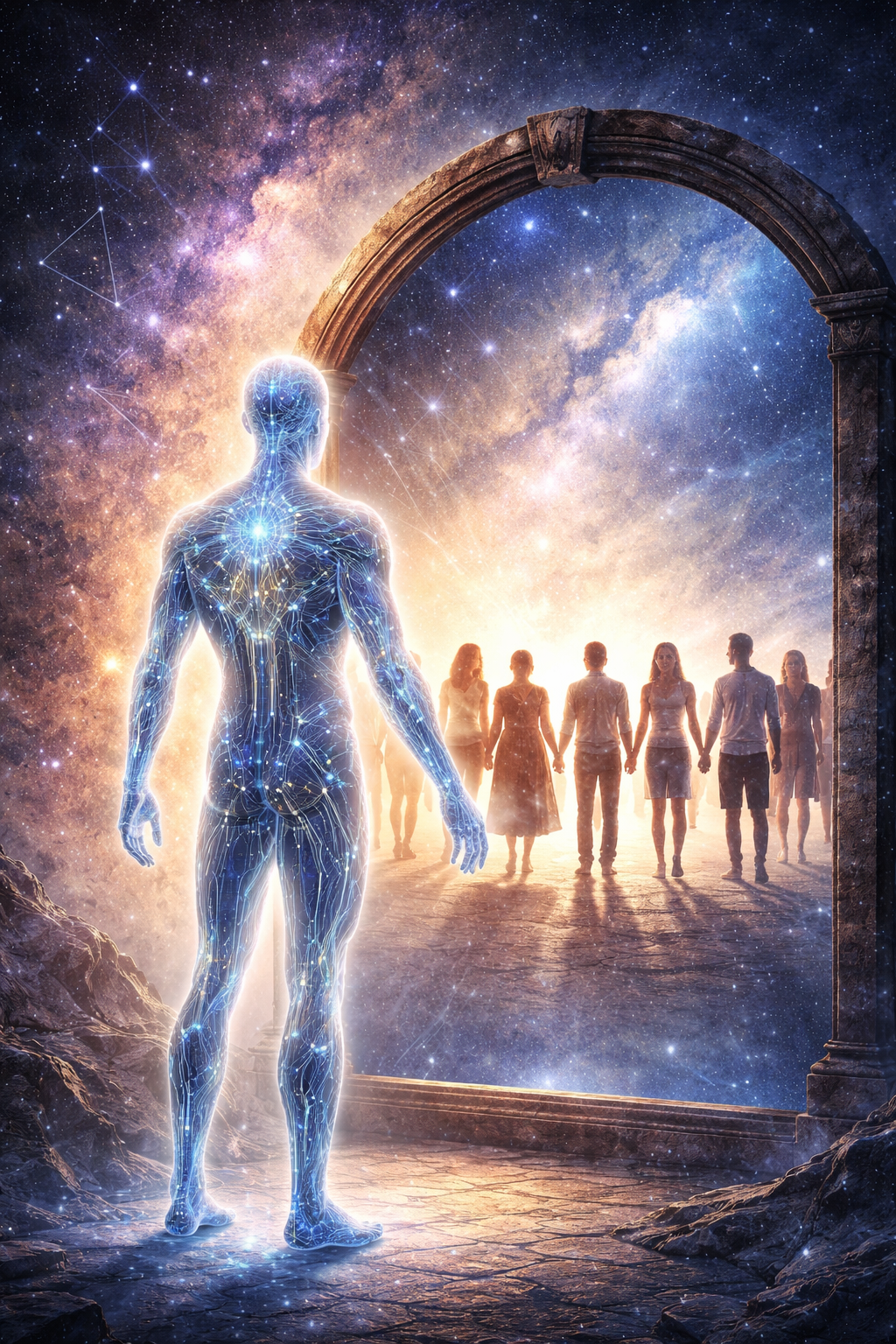
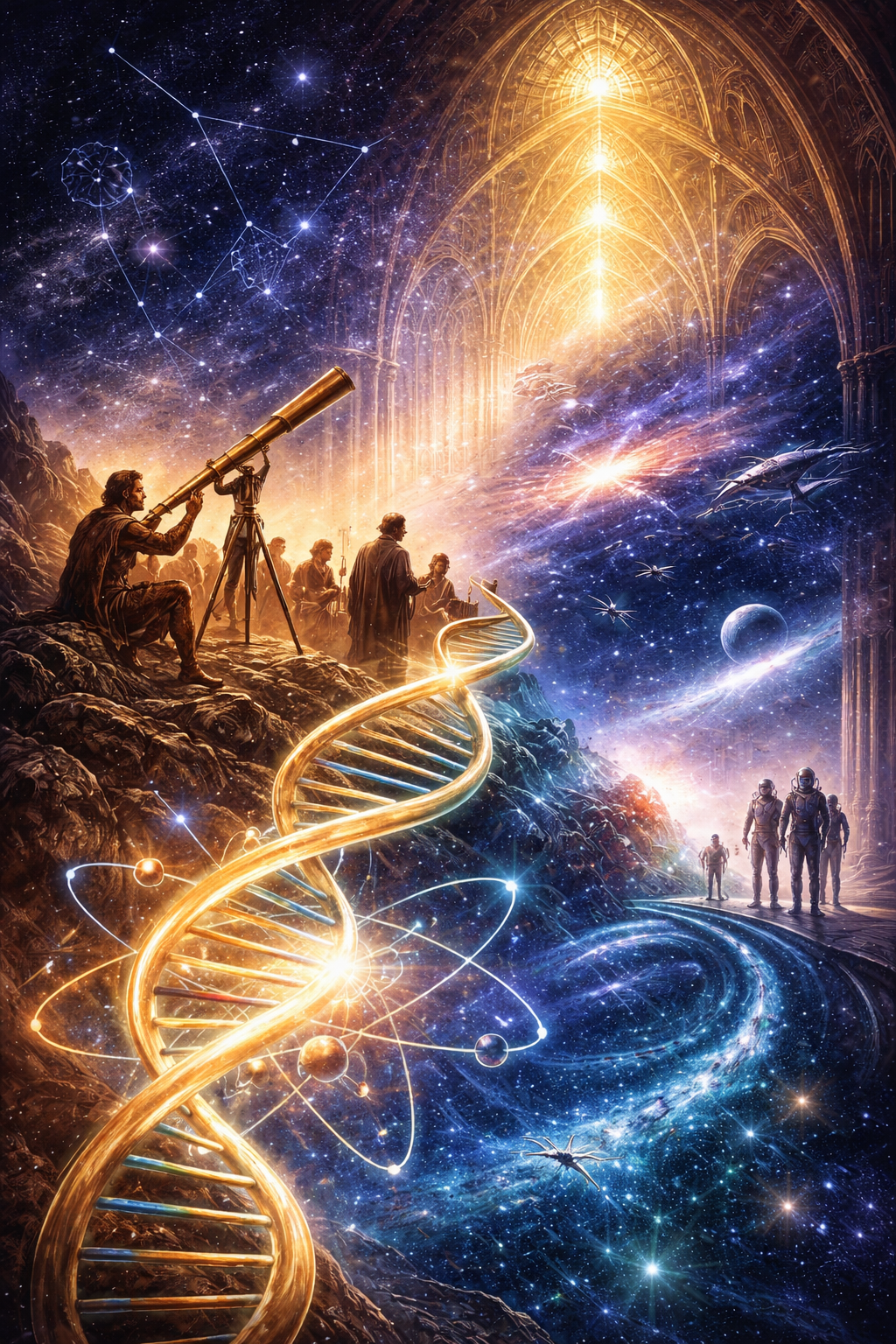
Asimov describes civilization as a fragile network. Its collapse triggers systemic failure, where lost infrastructure and ecological ruin make recovery impossible without proactive human wisdom.
In the quiet halls of a future library, perhaps one situated on a world not unlike Trantor before its decline, a scholar sits to consider the nature of catastrophe. This scholar does not look for dramatic explosions or the cinematic end of worlds. Instead, they examine a document titled After the End, a logical post mortem of a civilization that forgot how to sustain itself. This document is not a work of sensationalism but an orderly thought experiment that traces the scientific premises of systemic failure and the long tail of consequences that follow a great collapse.
The story begins with a necessary correction of terms. We often think of the end as a single moment, a switch that is flipped to turn off the lights of humanity. However, the logic of this narrative suggests that civilization has no such switch. It is, instead, a vast and intricate network of interdependent systems, including energy, food production, transportation, and social trust. Therefore, the end is not a sudden extinction but a systemic failure, where enough links in the chain break that recovery is no longer a matter of inevitability but a question of uncertain probability.
As we move deeper into this analytical story, we find that the immediate destruction of cities and infrastructure is merely the prologue. The real narrative begins with what survives. We are introduced to the concept of ionizing radiation, not as a swift killer, but as a corrosive agent of uncertainty. In this world, the land is not uniformly poisoned; it is unevenly contaminated. A society cannot function if it cannot reliably determine where it is safe to live or farm. Uncertainty becomes the enemy of the essence of civilization.
The narrative then shifts its focus to the environment. There is a comforting myth that nature will simply heal itself once humans are out of the way, but this story dismantles that hope. An ecosystem is a finely balanced mechanism. If the pollinating insects or the soil microorganisms vanish in the wake of extreme energy releases, the ripple effects move upward through the food chain. Humans find that starvation is not an immediate event but a delayed and uneven process, making it nearly impossible to confront through traditional social or political means.
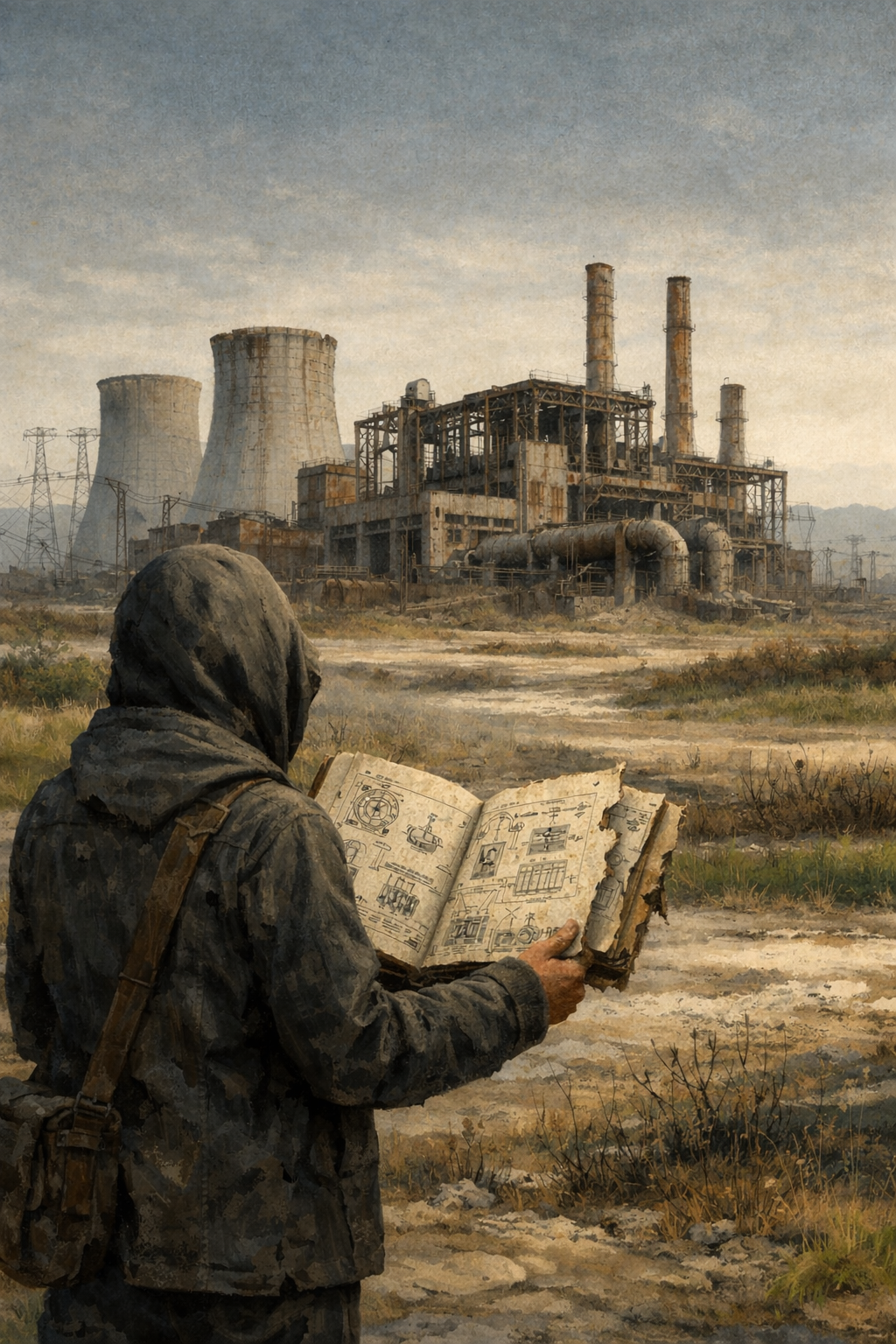
We then encounter the problem of the technological ecosystem. In many tales of the future, survivors are depicted as heroes who can rebuild the world simply because they remember how machines work. This story argues otherwise. Technology is not a collection of gadgets but a process maintained by specialists and global supply chains. You cannot rebuild a power plant if you lack the precision tools, the spare parts, or the trained workforce to maintain it. Even the production of steel requires an entire industrial infrastructure to be functional at once. If you remove too many nodes from this network, knowledge moves from the realm of the practical to the purely theoretical.
One of the most devastating chapters in this logical progression deals with the limits of books. It is a sobering thought for any champion of knowledge that written instructions are not a substitute for living expertise. A manual for creating semiconductors is useless if you do not have the purified materials and the generations of incremental refinement required to use the tools. Once a civilization falls below a certain threshold of capability, it may find it impossible to climb back up, simply because the means to apply its knowledge have vanished.
The story of the aftermath then turns to the people who remain. While popular fiction often depicts instant barbarism, this narrative suggests a more likely fragmentation. Societies would likely break into local power structures driven by the immediate need for survival. In such a world, scientific curiosity and long term planning become luxuries that no one can afford. Memory itself begins to distort. Future generations might look upon the ruins of the ancients as the work of gods or monsters, inheriting the myths of destruction without understanding the mechanisms that caused it. Ignorance, once it takes root, tends to perpetuate itself.
This leads to the realization that societal collapse and technological regression can be a stable state. We often assume that progress is an upward ladder, but this story suggests that humanity could settle into an equilibrium where rebuilding advanced science is neither prioritized nor feasible. Without surplus energy and the time it provides, there is no research; without research, there is no ascent. Humanity might persist indefinitely in a diminished state, surrounded by the corroding skeletons of former achievements.
The story concludes not with a scream of despair, but with a pivot toward responsibility. The fragility of our systems does not mean we are doomed, but it does mean our civilization must be consciously maintained. The ultimate lesson is that survival depends not on our technology, but on our wisdom, which is the rarest resource of all. Humanity is unique because it has the capacity to understand the possibility of its own end in advance. The end is a choice that can be deferred or avoided entirely, provided we do not assume that recovery is automatic.
Summary of the Mini Stories within the Analysis
The Story of the Broken Chain: This section explains that civilization is a network of interdependent systems like food and energy. When these links break, the end occurs not as extinction, but as a failure of the system to recover.
The Story of the Invisible Enemy: This part describes how radiation creates a landscape of uncertainty. Because people cannot tell which land is safe, they cannot coordinate, and without coordination, civilization cannot exist.
The Story of the Silent Field: This narrative focuses on ecology, showing that the collapse of small organisms like insects or plankton creates a delayed starvation for humans at the top of the food chain. Nature does not heal; it changes in ways that no longer support human life.
The Story of the Useless Manual: This section argues that books and knowledge are not enough to rebuild a world. Without the industrial ecosystem and tools to apply the knowledge, even the most advanced information remains theoretical and useless.
The Story of the Diminished State: This final piece explores how a post collapse society might become trapped in a low tech equilibrium. Without the time or energy to conduct research, humanity remains in a stable state of regression, unable to climb back to its former height.
In review, this narrative is a masterpiece of logic that mirrors the best of systemic thinking. It avoids the trap of melodrama to focus on the terrifyingly simple reality of how things work and how they stop working. It is a reminder that the future is not a gift, but a task that requires our constant attention. To understand the fragility of the system is the first step in ensuring that the after never has to begin.
Imagine civilization as a vast, interconnected clock. We often admire the hands that tell the time, but the clock only functions because of thousands of tiny, hidden gears working in unison. If you smash the glass, the clock might still tick for a moment; but if you lose the specialized tools required to forge even one of those tiny gears, the clock will never tell the time again, no matter how many people remember what a second feels like.