How Did We Find Out About Solar Power
Centuries of patient work clarified how sunlight influenced charge, transforming the Sun from myth to a practical, essential supplier of modern global energy.

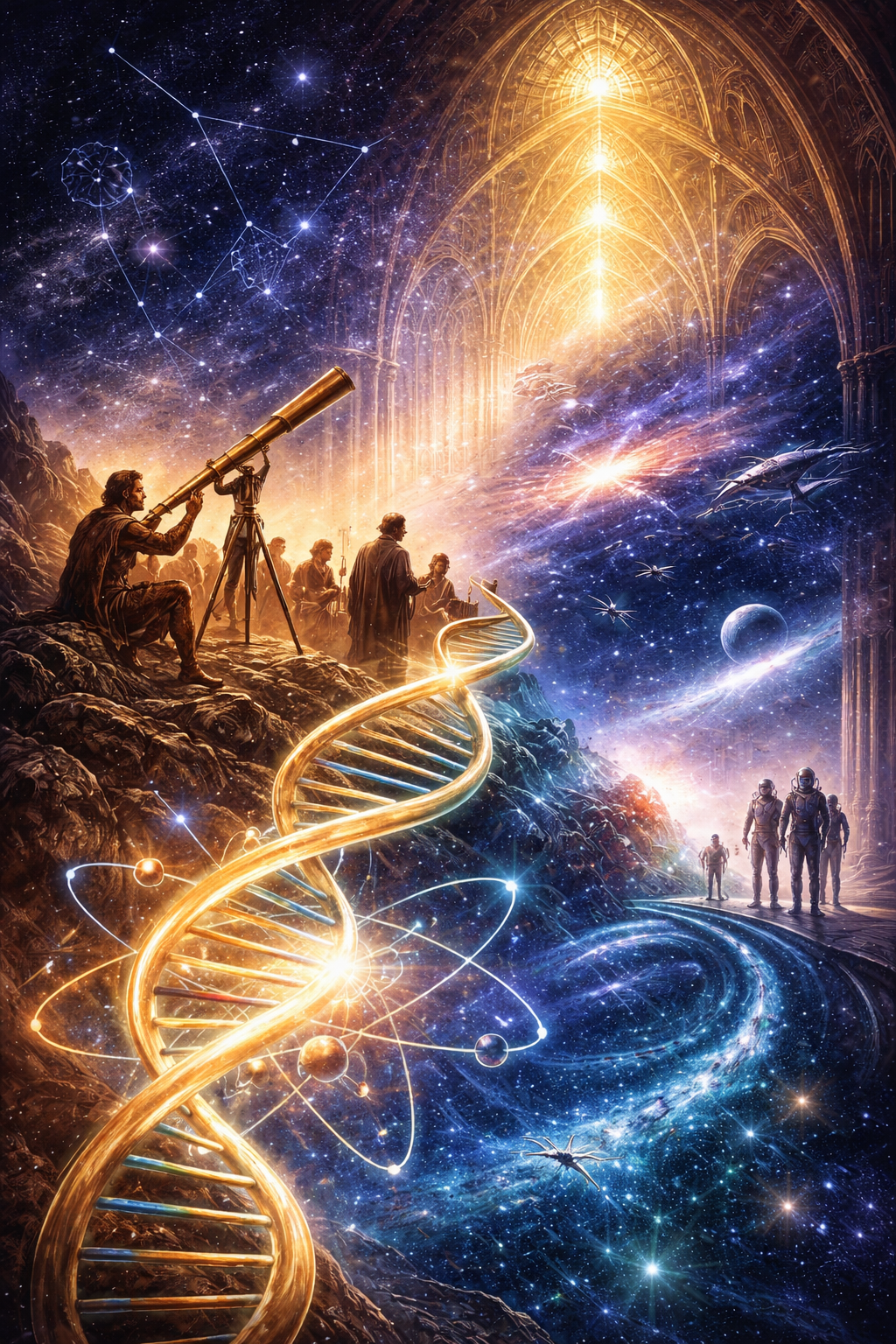
The narrative detailed in these excerpts is not a fiction of spaceships and robots, but a far more important kind of history: the story of how human cleverness unlocked an inexhaustible source of energy, moving from simple curiosity to fundamental technology. It is a tale structured by logical necessity, much like the great epochs of the Galactic Era, where specific scientific breakthroughs appear precisely when the preceding knowledge makes them inevitable. This story traces the slow clarification of causes, transforming the sun from a subject of myth and agriculture into a practical supplier of civilization’s power.
The beginning of this long narrative is set in an environment of mere observation. Human beings had always recognized the sun’s organizational importance, its light and warmth governing their lives. Yet, the story truly begins when curiosity prompts careful investigation into how light and electric charge might be physically linked. Early experimenters, working with electrochemical setups, made the modest observation that light could influence electric current—a photochemical effect. This was discovery, not invention, but it established the critical premise that light and electricity were partners in physics. This opening phase shows the classic pattern of scientific emergence: a minor, meticulous finding that later becomes the absolute keystone of massive technological change.
The story progresses through a series of material explorations. Investigators identified materials sensitive to light, such as selenium, whose electrical conductivity would notably change under illumination. This moved the work forward from pure chemistry toward applied materials science. By the late 1880s, the first crude, functional demonstration existed: a primitive cell coated with gold and selenium could convert sunlight into an electric current. The efficiency of this early device was tiny, merely a few percent, but the principle had been proven: energy could be harvested directly from light without moving parts.
The narrative then takes a decisive turn into the realm of theory. As often happens in the history of science, the practical experiments initially ran ahead of the conceptual understanding. A breakthrough was needed to explain why these effects worked. This clarity arrived in the early twentieth century with the explanation that light energy is absorbed in discrete units, or quanta, now known as photons. This conceptual shift clarified precisely how light could liberate electrons from material surfaces, providing the systematic conceptual foundation necessary for engineers to proceed with confidence. Without this theoretical underpinning, the next great practical leaps would have remained locked in the uncertainty of trial and error.
The midpoint of the story focuses intensely on the engineering required to transition from a laboratory marvel to a reliable, functional tool. The narrative arc demanded advances in materials purity and a deep understanding of semiconductors. The exploitation of the p–n junction—joining regions of positive and negative charge carriers to produce an internal electric field—was the pivotal engineering feat. This patient work culminated in the middle decades of the twentieth century, resulting in the creation of the first reliable silicon solar cell. This cell was efficient enough to become a bona fide electrical source, achieving around six percent conversion efficiency, validating the theoretical work and suggesting that widespread improvement was realistic.
Once a stable technology existed, necessity intervened to accelerate refinement. The dawn of the space age provided the critical application that scaled the manufacturing and hardened the engineering. Satellites demanded power sources that were lightweight, reliable, and long-lived, far beyond the capability of batteries for extended missions. The space program served as a massive, ongoing stress test, pushing researchers toward predictable, rugged devices, rapidly advancing the art of manufacturing and research.
The final section of the narrative describes the translation of niche technology into societal infrastructure. Technical improvements came steadily—better methods for purifying silicon, refining the doping process (introducing impurities to control semiconductor properties), and superior integration methods. New avenues opened, including multi-junction cells that stack materials tuned to different parts of the solar spectrum, permitting truly remarkable efficiencies under concentration.
Crucially, the story shifts its focus from invention to adoption. The technology was no longer expensive helpmate to spacecraft; the economic arc of the story saw costs driven down dramatically through economies of scale and policy encouragement. The ultimate goal of this phase was reaching "grid parity"—the point where generating electricity from sunlight cost the same as traditional fossil fuels. Reaching this point transformed the technology from a scientific daydream into an engineering and political reality, promising abundant, distributed energy harvested from the sky.
The concluding chapters of the narrative acknowledge that the transformation is not yet complete. While the solar resource is virtually inexhaustible, societies must reckon with the practical challenges: the need for materials, land, and investment, as well as the variability imposed by night, clouds, and seasons. The story thus enters a new phase focused on secondary technologies: better storage batteries, smarter grid management, and robust infrastructure. The optimism here is purely pragmatic: these challenges are deemed solvable problems, not metaphysical barriers.
This history, like all great logical sequences, concludes with a profound understanding of process. It illustrates that large-scale progress arises not from a single moment of genius, but from patient, incremental refinement involving many different disciplines: the physicist’s quantum insight, the chemist’s purity work, the engineer’s system integration, and the economist’s role in feasibility. The tale is fundamentally about human persistence. The ironical end is that the sun, once a subject of myth, becomes the engine for a technology that offers a way to avert one of the greatest threats facing human civilization. The slow, logical march of discovery transforms the commonplace into the necessary cornerstone of a stable future.