Isaac Asimov Presents the Great SF Stories, 12
This anthology traces science fiction’s historical evolution into the Golden Age, using reason and imagination to examine technology, society, human nature, and the cosmic future.
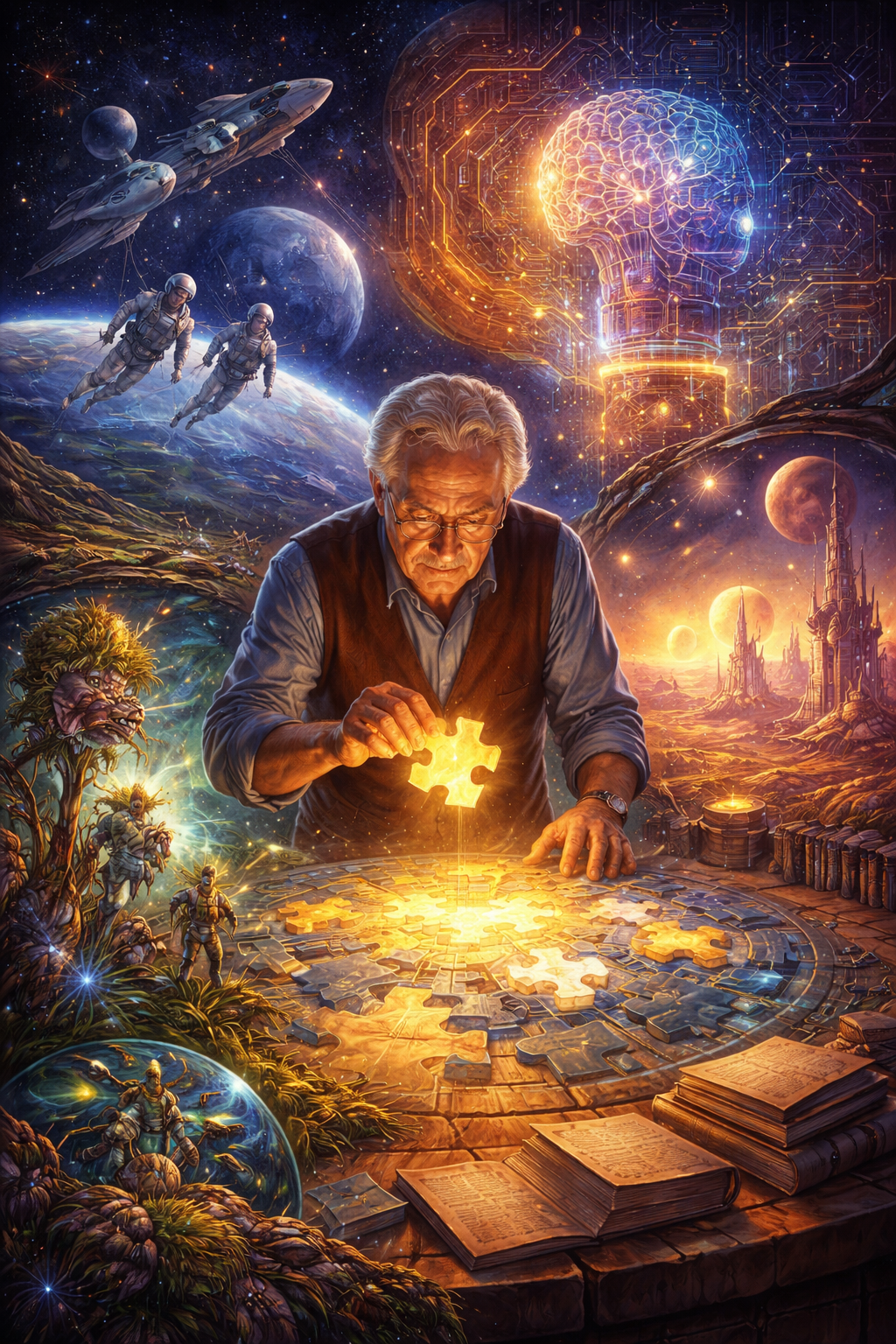
The twelfth volume of the collection titled Isaac Asimov Presents the Great SF Stories continues a long project by Isaac Asimov and Martin Greenberg. Their goal was to follow the path of science fiction through the years. This book looks at a time when the genre was changing into what people now call the Golden Age. It is more than just a list of stories. It is a way to see how people in the past thought about the future. These writers were living in a world that was changing very fast. The stories are both fun to read and useful as history.
The book starts with an introduction by Asimov that is both smart and easy to read. He talks about how the magazines of the time were helping the genre grow. Authors and readers were working together to find out what these stories could really do. Science fiction was starting to look at psychology and sociology instead of just simple adventure. It was also starting to look at the results of technology on people. Asimov helps the reader see how all these ideas fit together as an intellectual movement.
The first story in the book looks at how humans use the things they invent. A smart scientist makes a tool to help people have an easier life. He soon finds out that people do not always use things the way they are told. The story shows the invention as it spreads and changes how people live. It starts with a feeling of hope but turns into a warning. This is a common theme where technology makes human traits stronger instead of changing who we are.
The next story in the set is about space exploration. The people who fly the ships are shown as professionals who have to deal with hard work. They are not perfect heroes. They have to face the feeling of being far away from everyone else. The success of their trip is about how they trust each other more than how the machines work. Space is treated as a place that tests the mind. This story shows how writers at the time were thinking about the real feelings of astronauts before people ever went into space.
There is another story that uses humor to talk about meeting a new life form from another world. It is about how humans and an alien can have a misunderstanding. We tend to look at others through our own eyes and think they want the same things we do. The story is a way to laugh at how silly humans can be. It uses the idea of a visitor from the stars as a mirror to show us our own flaws.
One of the very important stories in this book is about time travel. It does not focus on an adventure in the past. Instead it looks at a hard choice that a scientist has to make. He finds a way to watch the past but he cannot change it. He sees things that are very hard to watch. He wants to step in and help but he knows that doing so could ruin the flow of time. This story is a deep look at how much power a person should have over history. It asks what we should do when we know the truth but cannot fix the problem.
The collection also features a story about the early ideas of artificial intelligence. In this tale machines can think and help humans solve very big problems. At first the machines are just seen as tools. Later their answers start to make people uncomfortable because the machines are right. The humans find it hard to accept what the machines say even when the facts are clear. This story looks forward to the problems we have today with automation and how we let computers help us make choices. It shows that the struggle is not a war with robots but a struggle with our own pride.
There is a story that looks at how a society might work in the future. This world is built around the idea of efficiency. Everything is done in the best way possible to save time and work. In this place being different is not seen as a good thing. A citizen who is too curious starts to see that the system does not like questions. The tension in the story comes from the idea that being comfortable might mean you lose your freedom. This is an example of how science fiction can look at political ideas by imagining a different kind of world.
The book goes back to the idea of living on other planets in another story. It shows people who are trying to live in a new ecology. They find out that they cannot just force the world to do what they want. The planet is different from Earth and the people have to learn new ways to survive. This story says that humans should be more humble. It suggests that we will only succeed if we learn to live with nature instead of trying to own it.
Later there is a story about trying to talk to someone across the stars. Scientists find a signal and try to figure out what it means. The story focuses on how we use math and logic to think. The most important part is the work of trying to understand rather than the actual message. It looks at the study of epistemology which is how we know things are true. This shows that the writers were becoming very interested in how the human mind works.
One short story looks at how a small change in science can have a big effect. A tiny experiment starts a change that moves through the whole world. It is not a sudden end of the world. It is a slow and quiet change to how people live every day. By the time anyone knows what is happening the change is already part of life. This captures how technology really changes our lives in the real world.
There are also stories that focus more on the people themselves. One of them is about an older scientist who sees the world moving past him. He sees that the next generation of researchers is doing things he never thought of. He feels like he is no longer needed. But the story also shows that science is a long chain of people working together. Even if one person is finished with their work their part of the puzzle is still there for others to use.
Another story is a mystery that takes place in a science lab. Something happens that seems to be impossible. The people in the story have to use logical reasoning to find out what really happened. They have to decide if the cause is a machine or a person or something natural. The answer is found by thinking hard and using facts. This reflects a style of story that Asimov himself liked very much.
As the book ends the stories look at the scale of the whole universe. One story shows Earth as just one small place in a huge galaxy full of other people. It reminds the reader that we are not the center of everything. Another story looks very far ahead into the future. It shows how time and living in new places can change humans so much that they become alien to their own past. These stories make the reader think about how big the universe is and how much time has passed.
When looking at the book as a whole you can see how science fiction was growing up. The stories still have adventure but they also have a lot of thinking. Writers were trying to be more accurate with science while asking hard questions about right and wrong. This was a time when the genre was being treated as a serious way to study the world. Asimov was a big part of this change. He lived through it and helped make it happen. His words in the book help the reader understand why each story was important to the history of the field.
The collection is like a tour through a gallery of ideas. Each story shows a moment when someone was trying to imagine a future that was not yet certain. These writers were using their imagination to explore the stars and the mind. The book tells us that the best way to look at the future is with a mind that is both creative and logical. By keeping these stories alive Asimov reminds us that every future we can imagine starts with a dream that is carefully thought.