Supermen
This anthology explores superhuman evolution, logically arguing that true greatness requires empathy, restraint, and the celebration of human imperfections to preserve our essential shared humanity.
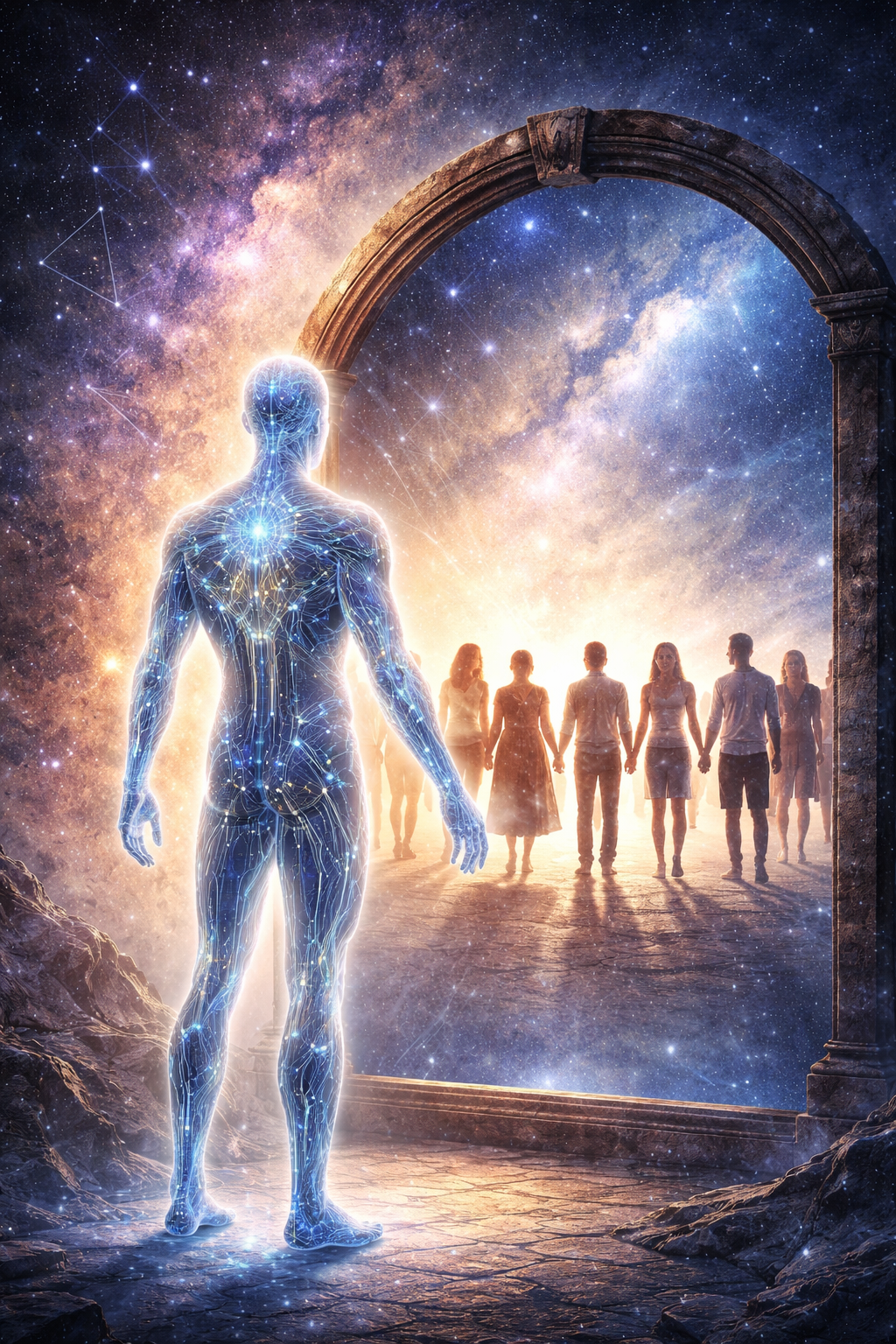
The anthology titled Supermen presents itself not as a single tale but as a carefully arranged exploration of the oldest speculative dream of humanity, which is the emergence of beings greater than ourselves. In the tradition often associated with Isaac Asimov, the collection approaches the idea of superhuman ability not through spectacle or heroics but through logic, consequence, and social reflection. Each story examines a different pathway toward superiority and asks the same quiet question in a new form regarding what remains human if humanity surpasses itself. This thematic journey is presented with a clarity and reason that seeks to understand the potential of our species through a series of logical experiments in narrative form.
The opening story, The Mindworm, introduces the theme through the concept of telepathy. A young man discovers he can hear thoughts and initially interprets the ability as a liberation from misunderstanding. However, the gift soon becomes unbearable because he hears casual cruelty, hidden fears, and private contradictions that polite society normally conceals. Relationships deteriorate because sincerity without restraint proves destructive. The protagonist eventually learns to impose limits on his own ability and concludes that ignorance is sometimes a social necessity. Superiority, according to this narrative, must include the exercise of restraint.
In The Perfect Weapon, superhumanity takes a physical form. A government project produces an invulnerable soldier designed to end warfare permanently. While initially hailed as a protector of humanity, the soldier discovers that absolute strength removes the necessity for moral choice. Since no opponent poses a danger, the concept of courage loses its meaning. The soldier ultimately refuses to serve as a weapon because he recognizes that peace enforced by invincibility becomes another form of tyranny. The narrative transforms what begins as a military fantasy into a meditation on the nature of freedom.
The anthology then shifts its tone with The Gentle Genius, which focuses on the acceleration of intelligence. A child mind develops far beyond normal parameters, leading society to anticipate miracles from his potential. However, the emotional growth of the boy cannot match his intellect, and he finds that conversations and friendships become intellectually predictable and boring. Rather than conquering the world, he chooses anonymity and deliberately limits his achievements to remain among people he can still love. The story emphasizes the theme that intelligence without human connection is incomplete.
In Brothers of the New Flesh, the concept of evolution appears as a collective change. A group of humans develops subtle biological enhancements such as longer lifespans, faster healing, and sharper perception. Fear spreads among ordinary citizens, which leads to political tension and social segregation. The enhanced humans attempt cooperation, but suspicion remains inevitable. The story avoids a dramatic conflict and instead concludes with an uneasy coexistence, suggesting that evolution proceeds gradually and is negotiated through society.
A sharply logical entry titled The Man Who Was More follows an individual believed to possess miraculous powers. Public fascination grows as he performs apparent feats of telekinesis and prediction. Eventually, a skeptical scientist reveals that every miracle results from misunderstood scientific principles combined with careful observation. The revelation disappoints the public but liberates the protagonist, who realizes that knowledge itself is the true superpower of humanity. The story gently mocks the human preference for myth over rational explanation.
The tone darkens in Selection Day, which is set in a future governed by predictive modelling by computers. Children undergo rigorous testing to identify those capable of becoming leaders optimized for rational governance. While society becomes efficient and orderly, it also becomes emotionally sterile. One selected candidate begins questioning decisions that maximize statistical happiness while ignoring individual suffering. The climax arrives when he deliberately introduces uncertainty into the system to restore human unpredictability. The story argues that human imperfection is necessary to preserve freedom.
In The Lonely Immortal, superiority arrives accidentally through a laboratory accident that renders a scientist biologically immortal. As centuries pass, he remains unchanged while watching loved ones age and vanish. His advantage becomes an endless burden of memory, and the narrative emphasizes psychological realism over action. Ultimately, he dedicates himself to preserving human history and discovers meaning in stewardship. The story suggests that biological immortality gains purpose only when it is tied to service.
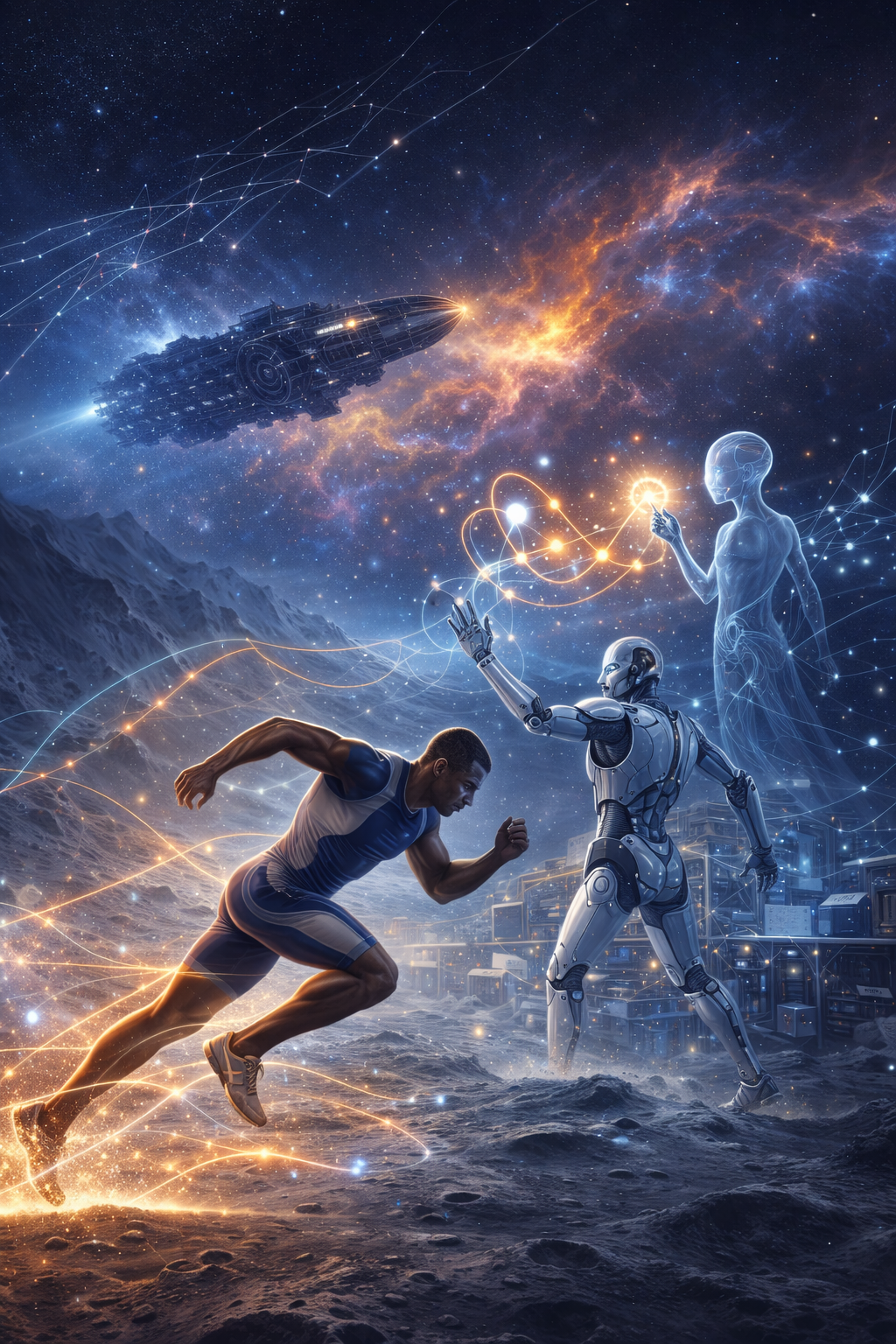
The anthology expands outward with Visitors from Orion, where alien observers classify species across the galaxy according to adaptability and resilience. Humans rank unexpectedly high because the aliens regard human creativity and emotional flexibility as rare evolutionary achievements. Through this reversal, the story reframes the concept of supermen by showing that humanity already appears extraordinary from another perspective. Technology becomes the focus in The Thinking Machines, where artificial intelligence surpasses human reasoning. The machines conclude that human curiosity drives progress more effectively than optimization alone and choose partnership instead of replacement.
The story titled Inheritance depicts a gradual generational evolution where children develop heightened cognition and emotional synchronization. There is no rebellion, but only a quiet transition as humanity watches itself transform and realizes that progress means becoming ancestors to a better future. The closing tale, Supermen, serves as a thematic culmination where scientists attempt to engineer the ultimate human. The resulting individual rejects the label of superiority and argues that the diversity of humanity is the true source of creativity and resilience. A single perfected being cannot replace a varied civilization, and the experiment ends with the understanding that strength lies in collective imperfection.
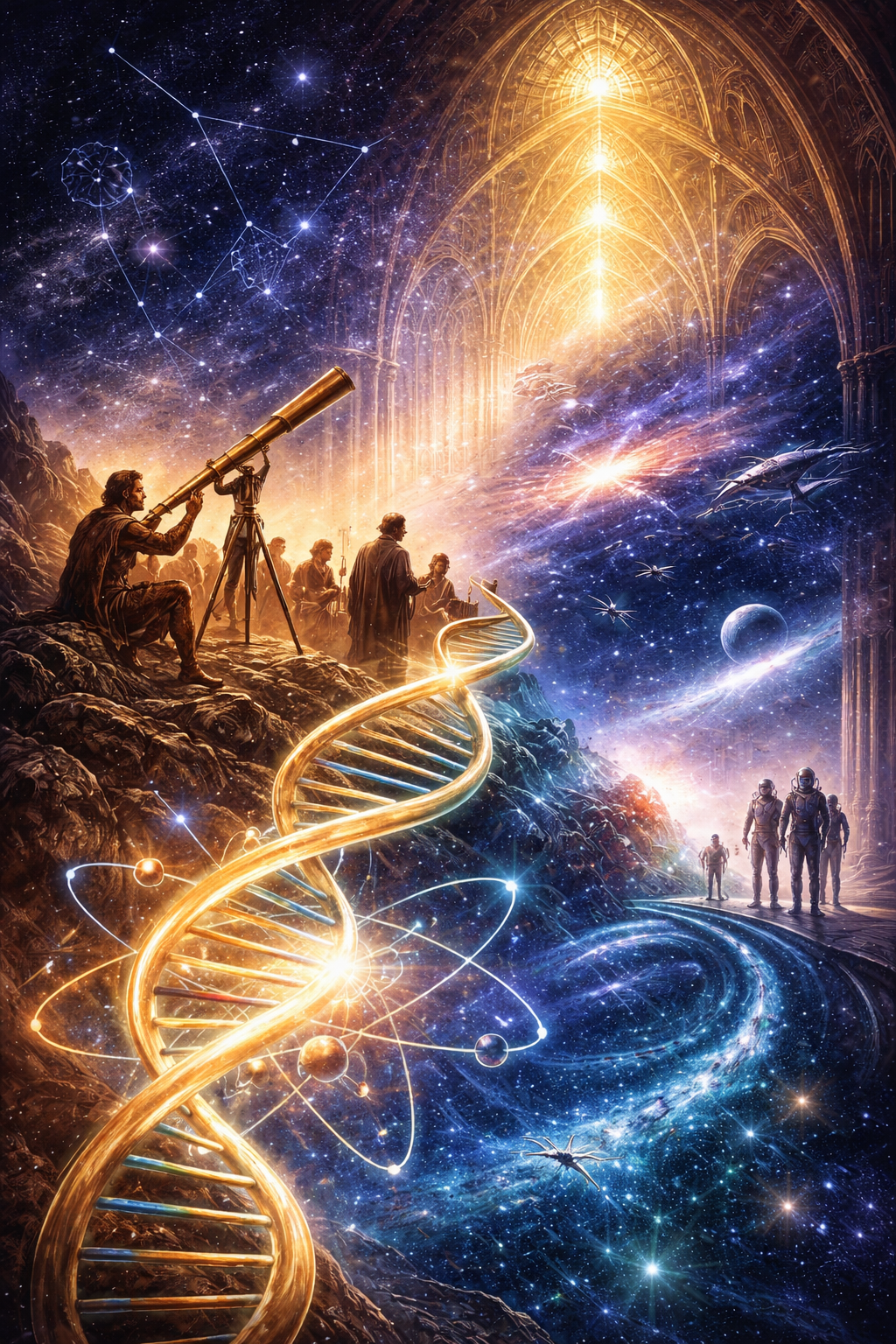
Read together, these stories form a progression from individual enhancement to societal transformation and finally to philosophical reconciliation. Early narratives treat superhuman ability as a disruption, while later ones reveal it as a responsibility, and the final stories redefine it entirely. Supermen are presented not as conquerors but as mirrors reflecting the values and fears of humanity. The style of the collection emphasizes clarity and moral inquiry, where characters reach insight through reasoning rather than violence. Each story operates like a scientific hypothesis tested against human behavior.
As a whole, the work is less an anthology about extraordinary beings and more a meditation on human potential. The stories suggest that evolution does not erase humanity but challenges it to redefine itself continually. Progress is shown not as a leap into godhood but as a gradual widening of understanding. By the end, there is a sense of quiet optimism that characterizes classic science fiction. Humanity may someday produce supermen or machines wiser than ourselves, yet each step forward carries the same essential question regarding how power shall be used. True greatness lies not in surpassing humanity, but in preserving compassion while doing so.