The Exploding Suns
Asimov explores a star’s birth, stability, and violent death, showing how supernovas forge heavy elements necessary for life and the universe's creative renewal cycle.
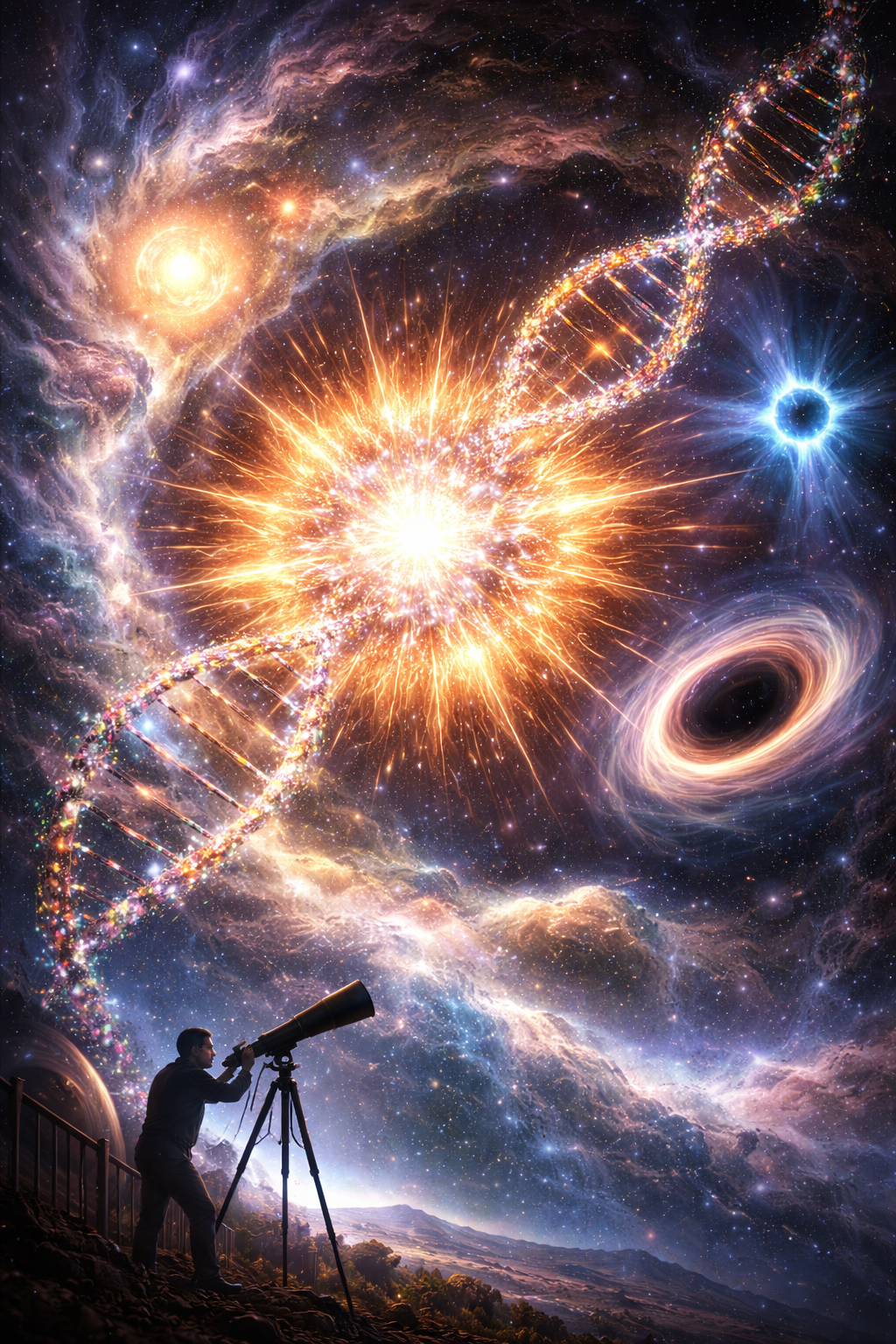
In the work titled The Exploding Suns, Isaac Asimov does not simply explain Astronomy; he builds a narrative where the Universe itself is the main character. This is a story of stars that live for billions of years before meeting a sudden and brilliant end. Asimov works with precision, starting with the quiet birth of a star to help the reader understand its final moments. He treats the vastness of space not as a collection of cold facts but as a living history where every event follows a logical path from beginning to end.
The story begins in the Nebulae, which are huge clouds of Gas and Dust scattered throughout space. These are not messy or random places but are nurseries shaped by the laws of Gravity and pressure. When small changes in density happen, matter starts to gather and forms Protostars. Eventually, the heat becomes high enough that Nuclear fusion starts. Asimov shows that the universe follows set rules and does not rely on miracles, setting a peaceful tone for the start of the stellar life cycle.
Once a star is born, it enters a long period of balance where the story focuses on stability. The inward pull of gravity is perfectly matched by the outward pressure from the core. In this stage, Hydrogen turns into Helium and sends Energy into space. Asimov focuses on this because it lasts for a very long time, like the billions of years our Sun has already lived. This long time of peace is what allows Planets to form and Life to begin, showing that the quiet life of a star is the foundation for everything else.
The tension in the story starts to grow when the supply of hydrogen begins to run low. The balance of the star starts to change as the core gets smaller and hotter. The star begins to fuse helium into heavier things like Carbon and Oxygen. As this internal struggle grows, the star grows into a Red giant as its outer layers swell up. Asimov explains that the star is now trying to adapt to survive, even though it looks calm from the outside, showing a complex internal conflict.
For very large stars, the struggle reaches a breaking point when the core turns into Iron. This is a major turning point because iron does not produce energy when it fuses. Without energy to push outward, the core fails and falls in on itself very fast. In less than a second, the particles in the core like Electrons and Protons are crushed together to make Neutrons. A structure that lived for millions of years is gone in an instant, representing a catastrophic failure of the stars internal engine.
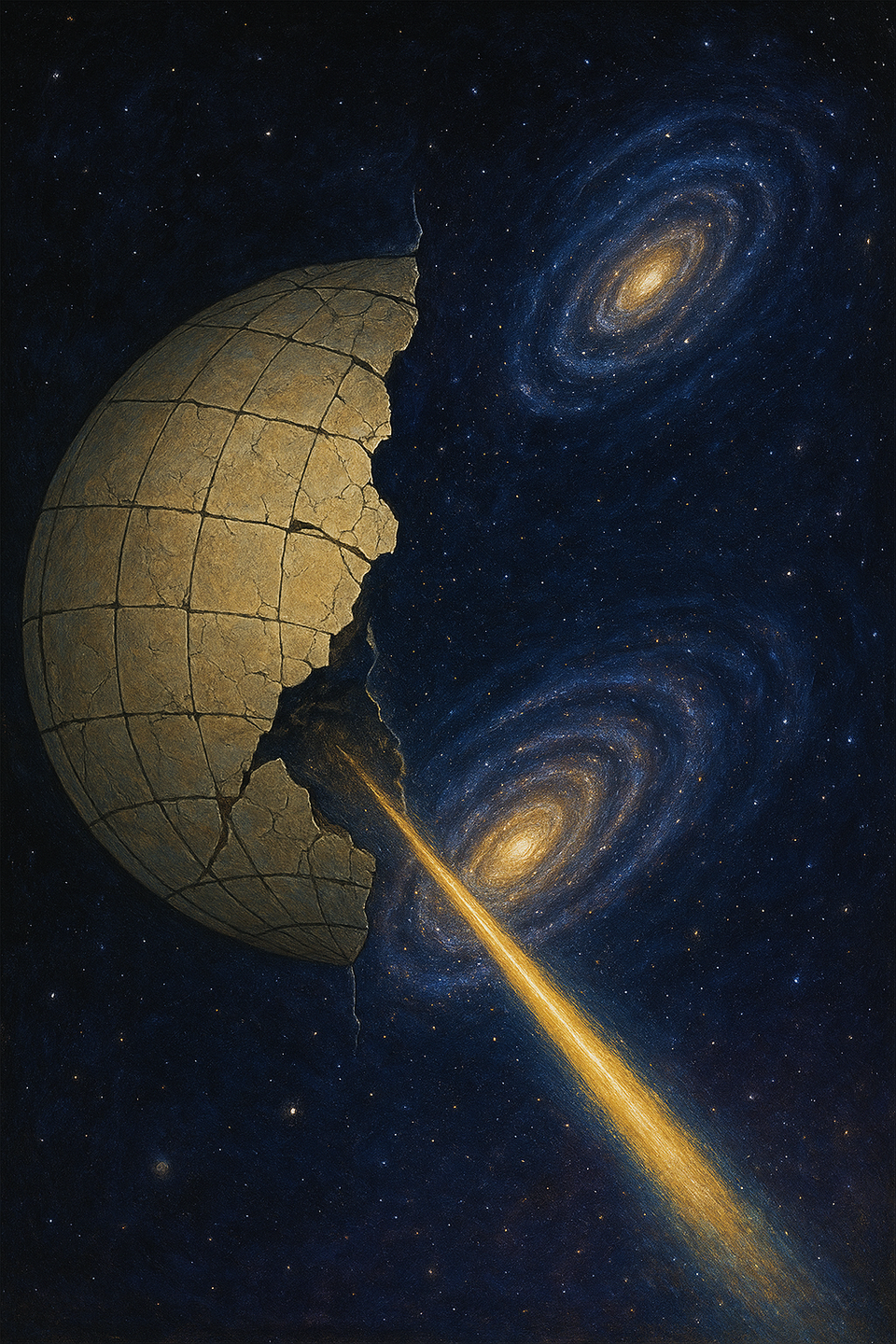
This collapse causes a massive Supernova. The outer parts of the star fall inward and then bounce off the hard core. This creates a blast so powerful that one star can look brighter than a whole Galaxy. Asimov explains how this sends Shock waves through the vacuum of space, carrying away the materials made inside the star. The imagery is grounded in fact, showing how the star ends its life with a release of energy that changes its entire neighborhood.
The story then shows that these explosions are responsible for the Chemical elements that make up our world. Things heavier than iron are made during the heat of the explosion itself. These elements travel through space and become part of new stars and worlds. Asimov points out that the very Atoms in our bodies come from these old explosions, creating a link between us and the stars. This part of the book carries a sense of poetic continuity, showing that we are part of the stars history.
After the explosion, something is left behind depending on how much mass the star had originally. It might be a Neutron star, which is a very dense object that spins fast and gives off Radiation. If the star was even bigger, it might become a Black hole, where gravity is so strong that even Light cannot get away. Asimov treats these as logical results of the laws of Physics rather than magic, stripping away the mystery to reveal the facts.
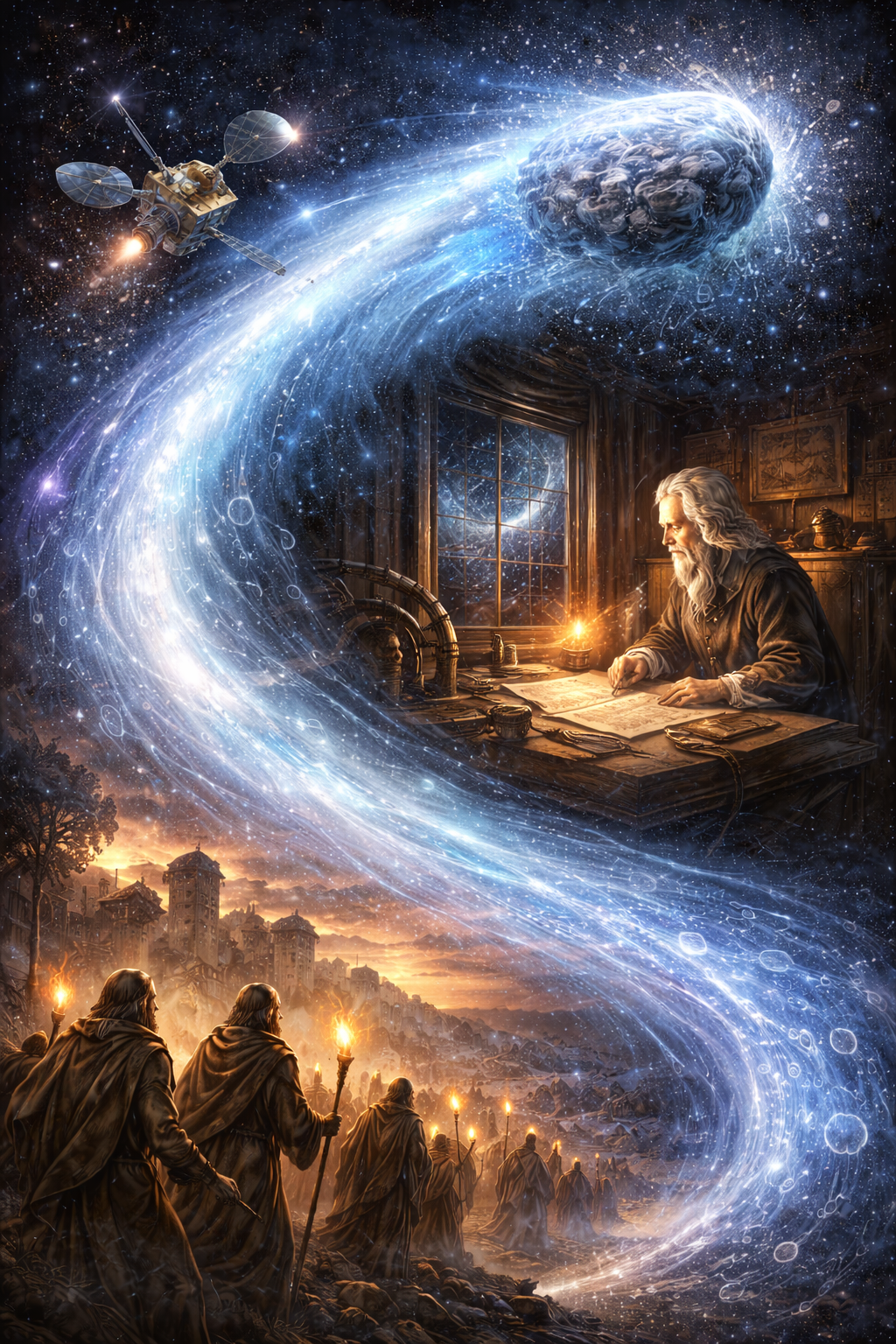
Human history enters the story as Asimov talks about how people first saw these events. Ancient people saw new stars in the sky but did not know what they were. Later, using Telescopes and Spectroscopy, scientists learned to read the light from these stars. This changed them from scary mysteries into things we can measure and understand, celebrating the power of the human mind to find answers.
The story ends by showing that supernovas are necessary for the universe to be complex and full of variety. They fill the Interstellar medium with the materials needed for planets like Earth. Without them, the universe would only be Hydrogen and Helium, and life could not exist. Destruction and creation are just two parts of the same cycle, where the death of one thing allows for the birth of something new.
In reviewing the book, it is clear that Asimov uses a step by step approach to make sure the reader follows every logical link. He uses logic to create a sense of wonder without needing to be confusing. The supernova is not just a bright light but a key to understanding how the universe works and how it changes over time. It is a story about how things move and transform, showing that the universe is dynamic rather than still.
Asimov reminds us that by learning about the stars, we learn about where we came from and what we are made of. The book is both a lesson in science and a thoughtful look at our place in the world. It stands as a clear explanation of the cosmos that reminds us that understanding the stars is a way to understand ourselves. The narrative is larger than just science; it is about the beauty of a universe that constantly renews itself through the lives of the stars.