The Twelve Crimes of Christmas
The Twelve Crimes of Christmas Edited by Asimov provides a macabre counterweight to holiday cheer through logical stories of murder and mischief during this season of benevolence.
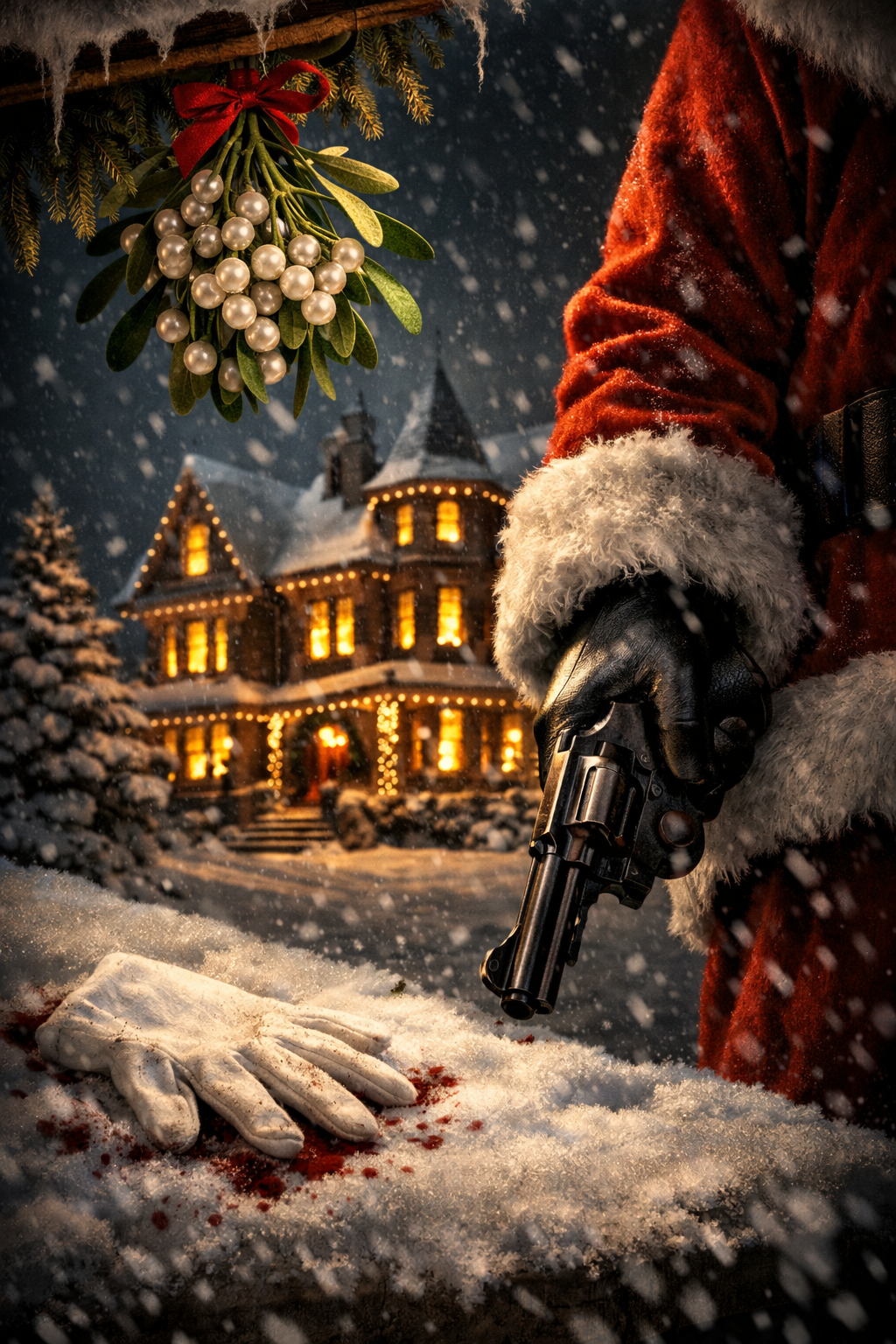
Throughout the North Temperate zone where our civilization began, the shortening days of winter once brought a profound fear to primitive man. He watched the sun sink lower each day and could never be certain it would return, leading to a vast outpouring of relief when the winter solstice finally signaled the sun climb back toward life. While we now understand this as a consequence of the axial tilt of the Earth and the laws of celestial mechanics, primitive man viewed the solar decline as the work of whimsical or angry gods. This relief manifested in the Roman Saturnalia, a festival honoring the god of agriculture where even slaves were granted temporary freedom. Eventually, the Christian church adapted this pagan joy into Christmas, but the spirit of the Saturnalia remained. Because we have come to view December as a time of universal benevolence, any despicable act committed during this month feels twice as villainous. This is the logical foundation upon which The Twelve Crimes of Christmas is built, a dozen fictional transgressions designed to provide a salutary counterweight to the seasonal saccharinity.
The collection begins with Rex Stout Christmas Party, where the logic of human relationships is tested. Archie Goodwin, looking for a raise and a holiday away from the brownstone, presents Nero Wolfe with a fake marriage license as a lesson. This personal flummery leads Archie to an interior decorator office party where a death occurs in front of several witnesses, and a mysterious Santa Claus disappears into the snowy New York afternoon. The story explores the boundaries of Archie independence and Wolfe eccentric loyalty while identifying the potassium cyanide that ended a life amidst the holiday cheers.
In Robert Somerlott Do Your Christmas Shoplifting Early, the narrative shifts to Los Angeles and the MacTavish Department Store. The store manager, Dudley P. Schlag, is a man who treats shoplifting with a watery and merciless eye, refusing to see any extenuating circumstances for the poor. Mrs. Whistler, an elderly retired actress with a genius for crime adjacent escapades, decides to teach Schlag a lesson in mercy after a domestic worker is arrested for trying to provide for her children. It is a story where the stagecraft of the past is used to dismantle a modern tyranny.
Dorothy L. Sayers provides a classic country house mystery in The Necklace of Pearls. Sir Septimus Shale, a rich man who insists on a traditional Dickensian Christmas, presents his daughter with a valuable pearl on her birthday. During a series of Victorian games like Animal, Vegetable, and Mineral, the necklace goes missing from a room with no apparent exit for a thief. Lord Peter Wimsey must apply his Sherlockian lenses to find a prize that has seemingly vanished into thin air while the guests are searched in vain.
Father Crumlish Celebrates Christmas by Alice Scanlan Reach focuses on a priest in Lake City waterfront parish. The story builds from a moment of high tension as the priest tries to talk a man named Charley Abbott down from a building ledge. Charley is a suspect in the murder of a wealthy real estate owner, and the police have found a gun in his room. Father Crumlish must use his deep knowledge of his people to find the truth behind the mystery man John Everett and a crying child that was heard through a telephone receiver.
S. S. Rafferty The Christmas Masque takes us back to 1754 in the Port of New York. Captain Jeremy Cork is invited to a grand ball at the van Schooner Haus, where he finds a household gripped by a hidden calamity. During a coronation ceremony for the Queen of the Ball, a woman is found dead with a French bayonet in her chest inside a closed sedan chair. The mystery leads through snowy yards and into the secrets of a family obsessed with purifying its bloodline.
Ellery Queen The Dauphin Doll presents a challenge from a master thief known as Comus. Comus announces his intention to steal a doll crowned with a forty nine carat blue diamond from a department store display. Despite an impenetrable enclosure of plate glass and a literal army of guards watching the doll every second, the theft occurs. The story is a masterwork of illusion and mimicry where the impossible becomes a simple logical certainty.
Nick O’Donohoe offers By the Chimney with Care, where a body is discovered hanging from a fireplace damper in a detective living room. The investigators must balance a homicide case involving an ex convict with the need to protect three visiting children. The tension leads to a barricaded house and a bomb in the basement, as the detectives realize that even an amateurish crime can be deadly.
In The Problem of the Christmas Steeple by Edward D. Hoch, Dr. Sam Hawthorne investigates a 1925 murder in a church belfry. The victim, Parson Wigger, is found stabbed with a gypsy dagger while the leader of the gypsy band is crouched nearby. The belfry is open on all sides but covered in wire mesh, making it an impossible crime. The solution involves the discovery of a bloodstained surplice and a deception practiced by those outside the town society.
Stanley Ellin Death on Christmas Eve is a grim tale set in the decaying Boerum house. A lawyer visits two siblings who have lived in mutual hatred for twenty years following the death of a wife who fell down the stairs. The house is a murky tomb where the lights are kept off and the shades are drawn, leading to a final confrontation where forgiveness is as sharp as a weapon.
August Derleth introduces Solar Pons in The Adventure of the Unique Dickensians. Pons is visited by a man in a hansom cab who claims to be plagued by a street singer. The case involves two eccentric Dickens collectors and a forged manuscript of Master Humphrey Clock. The story uses the logical inconsistencies of a watermark to resolve a conflict between two men who have lived their lives in the wrong century.
John Dickson Carr provides Blind Man Hood, a ghost story centering on a house called Clearlawns. Two guests arrive to find the house empty except for a girl in a brown dress who tells them a story of a murder from the 1870s. The mystery involves a woman who was killed in a locked house with no footprints in the snow. The story leads to a quarter past seven on Christmas Eve, when the boundary between the past and the present grows thin.
Finally, Isaac Asimov The Thirteenth Day of Christmas features a young boy named Larry who uses his knowledge of history to assist his detective father. A bomb threat against Soviet offices is scheduled for Christmas Day, but when nothing happens, Larry realizes that the perpetrator might be using the Julian calendar. This calendar, used by the Russian Orthodox Church, places Christmas thirteen days behind the Gregorian calendar, providing the crucial time frame needed to prevent a disaster.
Reviewing this collection reveals a logical consistency: crimes committed during the holiday season are rarely about simple greed. They are often about family tensions, the weight of history, and the contrast between public joy and private despair. Each master of mystery represented here uses the trappings of Christmas as the stage for puzzles that require a clear and analytical mind to solve. Whether it is the impossible vanishments of Ellery Queen or the fingerprint analysis in modern detection, these stories show that the Saturnalia remains a time where anything can happen. Thus, it is best to stretch out beside the tree and read, keeping one eye on the page and the other on the chimney.