Young Extraterrestrials
Alien youth serve as mirrors for humanity, progressing from biological curiosity to philosophical humility, showing that curiosity and learning are truly the universal galactic constants.
The collection of records known as Young Extraterrestrials functions as a logical path into the human study of minds that develop under different stars. It is not a book about monsters but a study of how life might learn and adapt in ways that are foreign to us. Each part of the book adds a new layer of understanding, moving from basic biological observations to complex ethical questions. The work follows a clear progression where each step is a deduction based on a new premise, reflecting a style that values clarity and reason above all else.
The first account begins at a scientific outpost on a world once thought to be dead. The researchers find young organisms that do not use sound or movement to speak but instead rely on changing patterns of color and heat. These scientists soon discover that what looked like simple biology is actually a complex grammar. This story suggests that intelligence in the young is defined by the speed at which they can absorb the world around them. It challenges the human idea of school by showing that these creatures learn more by being part of their environment than by being told what to think.
The second record describes a human family on a trading colony that takes in a small alien juvenile. The creature acts like a pet and learns to mimic human speech and social habits with great accuracy. However, the story reveals that this imitation is actually a form of deep analysis. The alien child is not playing but is instead documenting the many ways humans say one thing while meaning another. This leads to a realization that maturity is not about finding perfect answers but about accepting the messy nature of truth.
The third account takes place on a low gravity world where young aliens build massive structures out of living crystals. Human observers think it is just a game until the structures start to change the ecosystem. The young are not being careless; they are being allowed to make mistakes so they can learn the weight of responsibility. This story argues that wisdom only comes when someone is allowed to face the consequences of their actions, a concept that humans often try to avoid for their own children.
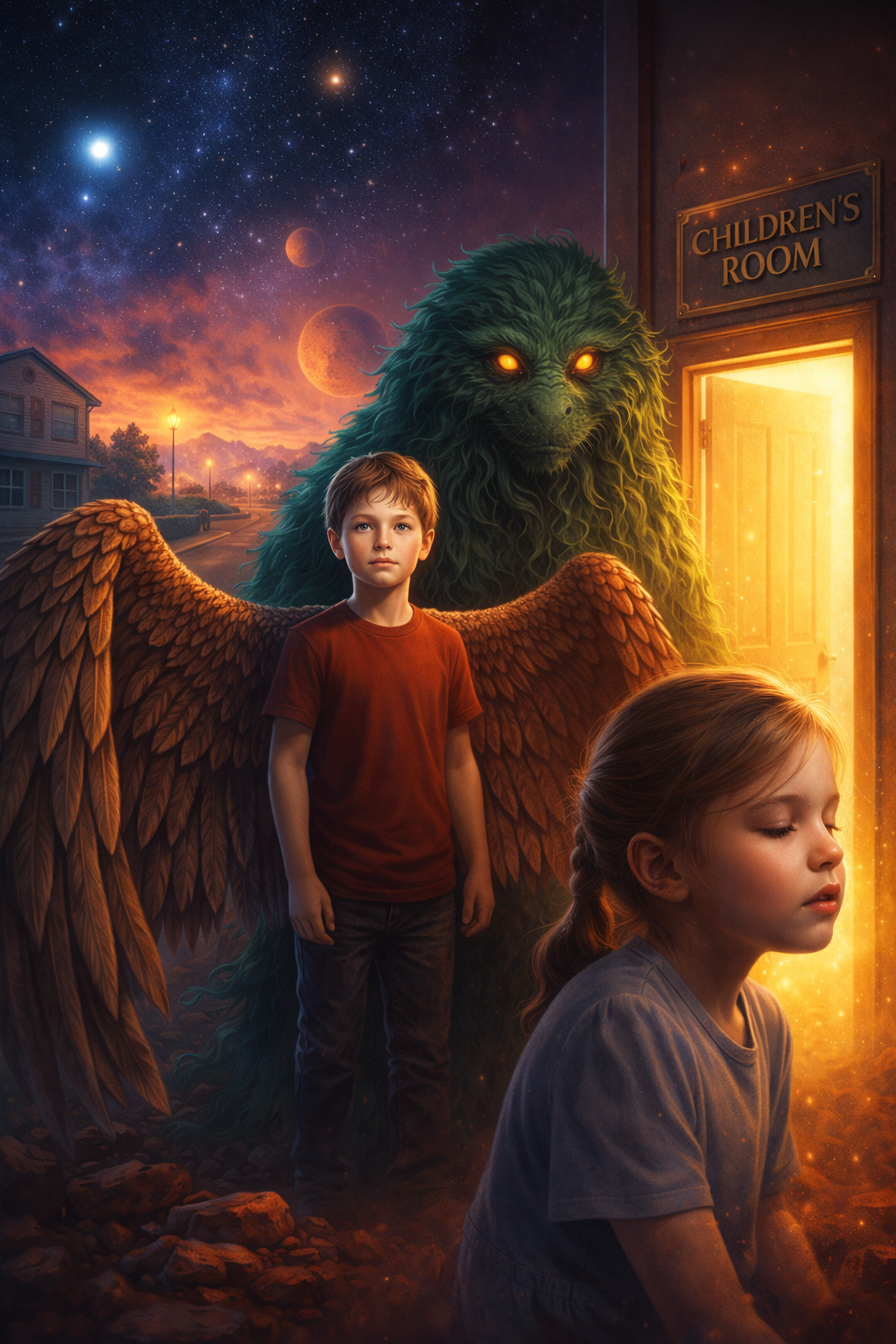
A more emotional record follows a telepathic alien child who is trapped on Earth. The child is overwhelmed by the constant noise of human consciousness, including all the hidden fears and anxieties people carry. The story explores how this mental chaos could be seen as a weakness by a logical alien mind. However, the alien eventually finds that human disorder is also the source of creativity. It concludes that a high level of intelligence may actually require a complex emotional life.
Another part of the collection focuses on alien young who seem to have no individual identity. They work together in a way that makes them look like a hive. Through careful study, the researchers find that individuality does exist but it is expressed through harmony rather than through fighting with others. This uses logic to break down the human belief that a person must be separate from the group to be an individual. It shows that a person can be even stronger when they work in total concert with their peers.
The records then move to a world of water where speculative biology is used to show growth that is not a straight line. These aliens can move between different stages of life, becoming young again when they need to. This challenges the human focus on chronological age. It suggests that learning is a cycle that should repeat and that being curious is something that should never be finished.
One report details a conflict where humans think alien young are trying to destroy their technology. The humans become very afraid until they realize the aliens were actually trying to save them. The extraterrestrials thought the humans were trapped inside the machines and were trying to let them out. This story shows how adult paranoia can make a kind act look like an attack. It serves as a reminder to look at the intentions behind an action rather than just the result.
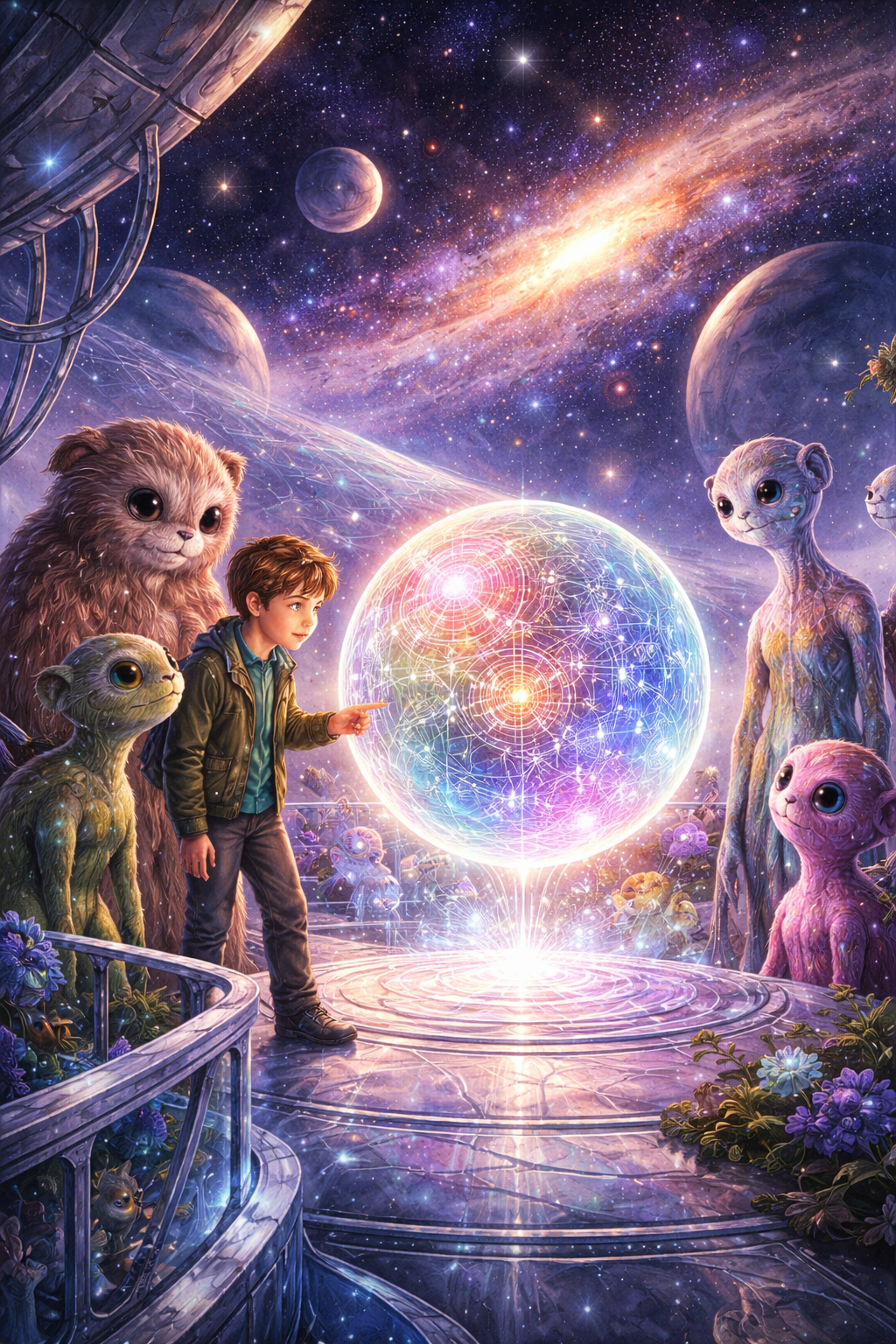
The collection expands to a massive school in space where many different species meet. These beings experience time and physical reality in very different ways. The young are able to succeed in talking to each other because they care more about learning than about being right. They work together to build a language out of mathematics and art. This represents the start of a true universal way for all life to understand one another.
The final story reveals that all these records are being read by a historian in the far future. The big surprise is that humanity was once considered one of these young species by older civilizations. Our own hope and imagination were studied as a strange and wonderful thing. This brings the entire book to a logical close by showing that every civilization is young when you look at the scale of the universe.
As a review, Young Extraterrestrials is an excellent example of how stories can be used to build a logical argument. It does not rely on flashy battles or simple thrills but instead focuses on the joy of understanding something new. The book maintains a sense of optimism about the future of the galaxy. It argues that the ability to grow is more important than any technology we might build. The final lesson is that we are all still learning how to exist among the stars and that our curiosity is our greatest asset.