Young Monsters
This anthology explores how monsters serve as mirrors, revealing that human fear often stems from limited perception and a failure to understand the unknown change.
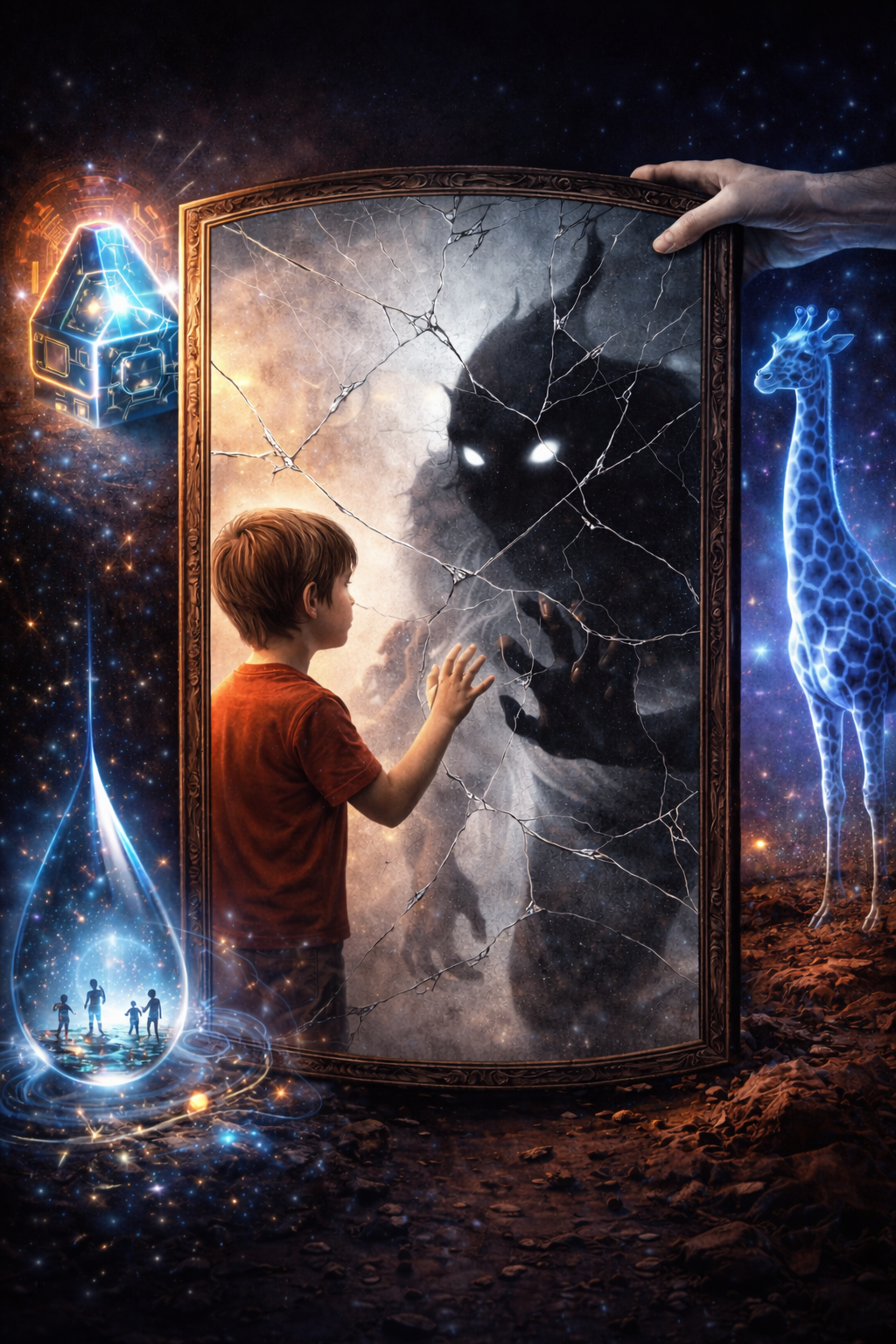
A scholar of the future might look back at the anthology titled Young Monsters and see it not merely as a collection of fiction, but as a structured experiment in human psychology. Edited by Isaac Asimov, the book reflects a rationalist approach to the concept of the monster, treating it as a variable to be tested against the constants of human perception and logic. In the tradition of Asimov’s own fiction, where robots and galactic empires are governed by clear laws and puzzles, these stories investigate the boundaries between the known and the unknown. The book is built upon the premise that fear is rarely about the creature itself; instead, fear is a result of a failure to understand. As the reader moves through the volume, the focus shifts from the external form of the monster to the internal workings of the human mind, leading ultimately to a quiet realization about the nature of change.
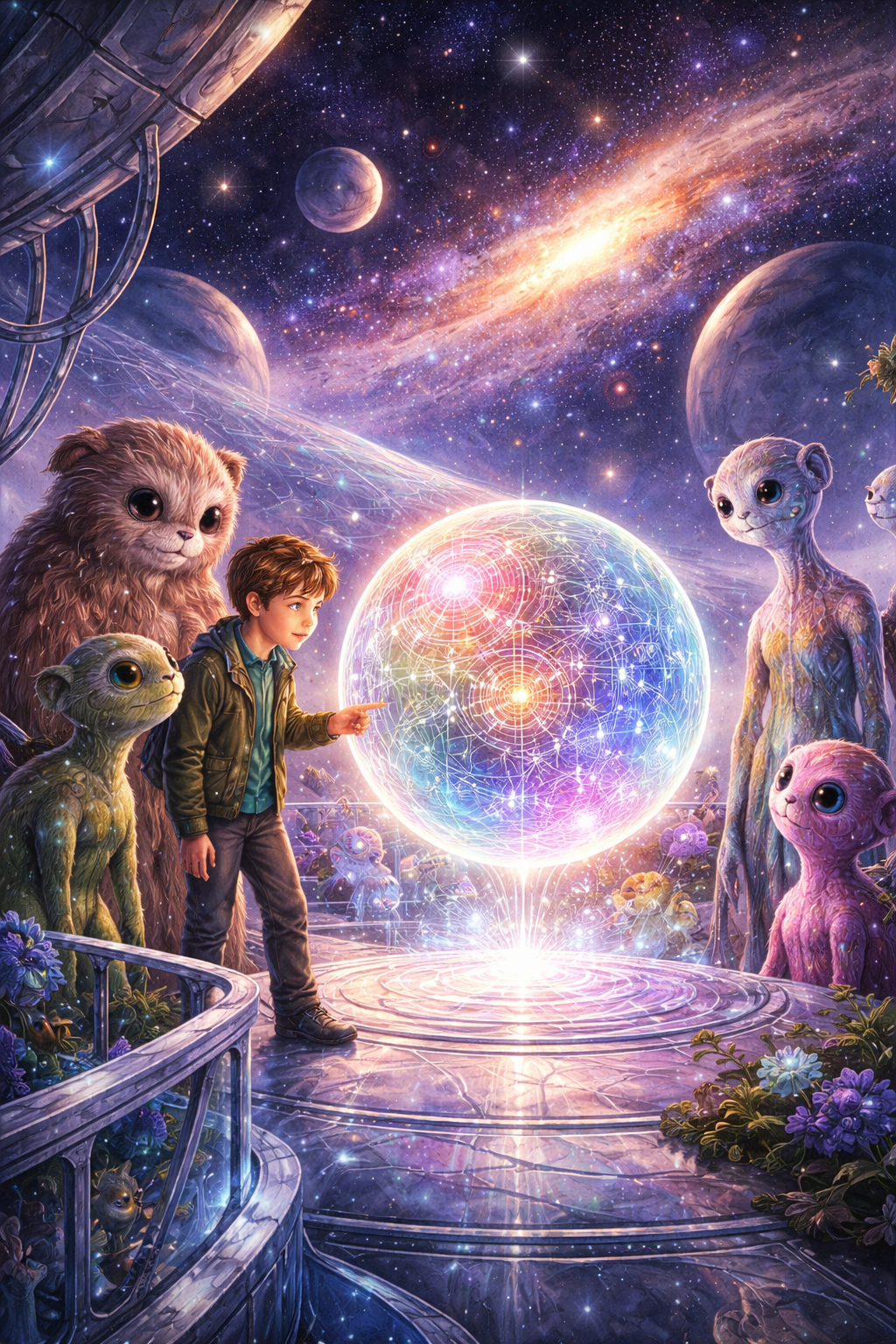
The collection begins with the story Youth by Isaac Asimov, which serves as the intellectual foundation for the entire project. In this narrative, two young alien beings find a strange, small creature they consider to be a monster. They treat the capture and study of this being with innocent curiosity and excitement. The story is constructed to show that monstrosity is a matter of relativity in perception. By examining how these young beings perceive the creature, Asimov demonstrates that what one observer calls a monster, another might call a fellow living soul. The story leads the reader to question their own biases, showing that the monster is often simply a mirror of the observer s own limited perspective.
The inquiry into growth and change continues in Junior by Robert Abernathy, where the stage is set within a domestic human environment. A couple brings home a child that does not follow the typical biological rules of human development. The creature grows at a rate that is both alarming and uncontrollable, exhibiting behaviors that the parents cannot categorize. The story builds from a place of curiosity and leads toward an atmosphere of dread. However, the logic of the narrative suggests that the true horror is not found in the biological acceleration of the child, but in the parents psychological inability to accept a being that is fundamentally different from themselves. It is a study of how rapid advancement can disrupt the stability of the home.
In Mimsy Were the Borogoves by Lewis Padgett, the concept of the monster is applied to the evolution of the mind. When children are exposed to advanced toys from a future era, their cognition begins to shift into a mode that adults can no longer comprehend. To the parents, the children s behavior appears alien and even threatening. The story suggests that as humanity moves toward its next stage of development, the change may look like monstrosity to those who are being left behind. The drama is found in the implications of this mental evolution, where the true monster is the incomprehensibility of a superior intelligence.
The emotional weight of the anthology deepens with Born of Man and Woman by Richard Matheson. Told through the eyes of a creature hidden away by its parents, the story uses simple, fragmented language to evoke a sense of deep isolation. While the protagonist may have a physical form that is monstrous by human standards, its internal emotions are profoundly human. The narrative logic reverses the typical moral lens of horror. Instead of fearing the creature, the reader is led to find horror in the cruelty and rejection of the parents. It is a psychological exploration of how humanity can become monstrous through its own lack of compassion.
A different kind of tension is explored in The Small Assassin by Ray Bradbury, where fear arises from ambiguity. A mother suspects that her newborn child is consciously malevolent, manipulating its environment to cause harm. Other characters in the story dismiss her concerns as mere paranoia, creating a logical conflict between rational explanation and primal instinct. The story does not provide a simple answer, instead leaving the reader to wonder if the monster exists in reality or if it has been constructed by the mother s own fear. This piece highlights how easily the boundaries between imagination and reality can be blurred.
The fragile nature of identity is the central theme of The Shape by Philip K. Dick. An alien being, stranded among humans, attempts to survive by taking on a human form. Because the transformation is imperfect, the creature s presence leads to suspicion and tragedy. The story explores the idea that humanity often resists anything it cannot easily categorize or label. It reinforces the Asimovian theme that understanding requires a conscious effort, and that without that effort, the unfamiliar will always be treated as a threat.
In Surface Tension by James Blish, the scale of the world itself becomes the source of the monstrous. The story follows a tiny civilization of microscopic humans living in a drop of water. To these beings, the limits of their environment represent the limits of the universe. When they attempt to move beyond their small world, the vastness of the surrounding environment becomes a terrifying and incomprehensible force. The monster in this narrative is the unknown dimension that exists beyond a species current level of perception. It is an existential reflection on what happens when a civilization crosses its established boundaries.
The tone shifts toward satire in The Silly Season by C. M. Kornbluth, where aliens arrive on Earth and behave in ways that are completely nonsensical to human logic. By acting in absurd and ridiculous ways, the visitors disrupt human expectations and expose the rigidity of our societal rules. This story suggests that the monstrous may simply be a set of different rules being applied to reality. It uses humor to dismantle the assumption that all intelligent life must follow the same logical patterns as humanity.
Domestic horror returns in The Father Thing by Philip K. Dick, which examines the terror of not being believed. A child becomes convinced that an alien duplicate has replaced his father. Because the adults in his life refuse to take his claim seriously, the child is left isolated in a world where his own father has become a stranger. The story explores the vulnerability of human perception and the fear that those closest to us might not be who they seem. It is a study of how identity can be stolen and how truth can be dismissed as a product of a child s imagination.
The anthology concludes with The Blue Giraffe by L. Sprague de Camp, a story that approaches the theme of normalcy with a sense of whimsy. The presence of an unusual creature disrupts a community, but not through any act of malice. Its very existence challenges the definitions of what is considered normal. The story leads toward a gentle resolution, suggesting that the simplest solution to the fear of the unknown is acceptance. This final piece reinforces the idea that once we stop trying to categorize or control the unfamiliar, we can coexist with it.
Viewed as a whole, Young Monsters is a series of thought experiments that use the concept of the monster to examine human limitations. Following the editorial vision of Asimov, the stories prioritize clarity of ideas and intellectual inquiry. The book moves from external, physical monsters to internal, psychological ones, mirroring a journey toward self knowledge. The unknown is not presented as something that is inherently hostile, but rather as something that has not yet been explored or understood. By the end of the collection, the monsters serve as mirrors, reflecting the complexities of human emotion, the limits of human thought, and the possibility of transformation through understanding.