How to Enjoy Writing A Book of Aid and Comfort
Isaac Asimov encourages writers to find joy through discipline, clear communication, and persistence, transforming the intimidating blank page into a rewarding, lifelong journey of discover.
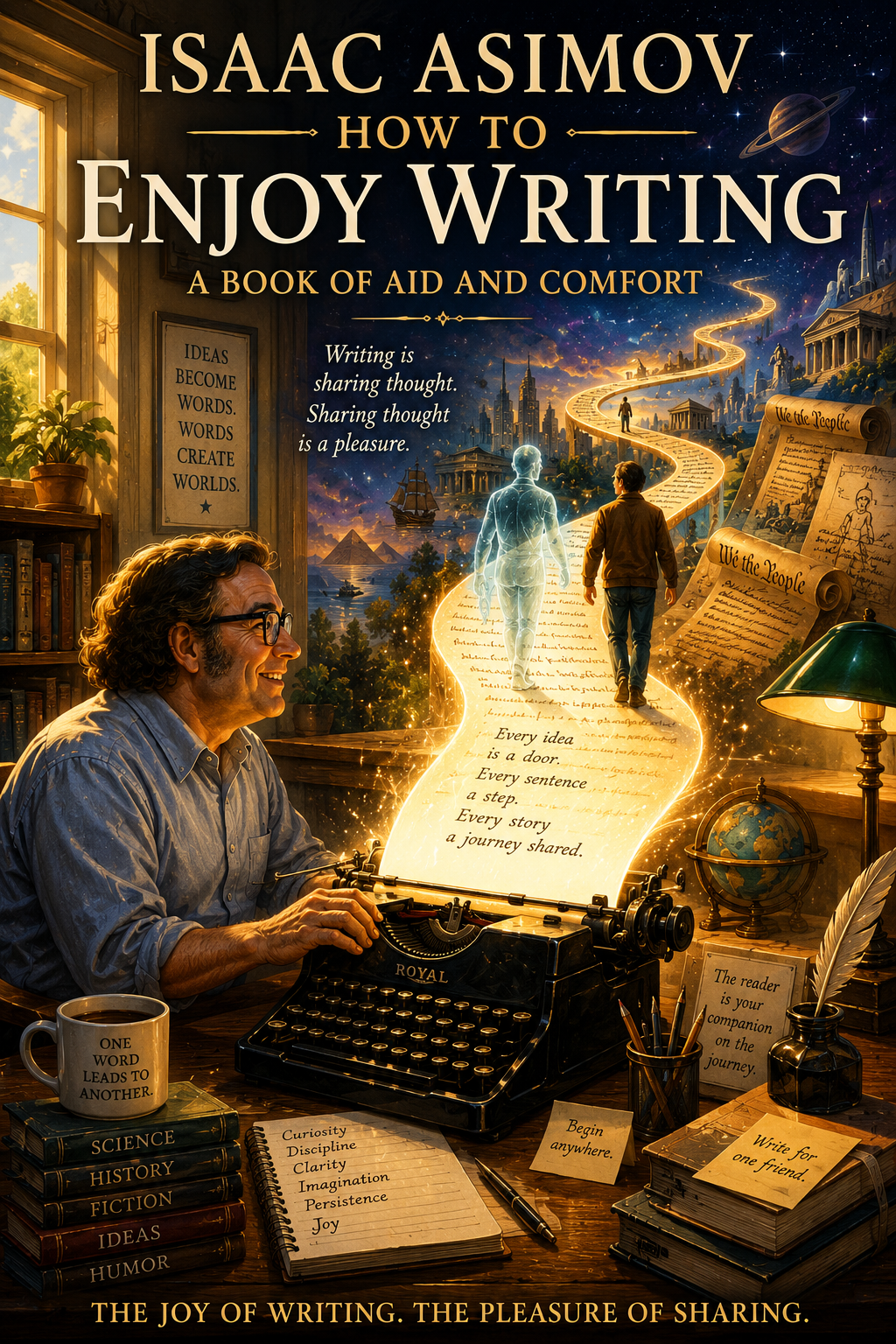
How to Enjoy Writing: A Book of Aid and Comfort is one of Isaac Asimov's most personal and encouraging works. Rather than presenting writing as a mysterious talent reserved for a gifted few, Asimov approaches it as an enjoyable craft that grows through curiosity, discipline, and persistence. His voice is conversational, humorous, and reassuring, as though an experienced author is sitting across the table sharing decades of hard earned wisdom over a friendly conversation. The book is not a strict manual filled with rigid rules but a journey through the habits, frustrations, discoveries, and pleasures that transform writing from labor into delight.
The story begins with Why Write? Asimov opens by challenging the common belief that writing must be painful. He argues that genuine writing begins with enthusiasm. Every writer has experienced the excitement of explaining an idea, telling a story, or sharing knowledge with another person. The purpose of writing is not merely publication or fame but communication. A writer who enjoys the process naturally invites readers to enjoy the result. Throughout the chapter, Asimov presents himself not as an unreachable master but as someone who simply never lost the joy of putting one word after another.
The journey continues with The Fear of the Blank Page. Every new writer faces the intimidating emptiness of untouched paper. Asimov describes this fear as perfectly natural but entirely conquerable. The blank page does not judge or criticize; it simply waits. The secret is to begin anywhere. Once a single sentence exists, the impossible becomes possible. Progress creates momentum, and momentum gradually replaces hesitation. He emphasizes that perfection is the enemy of productivity, encouraging writers to move forward instead of endlessly polishing unwritten ideas.
The next lesson appears in Finding Your Own Voice. Many beginners imitate favorite authors, and Asimov admits that this is part of learning. Over time, however, imitation gives way to individuality. A writer's unique experiences, interests, humor, and way of thinking naturally shape the work. Rather than forcing originality, writers should trust their own curiosity. Authenticity emerges not from trying to sound different but from honestly expressing one's thoughts.
The narrative then enters Writing What You Know and What You Love. Asimov explains that expertise grows from fascination. He himself wrote about science because he loved science, history because he loved history, and fiction because he loved imagination. Passion generates energy that readers can feel. Even unfamiliar subjects become accessible through research, provided genuine curiosity drives the effort. Every new project becomes an opportunity to learn, making writing itself an education.
The story moves into The Discipline of Habit. Here Asimov quietly reveals the secret behind his astonishing productivity. Inspiration is welcome, but routine is dependable. A writer who waits for perfect inspiration may produce little, while a writer who sits down every day inevitably creates something worthwhile. He compares writing to exercise: regular practice strengthens muscles that occasional effort cannot develop. The pleasure comes not from sudden bursts of genius but from steady progress.
One of the book's warmest chapters is The Joy of Simplicity. Many writers believe intelligence requires complicated language. Asimov disagrees completely. Clear writing reflects clear thinking. Short sentences, familiar words, and logical structure allow ideas to shine without distraction. The greatest compliment a writer can receive is that readers forgot they were reading because the ideas flowed so naturally. Complexity should arise from thought, not from vocabulary.
The journey continues through The Reader as Companion. Instead of imagining an anonymous audience, Asimov suggests writing for one intelligent, curious friend. The tone immediately becomes conversational rather than formal. Questions anticipate curiosity, explanations become more natural, and the entire piece acquires warmth. The reader is no longer an examiner but a fellow traveler sharing a fascinating discussion.
The chapter When Writing Refuses to Cooperate addresses frustration. Every writer eventually reaches moments when words refuse to appear. Asimov advises movement rather than despair. Switch projects, read something inspiring, conduct research, or simply continue writing imperfectly. Creative paralysis often disappears once the mind stops demanding perfection. The obstacle is usually emotional rather than intellectual.
The story then explores Revision Without Fear. First drafts exist to discover ideas; revisions exist to improve them. Asimov rejects endless rewriting motivated by insecurity but embraces thoughtful editing motivated by clarity. Removing unnecessary words, strengthening transitions, and sharpening arguments reveal the true shape hidden inside the original draft. Revision becomes sculpture rather than punishment.
In Writing Different Worlds, Asimov reflects on moving effortlessly between fiction, science, history, humor, and essays. He argues that the same fundamental principles govern every form: clarity, enthusiasm, organization, and respect for the reader. Genre changes scenery, but communication remains constant. A science article and a fantasy story both succeed when readers forget the effort behind their creation and simply enjoy the journey.
The book becomes particularly personal in The Professional Writer. Asimov describes deadlines not as enemies but as loyal companions that prevent endless hesitation. A completed manuscript has infinitely greater value than a perfect manuscript existing only in imagination. Professionalism means producing work consistently while maintaining quality through practice rather than anxiety.
The final chapters become increasingly philosophical in Writing as Discovery. Each sentence teaches the writer something previously unknown. A story develops unexpected characters; an essay uncovers hidden connections; an explanation clarifies ideas even for its author. Writing transforms from communication into exploration. The writer begins believing he is leading the reader, only to discover both are traveling together toward understanding.
The book concludes with The Pleasure of Continuing. There is no final mastery, no perfect style, and no moment when learning ends. Every article, story, and book becomes preparation for the next one. This endless process is not discouraging but liberating. Because improvement never ends, every page offers another opportunity to become a better writer.
Seen as a whole, How to Enjoy Writing: A Book of Aid and Comfort unfolds like a gentle conversation with a lifelong mentor. There are no dramatic plot twists or fictional adventures, yet the reader experiences a transformation. The frightened beginner gradually becomes an enthusiastic craftsman who understands that writing is less about talent than about curiosity, discipline, and delight.
As a review, the book succeeds precisely because it refuses to intimidate. Isaac Asimov never portrays writing as a mystical gift possessed by extraordinary people. Instead, he presents it as one of humanity's greatest pleasures: the simple act of taking ideas that exist only in one mind and allowing them to live in another. His practical advice is timeless, his humor disarms anxiety, and his optimism encourages persistence. The lasting message is both comforting and inspiring: the best way to become a writer is not to suffer through writing but to learn to enjoy it, for joy creates clarity, clarity creates confidence, and confidence allows imagination to flourish without fear.