Intergalactic Empires
This collection chronicles human ambition scaling from mythic dreams to tragic decline, exploring how order struggles against cosmic scale and inevitable mathematical and historical collapse.
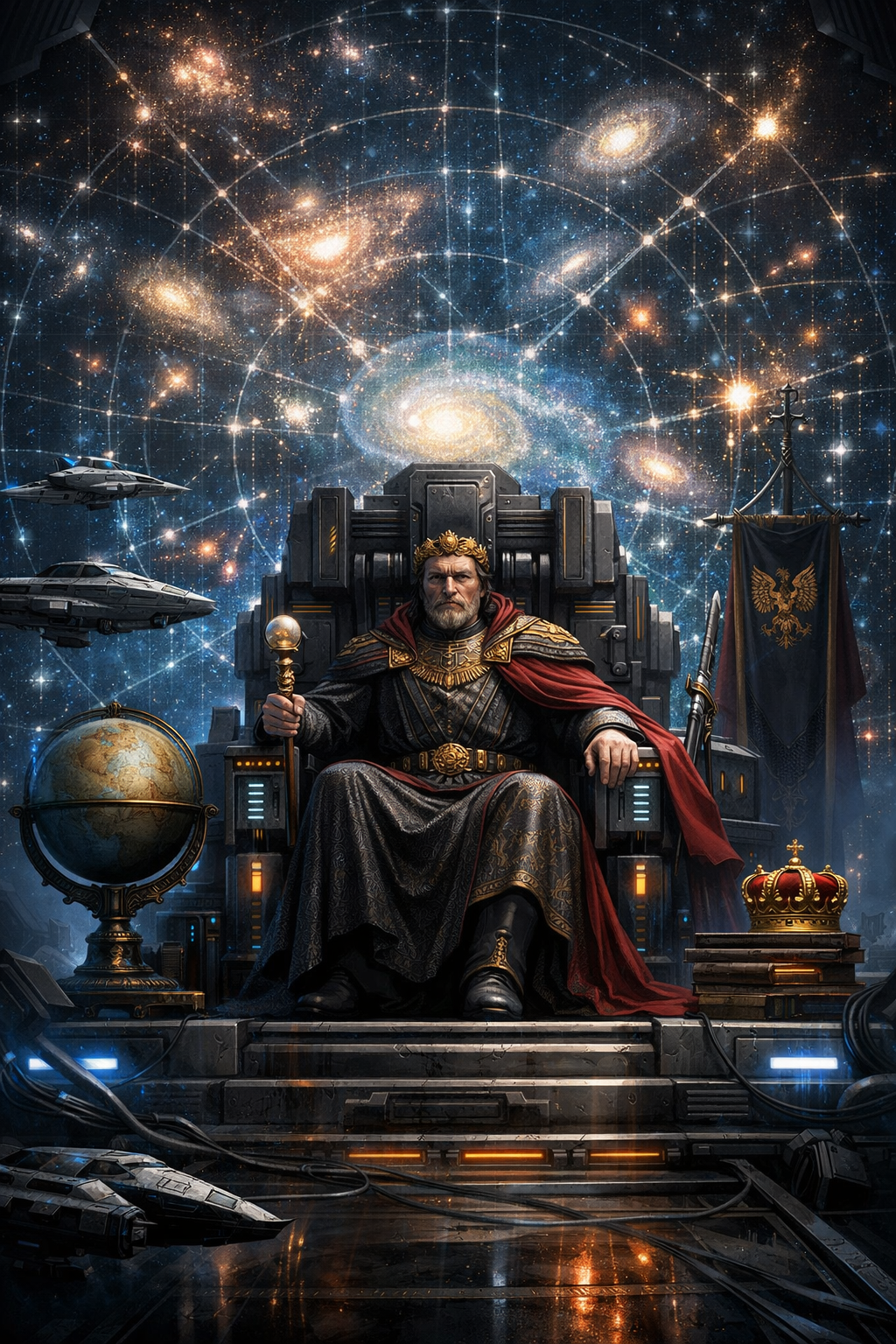
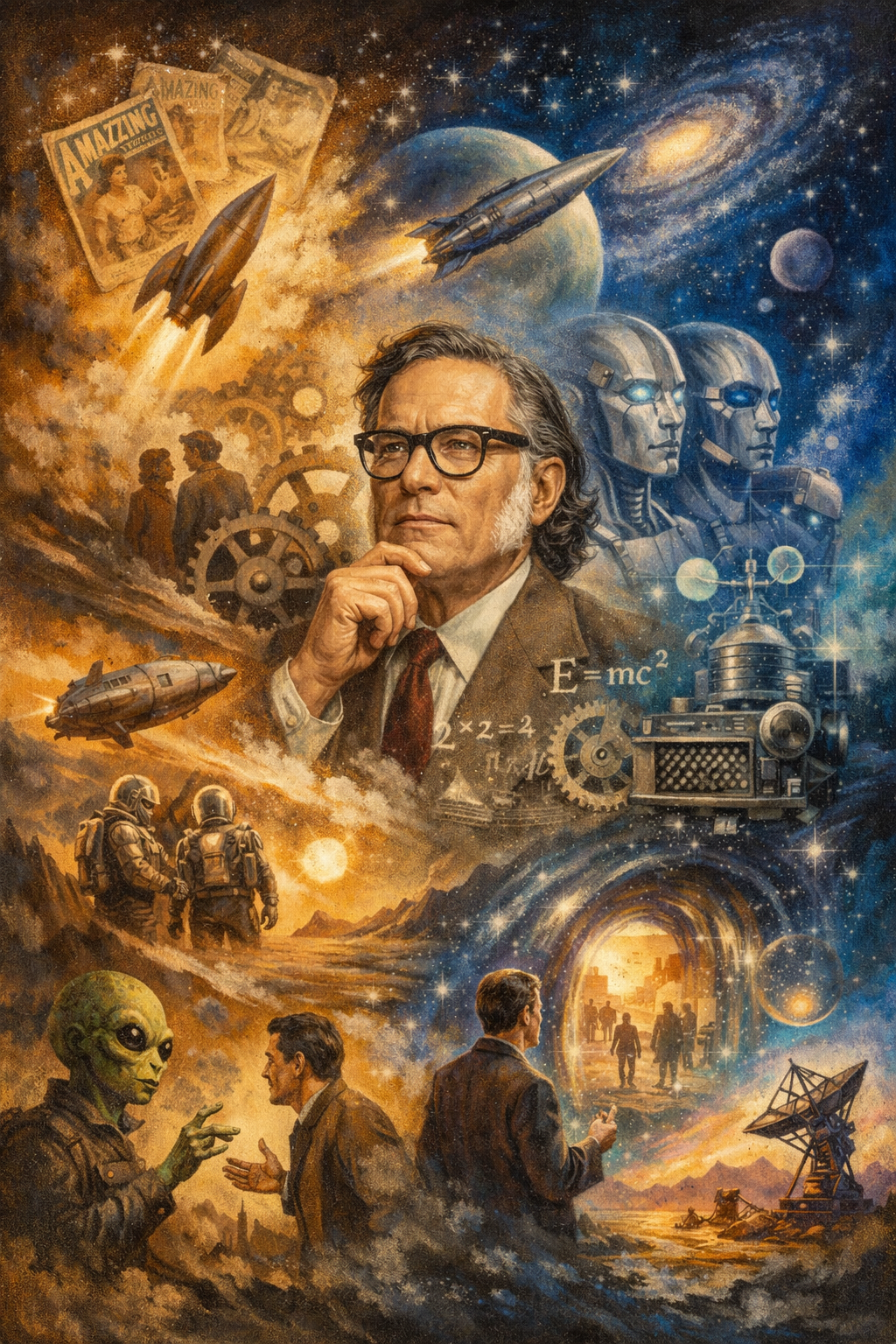
To understand the collection known as Intergalactic Empires, one must think of it as a record of human ambition stretched to the point of infinity. Isaac Asimov does not simply collect stories about distant stars; he creates a chronicle of how humans attempt to organize and dominate the void. This book is an expression of confidence and the belief that the future is something that can be planned. Asimov anchors these grand dreams in the solid ground of history, comparing the needs of a galactic ruler to those of the leaders of Rome or the British Empire. He argues that an empire is not just a collection of conquered lands, but a system built on the ability to move information faster than chaos can spread. Whether on a continent or across light years, the problems remain the same: distance, loyalty, and the dangerous delay between a command and its result.
The first part of the book takes us back to the youth of science fiction. In these early years, writers treated the galaxy as a large stage for drama rather than a real place governed by physics. These empires are massive and span thousands of worlds, yet they function with the ease of a medieval romance. There is little worry about logistics or the laws of relativity. While these stories may seem simple, Asimov views them as necessary myths. They provided the imaginative structure that allowed later writers to build more disciplined ideas. They represent a time of pure confidence when humanity felt it could be at home anywhere in the universe.
As the stories progress, they begin to grow up and accept the limits of reality. The idea of travel that is faster than light is no longer taken for granted; it starts to have rules and difficult consequences. The delay in communication becomes a major plot point that creates political instability. Empires are no longer solid blocks of power but are instead seen as fragile living systems. They are vulnerable to the whims of regional leaders and the way different cultures begin to drift apart over time. This stage of the book moves away from simple threats and focuses on internal problems, showing a deeper grasp of sociology and science.
Eventually, the collection reaches a point of crisis where the sheer size of an empire becomes its greatest weakness. In these stories, the reason for collapse is not found in a villain but in mathematics. When a domain is too large, central authority becomes impossible because laws arrive too late to matter and fleets move too slowly to help. Loyalty disappears in the long silences between messages. This reflects Asimov's own interest in how civilizations decline, a theme he used in his other famous works. These stories suggest that empires fall because they become too complex to control.
Other parts of the collection look at what it feels like to rule the stars. The leaders in these stories are often very alone, separated from the billions of people they rule by layers of technology and ritual. When power is spread so thin, it loses the human touch, and wisdom begins to fade. Some rulers try to stay in control by being harsh, but this only makes the collapse happen faster. Other leaders are wise enough to see the end coming and try to let go of power gracefully. These stories show that governing a galaxy is a moral test rather than just a military one.
In the final era of the anthology, the tone becomes very serious and analytical. Science is no longer a magic tool that solves everything; it is a wall that limits what can be done. Writers start to look at the massive amount of energy required for such a civilization and the way population dynamics shift over time. The galactic empire becomes less of a romantic dream and more of a believable challenge. These stories ask the hard question of whether spreading out into space is true progress or just a way to repeat the same mistakes we made on Earth.
Asimov acts as a guide throughout the book, treating each story as a step in how we think about the future. He shows how we moved from asking if a galactic empire would be magnificent to asking if it would be inevitable, and finally to asking if it would be tragic. He also points out the difference between an empire of stars and an empire of galaxies. An intergalactic empire is so large that it moves into the realm of metaphysics. It makes us wonder if such a thing could even be human or if it would require machines or gods to run it. In the end, the book shows that intelligence always seeks order, but order always struggles against the fact that nothing lasts forever. Asimov teaches us that to imagine ruling the stars is to learn about our own limits.
Summaries of the Anthology Phases
Phase One: The Mythic Empire
The first stories in the book represent the beginning of the genre. These tales are filled with grand confidence and focus on the excitement of ruling thousands of worlds. They treat the galaxy as a theater where heroes and emperors decide the fate of many people through simple action and decisive battles. These stories do not worry about the rules of science but instead serve as the necessary myths that allow us to dream of a unified universe.
Phase Two: The Fragile Organism
As the collection moves forward, the stories become more realistic. The focus shifts to how an empire actually stays together. These tales introduce the problems of travel and the fact that messages take time to travel across space. In this section, empires are seen as living things that can grow sick or fall apart because of internal disagreements and the distance between the ruler and the people.
Phase Three: The Imperial Crisis
This phase of the book focuses on the moment when an empire gets too big to function. The stories show that when a system is too large, it is impossible to keep control. Laws and help arrive too late to be useful. These narratives explain that collapse is a matter of logic and scale. The sheer complexity of ruling so many worlds leads to an inevitable decline where the system simply stops working.
Phase Four: The Isolated Ruler
These stories look at the psychological experience of being an emperor. They describe how power can make a person feel isolated and detached from reality. Rulers in these stories must deal with the moral weight of their decisions. Some choose to be cruel to keep order, while others realize that the only way to save their people is to step down and let the empire change into something else.
Phase Five: Analytical Realism
The final stories in the book are the most grounded in science. They look at the actual costs of maintaining a civilization across the stars. These tales examine the limits of energy and how populations grow and change. They challenge the idea that expansion is always good and ask if we are just repeating the same historical patterns. These stories offer a final and sobering look at the reality of our cosmic ambitions.