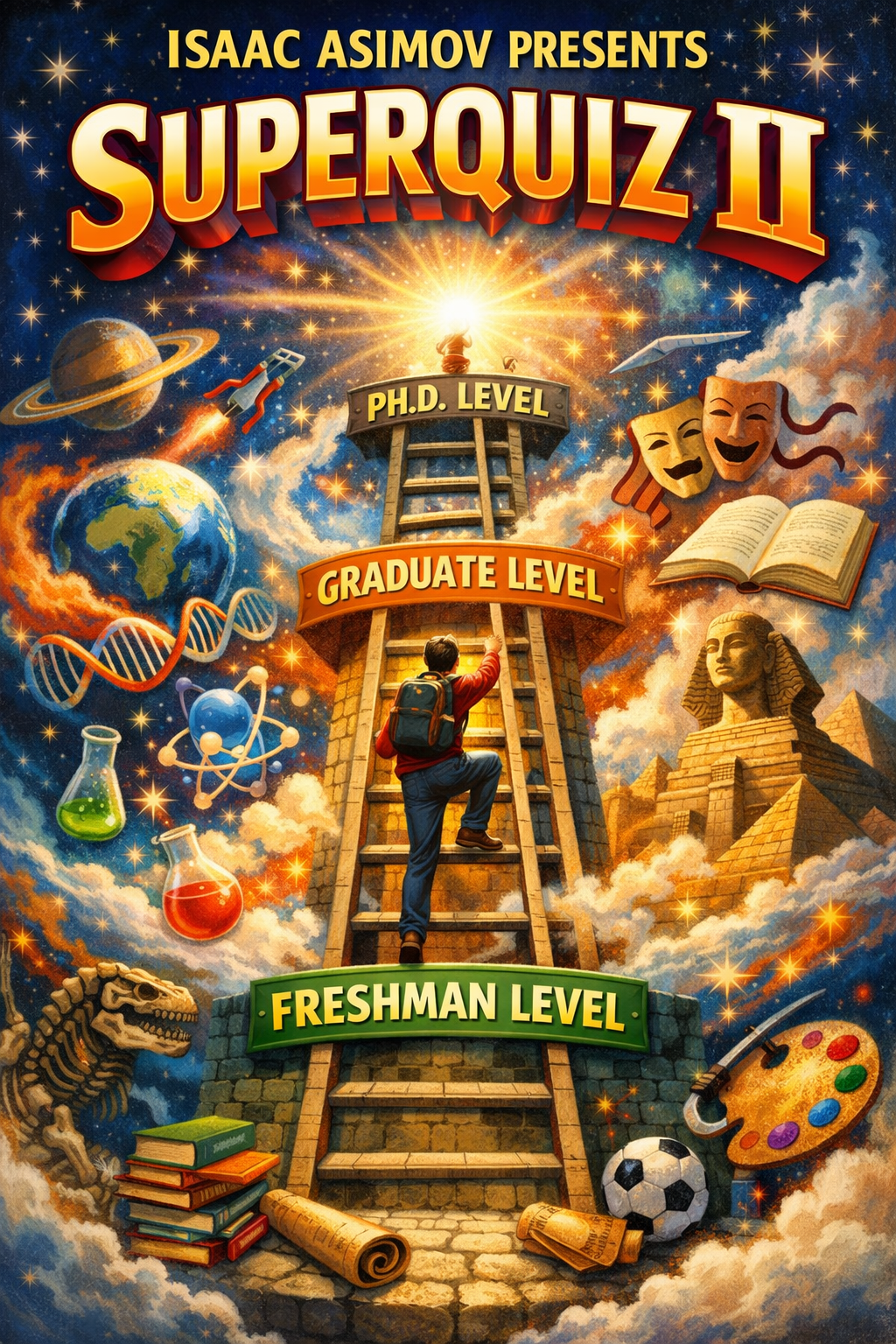
Isaac Asimov Presents Superquiz IV
Isaac Asimov Presents Superquiz IV turns general knowledge into an intellectual journey, testing memory across three escalating levels to ignite curiosity and celebrate human culture.
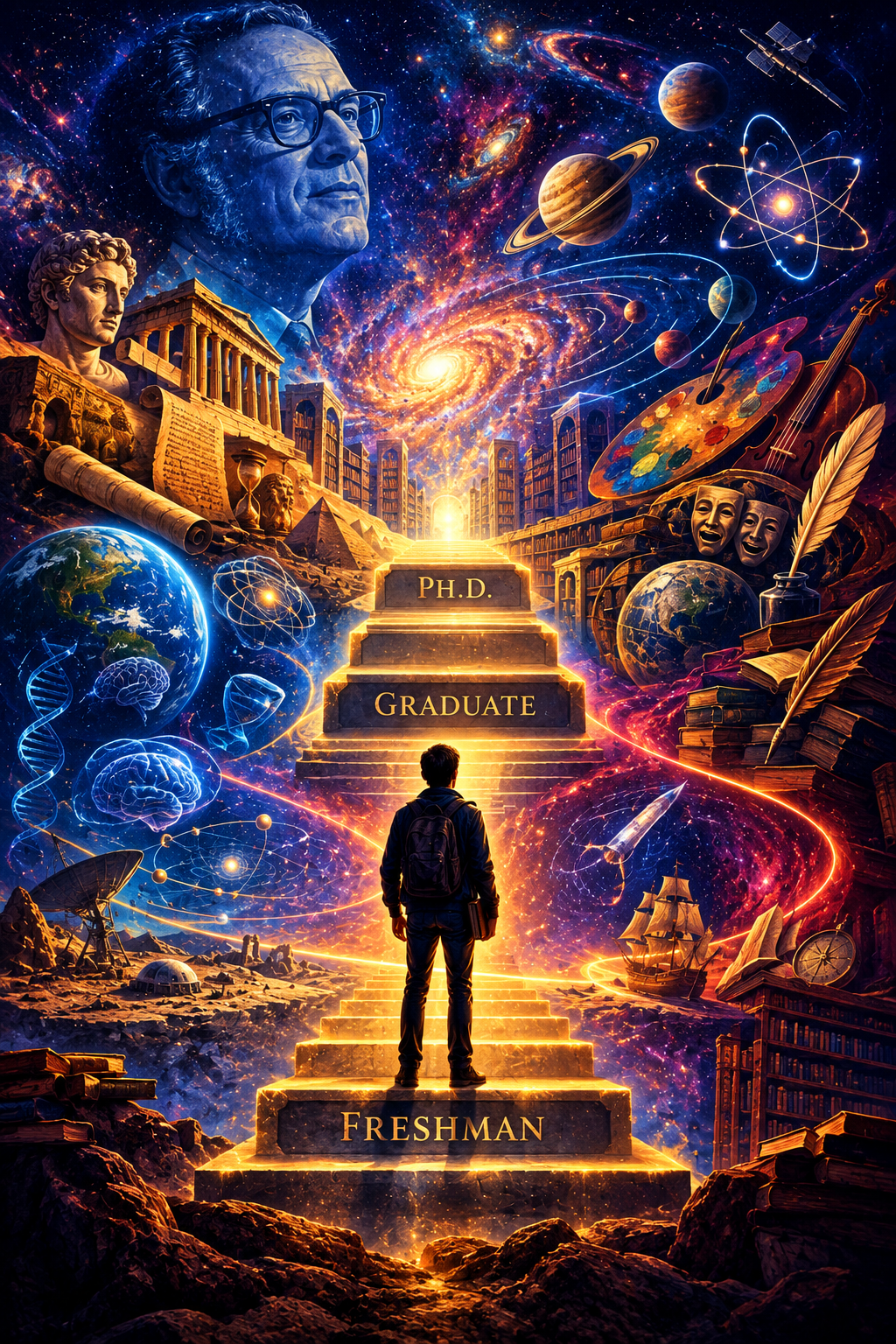
Isaac Asimov Presents Superquiz IV does not open like a traditional work of science fiction or a narrative novel. There is no hero embarking on a grand voyage, no distant planet awaiting exploration, and no dramatic plot or collection of fictional mini stories unfolding across chapters. Published in 1989 and created by Ken Fisher under the long running Superquiz brand, this volume places Isaac Asimov's name prominently on the cover while operating as a comprehensive compilation of approximately 5,000 general knowledge questions and answers. The true protagonist of this journey is the reader's own mind, invited to participate in a playful yet competitive test of memory and curiosity. Rather than following fictional characters, the structural arc of the book is built entirely out of the escalating intellectual experience of answering questions across three distinct tiers: Freshman, Graduate, and Ph.D. levels.
The journey begins at the Freshman level, which serves as the welcoming invitation to the game. Here, the questions are designed to be accessible enough to build confidence, drawing the reader into a comfortable and engaging rhythm. However, even at this entry stage, the material avoids simple or repetitive exercises. Instead, it moves rapidly across the expansive territory of general knowledge, sweeping through history, geography, literature, science, entertainment, language, and sports. A reader might easily recall a famous historical figure or a basic scientific fact, only to be suddenly confronted with a question about popular culture or classical poetry. This constant shifting prevents the mind from settling into a single comfort zone or narrow specialty. In doing so, the Freshman tier establishes the foundational idea of the volume: that general knowledge is not a single isolated subject, but a vibrant intersection of many human endeavors.
As the reader advances to the Graduate level, the comfortable rhythm shifts and the central challenge takes shape. The questions become noticeably more demanding, causing initial confidence to fluctuate. Facts that once felt familiar begin to linger frustratingly on the edge of memory. A reader might recognize a major historical event but fail to pin down its exact date, or recall the title of a celebrated novel while the author's name refuses to appear. This middle stage explores the vast territory between complete mastery and total ignorance. The quiz acts as a mirror, revealing the uneven nature of personal memory and showing how easily someone can know a great deal about one field while stumbling in another. Instead of causing discouragement, these moments of hesitation turn learning into a game, where searching through old memories creates a small intellectual mystery that resolves when the answer is revealed.
The climax of this experience occurs at the Ph.D. level, where the book becomes a rigorous test of intellectual breadth and specialized recall. Reaching into obscure corners of culture and history, this final stage demonstrates that expertise in one domain does not guarantee success across others. A brilliant scientist may falter on an obscure historical fact, just as a sports expert or historian may struggle with specialized scientific terminology. By forcing the mind outward beyond comfortable boundaries, the Ph.D. questions highlight a vital distinction between raw intelligence and broad knowledge. The progression leads to the realization that human civilization is a massive, interconnected tapestry woven from history, science, literature, language, and popular culture. The book leads not to a dramatic fictional ending, but to the humbling discovery of just how much knowledge exists beyond one's immediate view.
In review, Isaac Asimov Presents Superquiz IV succeeds because it turns learning into an engaging adventure. Although compiled by Ken Fisher, the spirit of the book aligns closely with the educational philosophy of Isaac Asimov. Throughout his career, Asimov championed broad curiosity, writing extensively across science, history, literature, and language to encourage readers to look beyond their own specialties. This book honors that legacy by treating knowledge not as an intimidating formal examination, but as a playful, social, and endlessly rewarding pursuit. Every question opens a small door toward a new fact or perspective. Ultimately, rather than asking how much a person knows, the volume leaves the reader with a far more inspiring question: how much is there left to learn?