Isaac Asimov Presents the Great SF Stories, 11
This 1949 anthology, edited by Isaac Asimov, offers a "little time machine" featuring classic stories by genre greats that explore many vital and visionary themes.
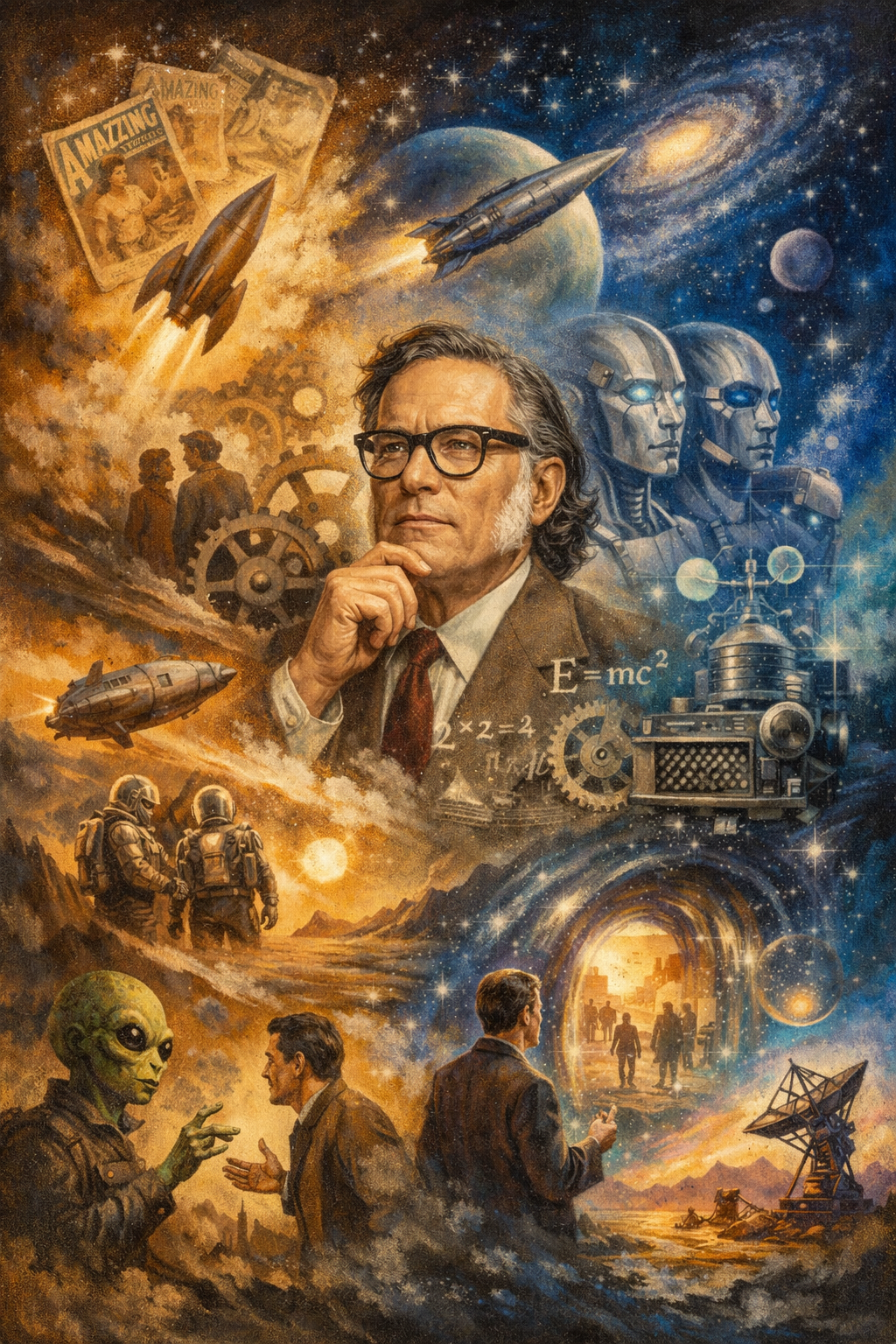
In the history of science fiction, the year 1949 stands as a momentous pivot point, marking the publication of George Orwell’s Nineteen Eighty-Four and the birth of The Magazine of Fantasy and Science Fiction. It was a time when the genre began to look inward at the human condition with a newfound logic and clarity, a shift perfectly captured in the anthology Isaac Asimov Presents the Great SF Stories, Volume 11 (1949). As we look back through this collection, which serves as a little time machine, we find that the writers of this era were no longer just imagining gadgets; they were building worlds that challenged our most fundamental assumptions about reality.
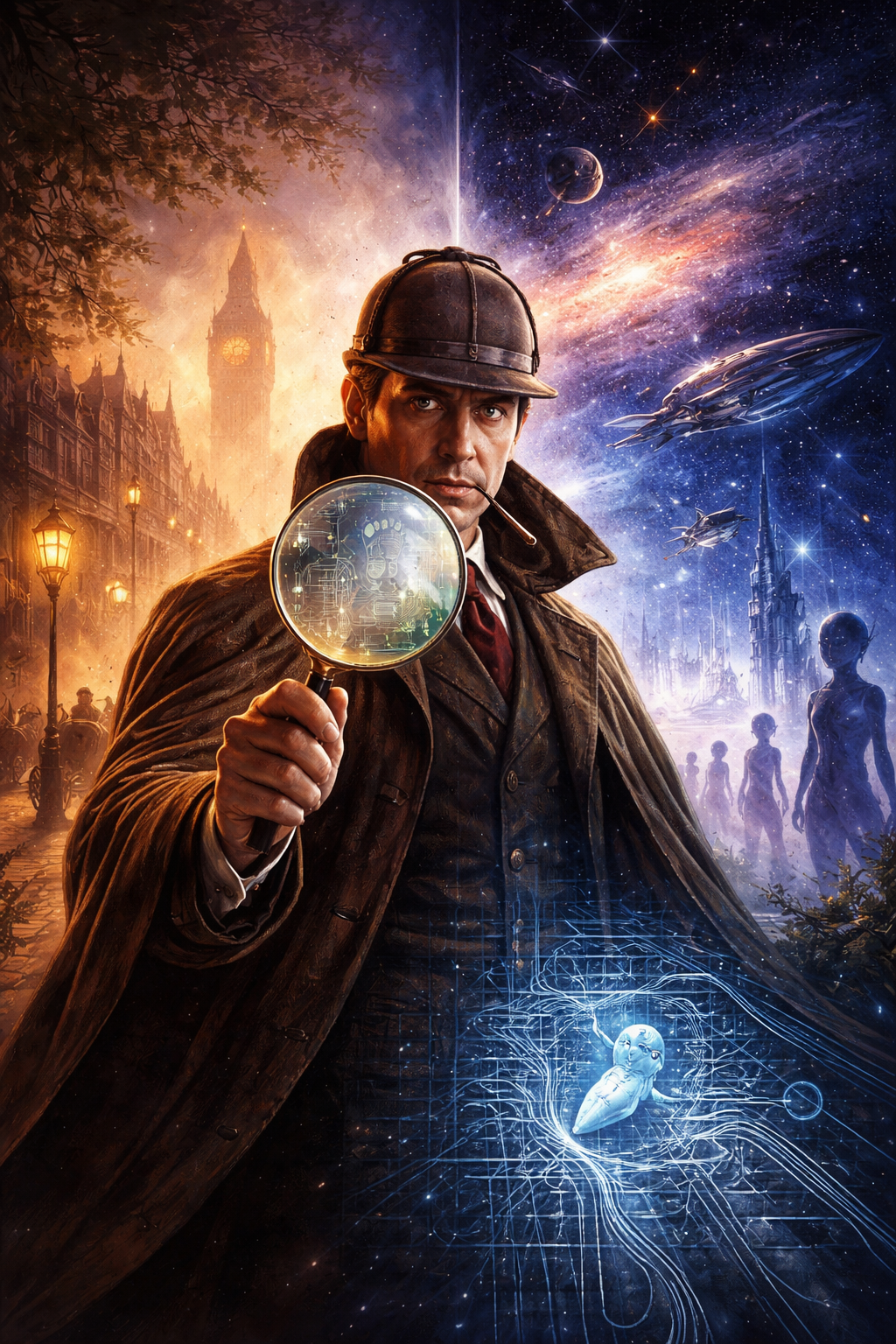
The journey through this honored year begins with a mystery that feels like a tough guy detective story, though it deals with the rigorous mathematics of nuclear physics. In a tale where an atomic power plant is mysteriously ruined and a professor is found dead, the investigation centers on the logic of time travel. Rather than seeking to change history, the story examines the necessity of maintaining it, suggesting that even the most revolutionary scientific discoveries might only serve to keep the world exactly as it has always been. It is a quintessential example of how the period used cold, logical puzzles to explore the concepts of fission, psychohistory, and atomic theory.
As the reader moves further into the shadows of the era, the sources present a blatantly pessimistic challenge to the dream of the stars. In a story about a rocket station and the pioneers who wished to migrate to new worlds, the narrative builds from a deep sense of dedication and fervor for space flight. However, it leads to a shattering scientific speculation that suggests the solar system is shrinking and humanity is trapped on Earth. This piece serves as a reminder that in 1949, not every vision of the future was filled with easy optimism.
The anthology then turns to the intersection of crime and technology, presenting a future where a device can look back into the past. This creates a society where homicide is only punishable if intent can be proved by viewing a person’s past actions. The story builds around a man who attempts to outwit this social conscience by masking his motives even from himself. It is a masterful study in how a futuristic gimmick can create a murder mystery that explores telepathy, chromosomes, and genes.
The theme of the impossible continues through a story about monks in the twelfth century who encounter bounty from the future. The narrative stems from the discovery of miracle food appearing in a priory’s storeroom, leading the inhabitants to believe they are witnessing a thaumaturgical manifestation. The story leads toward a scientific explanation involving tensors and angular momentum, proving that even ghosts can have a passion for research into synthetic protein, neutrons, and thorium.
A darker psychological exploration follows, centered on a man with mysterious mental powers who is exploited by a selfish jailer. The story builds as the jailer uses this prisoner to invent intricate patents that bring him wealth. However, the story leads to a cyclical conclusion where the jailer realizes his own identity is inextricably linked to the man he has been punishing. It is a vignette about the dangers of absolute power that touches on catatonic stupor, synapses, and mutation.
The focus then shifts to the world of biology and the alien nature of plants. In the jungles of Indo China, a botanist discovers a drug that slows down the human life tempo, allowing a person to enter the world of green leaf and root. The story builds an atmosphere of dread as the forest is revealed to be a sentient battlefield of birth and death. It leads to a realization that humanity lives alongside an alien kind of life involving chlorophyll, metabolism, and oxidation.
The passage of time is explored through the eyes of reptilian scientists from Venus who visit a frozen Earth. They discover a small crypt of sacred treasures, including a film reel they believe to be a record of our greatest achievements. The story is a poignant lesson in history involving glaciers, logarithms, and radiation physics, building to a famous concluding line.
The collection also examines the dream of physical immortality and political corruption. In a world where life can be continued through technology, the story builds from the maneuvers of an aging senator who has been rejected by his party. It leads to a reflection on the value of life and the work of biochemists and bacteria researchers.
The cyclical nature of human history is explored in a lecture given by a professor in a far distant empire. The narrative builds from archaeological evidence of a war between frontiersmen and a decadent home world. The story uses concepts such as fission bombs and relativistic physics to show that humanity never truly learns from its past.
A different kind of terror arises when a man realizes that a close friend has been deleted from history entirely. This story builds from the discovery that a man can be removed from all records and memories. It leads to a final sentence that leaves the reader questioning reality.
The mood lightens with a story about a happy alien beast called a hurkle, which can become invisible and purrs radiations. The story builds as the creature wanders from its home dimension into a human classroom. It leads to a conclusion involving DDT, insects, and parthenogenetic reproduction.
A grim vignette follows, describing the final moments of astronauts scattered into space. The story builds through their voices as they drift apart toward fates involving meteors, asteroids, and radio waves. It leads to a look at a single life ending as a falling star.
The theme of telepathy as a biological defense mechanism is presented through a father who discovers his infant son has a mental rapport with the world. The story builds as the father eavesdrops on minds, only to encounter a moment of human psychosis. It leads to the realization that psychiatry might explain why normality is a necessary shield.
Humor returns in a tale of a mutant family dealing with a repulsive child who can hex people. The story builds through mishaps involving enzymes, DNA, antibodies, and ultraviolet light. It leads to an explanation of how mutations and genes allow a family line to survive as a virus.
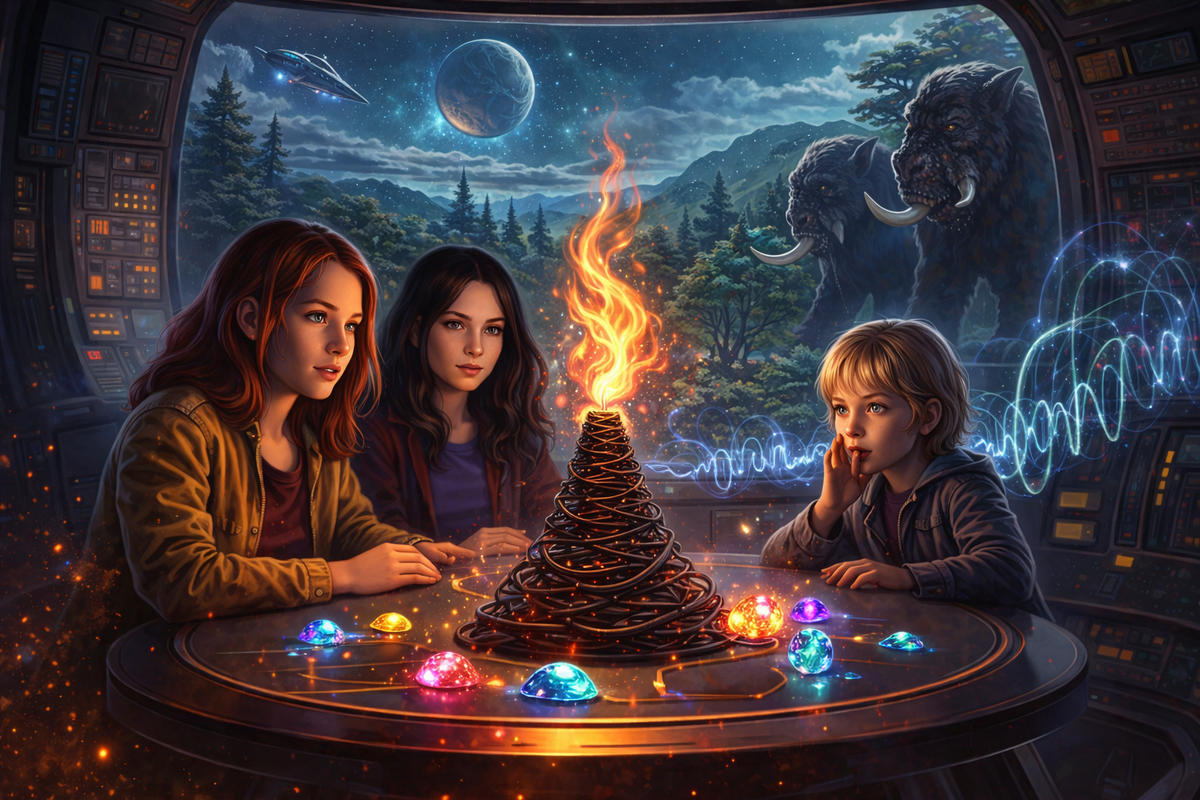
Finally, the journey concludes with an adventure of a traveler who encounters three sisters from a prohibited planet. These girls possess powers such as teleportation and a mysterious space drive. The story builds as the traveler is branded a criminal by his government. It leads to a break from society as the traveler joins them beyond the stars.
Reviewing this collection, one is struck by the clear presentation of themes that were revolutionary. The authors of 1949 used science fiction to probe social consequences and psychological traits. This anthology is a mirror of its time, reflecting a genre maturing into a sophisticated literature of ideas. These tales provide the essential foundation for everything that followed.