Mythology and the Universe
Isaac Asimov traces how ancient stargazing and mythological stories provided the foundational stepping stones for modern astronomy, connecting imaginative cosmic myths with empirical physical science.
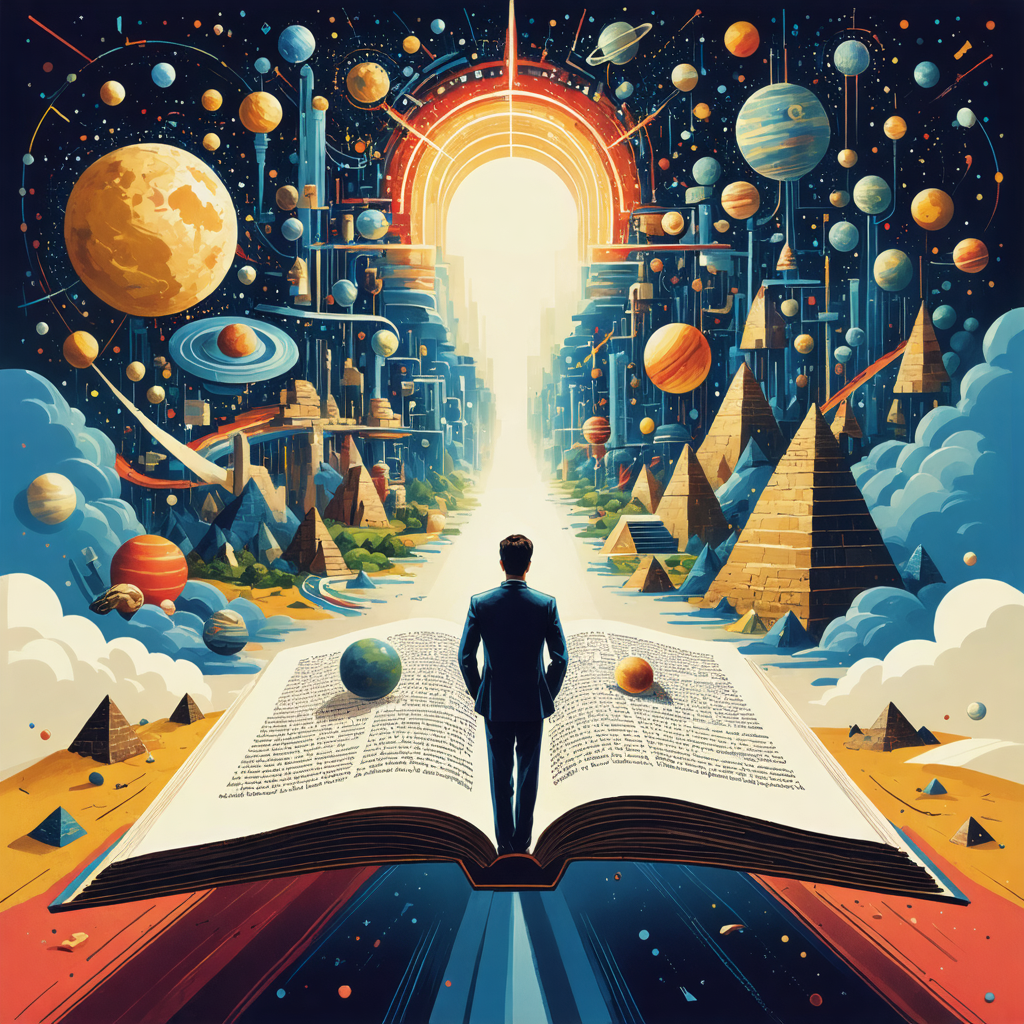
Isaac Asimov's Mythology and the Universe, published in 1989 by Gareth Stevens Publishing, presents a compact, thirty two page illustrated narrative exploring humanity's relationship with the heavens. Rather than containing a collection of separate fictional short stories or individual plotlines, the book presents a unified educational narrative tracing how ancient storytellers laid the groundwork for modern astronomical understanding. Written in Asimov's signature clear, logical, and accessible prose style, the work seeks to connect humanity's earliest imaginative explanations of the cosmos with the gradual emergence of physical science.
The story begins in the distant past, long before telescopes revealed planets as physical worlds, when early human beings looked up at the night sky with deep wonder. The celestial sphere offered an immense and mysterious spectacle of sunlight, changing lunar phases, and seasonal star patterns that directly governed agriculture, travel, and timekeeping. Lacking modern instruments or physical theories to explain these celestial movements, ancient observers created stories populated by gods, supernatural beings, and heroic figures to make sense of the cosmos. The Sun was imagined as a divine traveler, the Moon as a mystical entity, and the sky itself as a realm governed by conscious intentions.
Asimov establishes that these ancient mythologies were far more than simple scientific mistakes; they were essential tools through which early societies organized observations and passed knowledge down across generations. Mythology provided a vital bridge connecting familiar human experiences with the vast, intimidating forces of the natural world. By turning unpredictable cosmic events into relatable narrative characters, early storytellers gave meaning to a universe that otherwise appeared beyond human comprehension. This foundational era forms the starting point of Asimov's narrative, showing that the drive to observe and the drive to tell stories share a common origin in human curiosity.
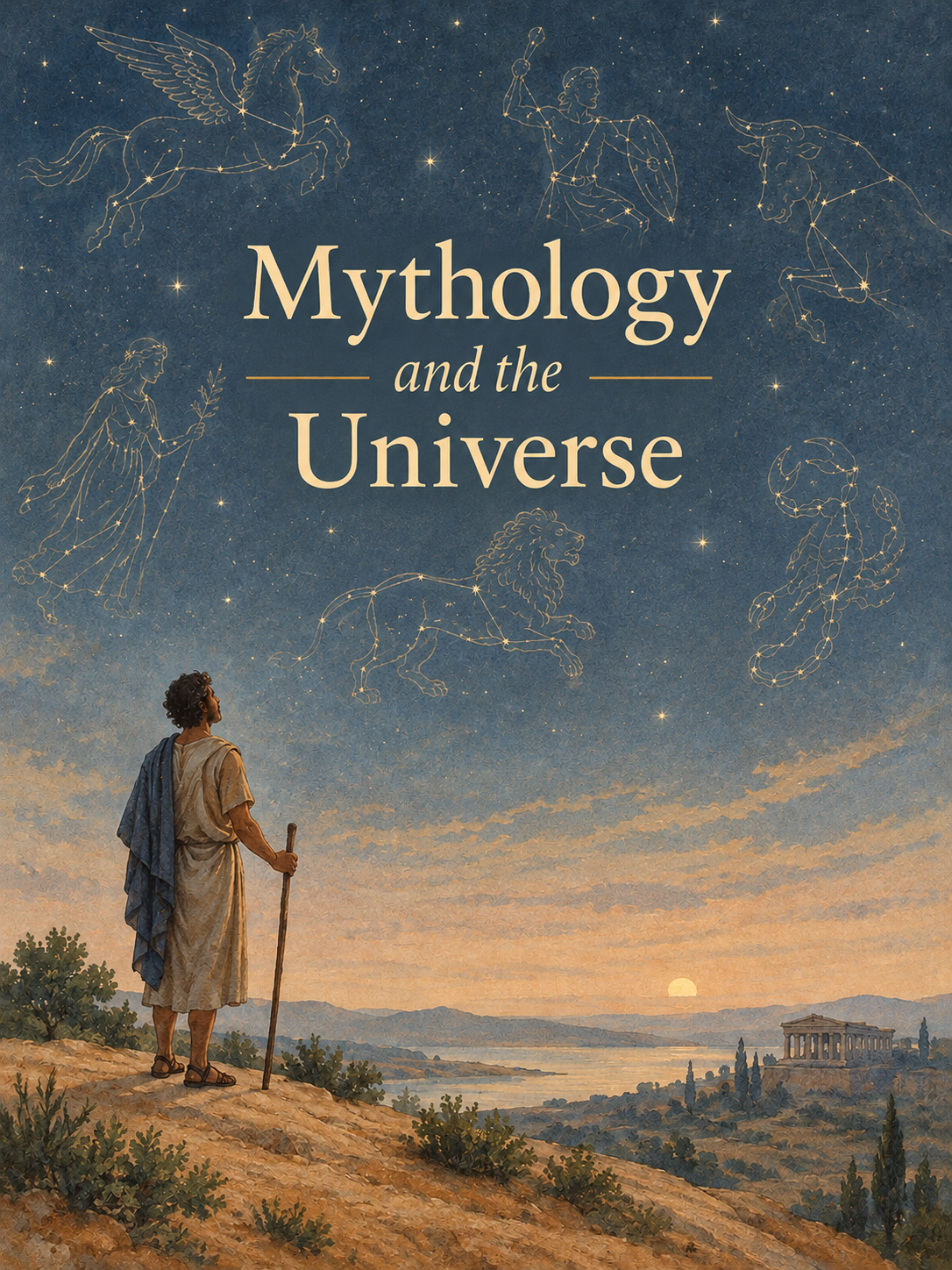
Building from this primordial wonder, the narrative moves forward to examine the celestial bodies that ancient observers distinguished from the fixed background of the stars: the classical planets. The word planet originates from a Greek term associated with wandering, reflecting how these bright objects shifted their positions across the constellations over time. Because their movements set them apart from ordinary stars, ancient civilizations linked these wandering lights to powerful divine personalities. The ancient Greeks connected swift Mercury with Hermes, brilliant Venus with Aphrodite, reddish Mars with Ares, dominant Jupiter with Zeus, and distant Saturn with Cronus.
These ancient mythological connections were later adopted by the Romans, who assigned the Latin names that remain standard in modern astronomy today. Asimov highlights the clear, symbolic logic behind these naming choices, noting that Mercury's rapid orbital motion suggested speed, Venus's intense brightness suggested beauty, and Mars's reddish tint naturally evoked blood and conflict. This section illustrates how scientific language can inherit and preserve ancient cultural expressions without compromising physical accuracy. In modern astronomy, a planet is fully understood as a physical world orbiting the Sun while simultaneously carrying a name inherited from an ancient mythic tradition.
The narrative then turns to the broader canvas of the night sky, detailing how ancient observers grouped individual stars together into recognizable patterns called constellations. A constellation begins with an intentional act of human interpretation, where observers draw imaginary lines between points of light to form figures of heroes, animals, and traditional tools. For ancient communities, these constellations served practical functions like seasonal tracking and navigational orientation, while transforming the night sky into an everlasting picture book of their cultural traditions. Placing a mythological character among the stars gave traditional stories a sense of permanence across generations.
A central logical theme in Asimov's presentation is the clear distinction between imaginative pattern making and physical reality. Stars that appear close together in a constellation do so only because of Earth's perspective, while in reality they lie at vastly different physical distances from one another. The ancient constellation maker asked what story a pattern resembled, whereas the modern astronomer investigates what the stars physically are, how far away they lie, and how they move. Both approaches begin by looking upward at the same sky, but their methods, questions, and conclusions remain fundamentally distinct.
To expand this historical review, Asimov demonstrates that the night sky did not produce one universal collection of mythological figures across different civilizations. Different cultures looking at the exact same stars created unique stories based on their local wildlife, environment, and societal values. While Greek and Roman traditions heavily influenced Western astronomy, they represent only one part of humanity's global history of sky watching. The physical stars provide raw material, but human culture supplies the imagery and meaning that make cosmic distances feel familiar.
Asimov's thoughtful approach encourages readers to respect mythology as a rich cultural achievement without confusing it with empirical scientific fact.
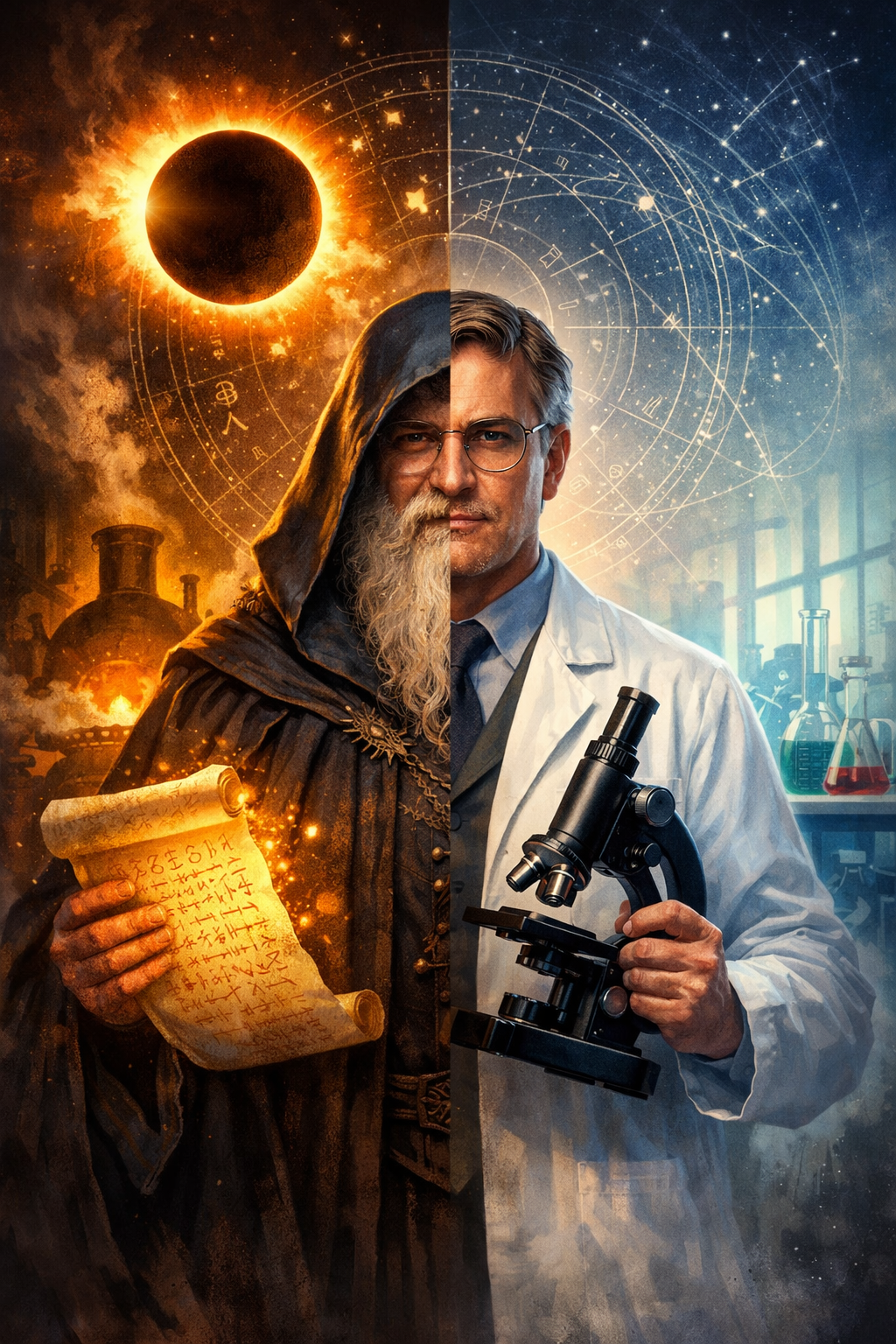
In reviewing the narrative's conclusion, Asimov leaves readers with an enduring question about the nature of human perception and cosmic discovery. He asks how much of what we see when looking at the universe belongs to physical nature and how much stems from the stories we bring with us. The book demonstrates that while scientific discovery continually replaces older assumptions with better supported theories, the initial wonder that birthed mythology still powers modern astronomy. Ultimately, the physical universe is far larger than any single myth, yet the enduring human desire to understand it unites the ancient storyteller with the modern scientist.