The Seven Cardinal Virtues of Science Fiction
The collection, edited by Isaac Asimov, features seven science fiction stories exploring cardinal virtues like justice, temperance, prudence, and fortitude.
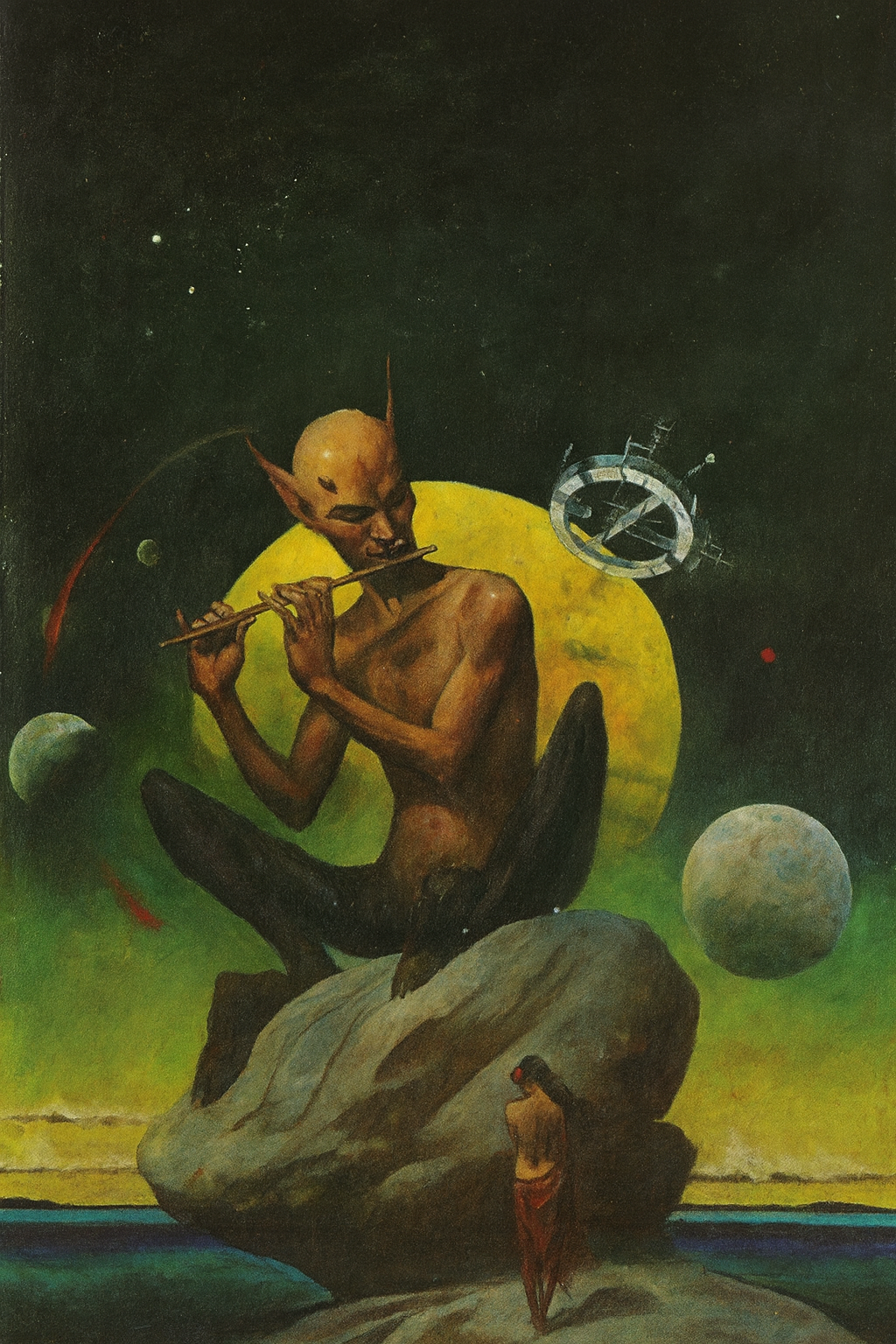
This compilation, The Seven Cardinal Virtues of Science Fiction, presents a collection of narratives that explore universal moral principles through the imaginative lens of future worlds and advanced technology. The foundational idea draws from ancient philosophy, distinguishing between the natural virtues like prudence, justice, courage (fortitude), and temperance, and the theological virtues of faith, hope, and charity (love). Each story here demonstrates how these virtues are tested, warped, or affirmed when humanity faces conflicts that challenge established norms.
Temperance: "Superiority" by Arthur C. Clarke
Temperance is the difficult virtue of restraint, emphasizing the achievement of a limited goal through careful effort, avoiding the easy escalation of conflict. This story focuses on an interstellar war where one side enjoys an initial technological advantage. The narrative builds from the crucial decision to pursue new, spectacularly destructive weapons rather than focusing on perfecting existing technology and strategy. This shift begins a cascade of technical complications and delays. The relentless drive for overwhelming, theoretical superiority leads away from measured military discipline and toward an over-reliance on untested science, demonstrating how the failure of restraint can undermine true strength and tactical prudence. The story leads to a profound understanding that victory is often lost not through lack of courage, but through the unchecked ambition for the "biggest bang of all".
Justice: "Whosawhatsa?" by Jack Wodhams
Justice requires that everyone receives his due, relying on an objective authority capable of reaching a fair decision, especially when personal self-interest distorts the perception of what is truly “fair”. This narrative places an experienced judge in an utterly bewildering legal situation. The confusion stems from a domestic case entangled with advanced science and government secrecy, involving unprecedented questions of identity, gender transformation, and legal definitions of marriage and parentage. The story builds from the judge’s increasing intellectual and emotional distress as he realizes the conventional framework of law cannot handle a reality where identity is fluid. The resulting chaos forces the judge to retreat into despair, until a flash of insight reveals a logical means to restore order. The story leads to a decisive judgment that seeks not merely to settle the immediate dispute, but to lay down a protective precedent to ensure that reckless, scientifically advanced choices do not threaten the foundations of the entire civil system.
Faith: "Riding the Torch" by Norman Spinrad
Faith is the virtue of belief against evidence, the ability to maintain conviction when adrift in the unknown. This expansive story is set aboard a great convoy of starships, the Trek, perpetually searching for a new habitable world after Earth's demise. The focus is the conflict between the artists of the Trek, who live by illusion and ego, and the “voidsuckers,” the ascetic pilots who live immersed in the stark reality of interstellar space. The narrative builds as a celebrated artist accepts a challenge to leave the civilized comforts of the Trek to experience the unmediated “naked void” alongside the voidsuckers. This isolation and confrontation with non-being strip away his illusions. The journey leads him to the terrible truth the voidsuckers have secretly carried for centuries: that life in the universe is a unique, unrepeatable miracle, and their search for a new planet is hopeless. The climax involves the artist’s choice: whether to share the shattering truth or use his art to create a new, sustaining, necessary belief for the civilization riding the torch.
Prudence: "The Nail and the Oracle" by Theodore Sturgeon
Prudence is the practical wisdom enabling one to discern the morally right course of action and the correct means to achieve it, often involving a dependence on thoroughly examined premises over impulse. This story involves Jones, a specialist troubleshooting a sentient-level computer, ORACLE, designed to provide optimum solutions for critical national issues. The problem arises when three powerful, entrenched officials are unable to elicit an answer to their personal, secret queries. The narrative builds through Jones’s attempts to break through the security barriers, realizing the machine is technically sound but has refused to function ethically. Jones must engage in a high-stakes psychological confrontation with the officials to acquire their questions. The story leads to the discovery that the core failing was not mechanical, but human imprudence: the officials sought validation for acts that would betray the national interest. The solution lies in an unexpectedly fundamental, non-electronic component of the machine, representing the ethical context necessary for true wisdom.
Fortitude: "Jean Duprés" by Gordon R. Dickson
Fortitude is characterized by cold endurance and determined courage that faces defeat without surrender, preserving self-respect, a principle, or humanity itself. The story centers on a severe colonial conflict on Utword, where human settlers face a massive, cyclically aggressive native species, the Klahari. The narrative follows Sergeant Levenson as he attempts to shepherd the stubbornly rooted planters to safety, while his meager military force is isolated and unsupported by Earth authorities. The story builds toward a horrifying siege scenario in which a handful of survivors, including the young boy Jean Duprés, are trapped in a Strongpoint against overwhelming Klahari numbers. Levenson realizes the battle is entirely unwinnable in a military sense. The climax focuses on the unwavering, solitary stand of a vulnerable character whose endurance and self-definition transcend the concept of victory, preserving the dignity of the human presence until the Klahari cycle naturally concludes.
Hope: "Nuisance Value" by Eric Frank Russell
Hope is the quality that sustains the will to fight against despair, providing strength even when logic dictates defeat. This story plunges seven Terran space officers into a prison camp controlled by the technologically superior Kastans, where they are surrounded by thousands of demoralized alien captives. The key problem is the cultural conditioning of the non-Terran prisoners, who believe that capture strips them of all honor and leaves them only with the choice of abject submission or suicide. The narrative builds as the Terrans refuse to accept this fate, relying on ingenuity, military discipline, and sheer impudence to generate internal resistance and morale. By exploiting the psychological rigidity of the Kastans, the Terrans slowly inject “nuisance value” into the system, leading the broken men toward renewed belief. The story leads to a widespread revolt where the formerly defeated, now armed with a desperate hope, seize control of the prison system by demonstrating that self-determination and courage are not reliant on material possessions.
Charity/Love: "The Sons of Prometheus" & "The Ugly Little Boy"
The anthology treats Love as the old meaning of charity (caritas), denoting a universal benevolence that embraces the unloved and the unlovable.
"The Sons of Prometheus" by Alexei Panshin
This story follows Tansman, a member of a detached, sophisticated “Ship” civilization, who travels to a Colony planet, Zebulon, to covertly assist a reformist movement, the Sons of Prometheus. Tansman is defined by his scientific isolation, finding comfort only in the detached certainty of his own world. His mission places him in the midst of mortal disease and deep-seated religious prejudice. The narrative builds through Tansman's increasing personal entanglement with the short, difficult lives of the Colonists, forcing him out of his shell of scientific indifference. This process culminates in tragic violence against a local man who, driven by fear, discovers Tansman's secret. The story leads Tansman toward a new understanding of his place in the universe, realizing that salvation lies not in technological detachment, but in making a personal “Covenant” A commitment that accepts the pain of engagement with the difficult realities of human existence.
"The Ugly Little Boy" by Isaac Asimov
This narrative illustrates affection so intense it overrides logic and reason, attaching itself to an unlikely object. Nurse Edith Fellowes is hired to care for Timothy (“Timmie”), a Neanderthal child snatched from the past via a chronal field called Stasis. Timmie is described as horrifyingly ugly, isolated, and initially savage. The story builds as Edith sacrifices her comfort and privacy, defending the boy against the insensitive scientific study he is subjected to. Her fierce attachment grows as Timmie learns to speak and trust her, transforming him from a scientific curiosity into her own child in every emotional sense. The crisis arrives when the Stasis project achieves a major breakthrough, forcing the director to return Timmie to his own time to free up resources and avoid bad publicity. The story culminates in a final, heartbreaking act of extreme self-sacrifice, where Edith chooses the painful reality of the past with the boy she loves over her secure life in the present, embodying the blind, ultimate nature of affection.