Young Mutants
Twelve stories examine children with mutations, depicting their psychological isolation and the logical, often tragic, evolutionary progression of human potential through unique new mental powers.
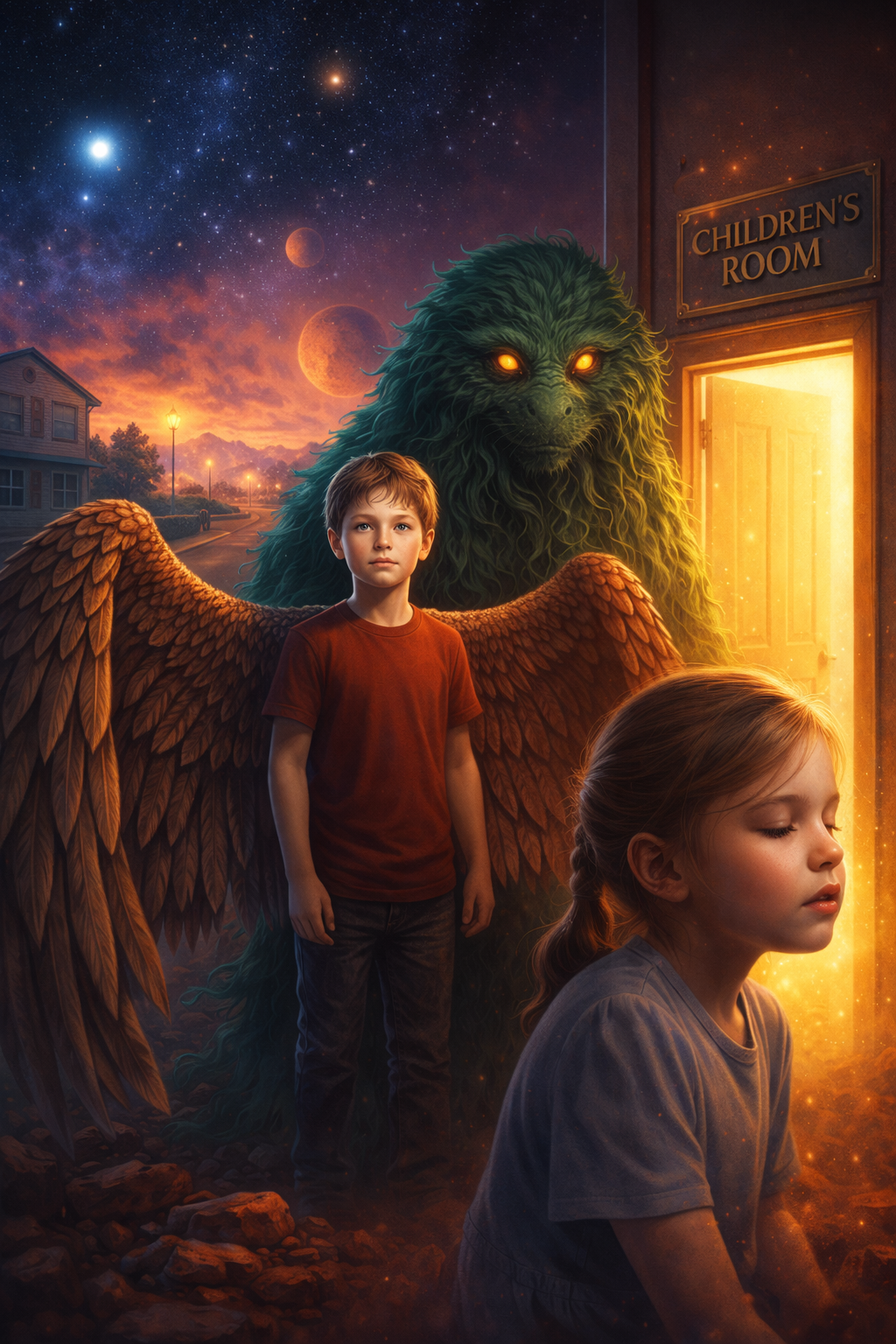
The world is a place of constant change, and as Isaac Asimov often reminded us, the most significant change is the evolution of the human mind. In the collection of stories known as the Young Mutants, Asimov and his colleagues explore the concept of mutation not as a frightening monster in a dark room, but as the next logical step in the history of our species. Long ago, a mutation in the spine allowed humans to stand upright, freeing our hands and eventually leading to the development of our enormous brains. Now, we must consider what happens when the brain itself begins to change, giving us powers that seem like magic to those who do not understand the science behind them.
The stories in this book are a testament to the fact that being different is often a lonely and difficult path. In Ray Bradbury's contribution, we meet a boy who remains twelve years old for decades, a permanent child in a world where everyone else grows old and gray. It is a story about the search for belonging and the specialized role a mutant might play in making lonely people happy, even if it means living a life of perpetual hellos and goodbyes. It shows us that a physical change can lead to a psychological isolation that no amount of kindness can fully bridge.
We also see the darker side of evolution in the story of children born to be Martians. These children are modified using a drug called daptine to survive the thin air and freezing temperatures of Mars. The story highlights a common theme in the sources: the gap between generations. When children undergo adaptation to be better than their parents, or simply different enough to survive a new environment, they may find their makers to be narrow and hideous, leading to a complete rejection of their ancestral home.
In a more modern setting, the sources describe a child whose genetic engineering gifts were ordered like luxury features on a car tallness, strength, and a high IQ but whose emotional development remained arrested in total egocentrism. The story introduces the concept of a Friend, an alien biological artifact designed to teach empathy and patience to a child who lacks the natural capacity for it. It is a logical look at how technology and alien sociology might be used to fix the monsters we create through our own vanity.
The idea of the Wonder Horse shifts the focus to how a mutation might be exploited in the world of sports and gambling. A horse with unique bone levers and incredible lung capacity breaks every world record, leading to a crisis in the racing world. The story explores the tension between those who see a mutant as a miracle to be nurtured and those who see it as a freak that must be handicapped or removed to protect the status quo of the market.
Another poignant narrative follows a boy born with wings due to a radiation accident that altered his parents' genes. He is a mutant in the truest biological sense, finding a wild, clean joy in the sky that earthbound people can never know. The review of his life is a study in the conflict between the freedom of the wild and the desire for human love, which often demands that the unique individual clip their wings to fit into a normal society.
Psychic powers also play a major role in these explorations. One journal details the life of a psi high girl who can read minds with such clarity that she never needed to develop her own senses of sight or hearing. To the outside world, she is a cripple, but to herself, she is a bridge to a latent human potential that others are eager to exploit. The story forces us to ask if the price of evolution losing one's own senses to gain a telepathic connection to everyone else's is a fair trade.
Two stories deal with the terrifying burden of children who can sense the future of death. One girl finds she cannot help saying goodbye to people right before they die, leading her family to fear her as if she were the cause of the tragedy rather than its witness. Another deaf child listens to the future, sensing precognition of accidents and heart attacks before they happen. These stories suggest that some mutations are not gifts at all, but heavy weights that separate a child from the carefree world of their peers.
The collection also imagines a hidden sanctuary for mutants. In a university library, there is a Children’s Room that only those with a specific mutation can see or enter. It contains books in a mutant language that prepares children for a future colony where they will help the human race out evolve extraterrestrial competitors. It is a story of sacrifice, where parents must decide if they can let their children go to a future they can never visit themselves.
Communication is a final recurring theme. A young boy who will not speak is found to be writing in a lost language, which may be a form of inherited ancestral memory. It takes a specialized machine to turn his symbols into sounds, revealing that he is not silent because he is empty, but because he is speaking a language for which the world has lost its ears. Similarly, a boy who is accident prone is revealed to be a biological weapon of sorts, where his very presence causes the laws of probability to collapse around him, leading to a clever military application of his liability.
The final piece of the puzzle is the tragedy of growing up. A child who has psychokinetic abilities that allow him to move a wagon simply by telling it to come on eventually learns the impossible laws of physics of the adult world. As he learns that a tractor must be run rather than just spoken to, he loses the very power that could have saved a life. It serves as a review of our own limitations: we spend our childhood learning what we cannot do, and in the process, we may be killing the very mutations that would allow us to reach the stars.
Overall, these sources provide a clear and logical progression of thought regarding our future. They suggest that while mutation may be rare and often difficult for the individual, it is the only way humanity can move forward. As Asimov would say, we must not fear the new, but rather seek to understand the laws of nature that bring it about.
Short Summaries of the Mini Stories
Hail and Farewell: A man who stopped aging at twelve years old travels from town to town, being adopted by lonely couples for a few years at a time until people begin to notice he never grows up.
Keep Out: In the future, children are chemically adapted to live on the surface of Mars without suits; they eventually come to despise the hideous unadapted humans from Earth and decide to keep the planet for themselves.
What Friends Are For: A wealthy couple uses genetic engineering to create a perfect son, but his superior traits make him an egocentric brat; they are forced to rent an alien Friend to teach him empathy by mirroring his own behaviors.
The Wonder Horse: A chestnut colt is born with mutated bone and muscle structures that make him the fastest horse in history, leading racing officials to try to handicap him out of existence to protect the betting industry.
He That Hath Wings: After a radiation accident, a boy is born with wings; he grows up in isolation, finding joy in flight, but eventually chooses to have his wings surgically removed to marry the woman he loves and fit into human society.
Second Sight: A telepathic girl is studied in a lab where it is discovered that her psychic powers are so dominant that her brain never bothered to hook up her physical senses of sight and hearing, leaving her stone blind and deaf to the physical world.
I Can’t Help Saying Goodbye: A young girl has the precognition ability to know when someone is about to die; she signals this by saying goodbye to them, causing her family to fear her as a bringer of death.
The Listening Child: A deaf boy has the ability to listen to future events, specifically sensing approaching death or accidents, which allows him to save his elderly friend's life before a heart attack strikes.
The Children’s Room: An engineer discovers his son is a mutant when they both find they can read books in a secret library room that leads to a future where mutants are being gathered to save the human race from extinction.
The Lost Language: A boy who never speaks is found to be writing in an ancient Welsh dialect through inherited memory; his sister devotes her life to learning his language so he will not have to be alone.
Prone: A young man is a super accident prone whose presence causes mechanical and physical disasters for everyone around him but never himself; the military decides to use him as a secret weapon by sending him to live in the enemy's capital.
Come On, Wagon!: A toddler has psychokinetic abilities that allow him to move objects with his mind, but as he grows up and is taught the impossible laws of physics by adults, he loses his powers just when they are needed most to save a life.