Great Science Fiction Stories by the World's Great Scientists
Scientists use fiction as a logical extension of reality, exploring boundaries between the known and possible through structured narratives that follow scientific reasoning and imagination.
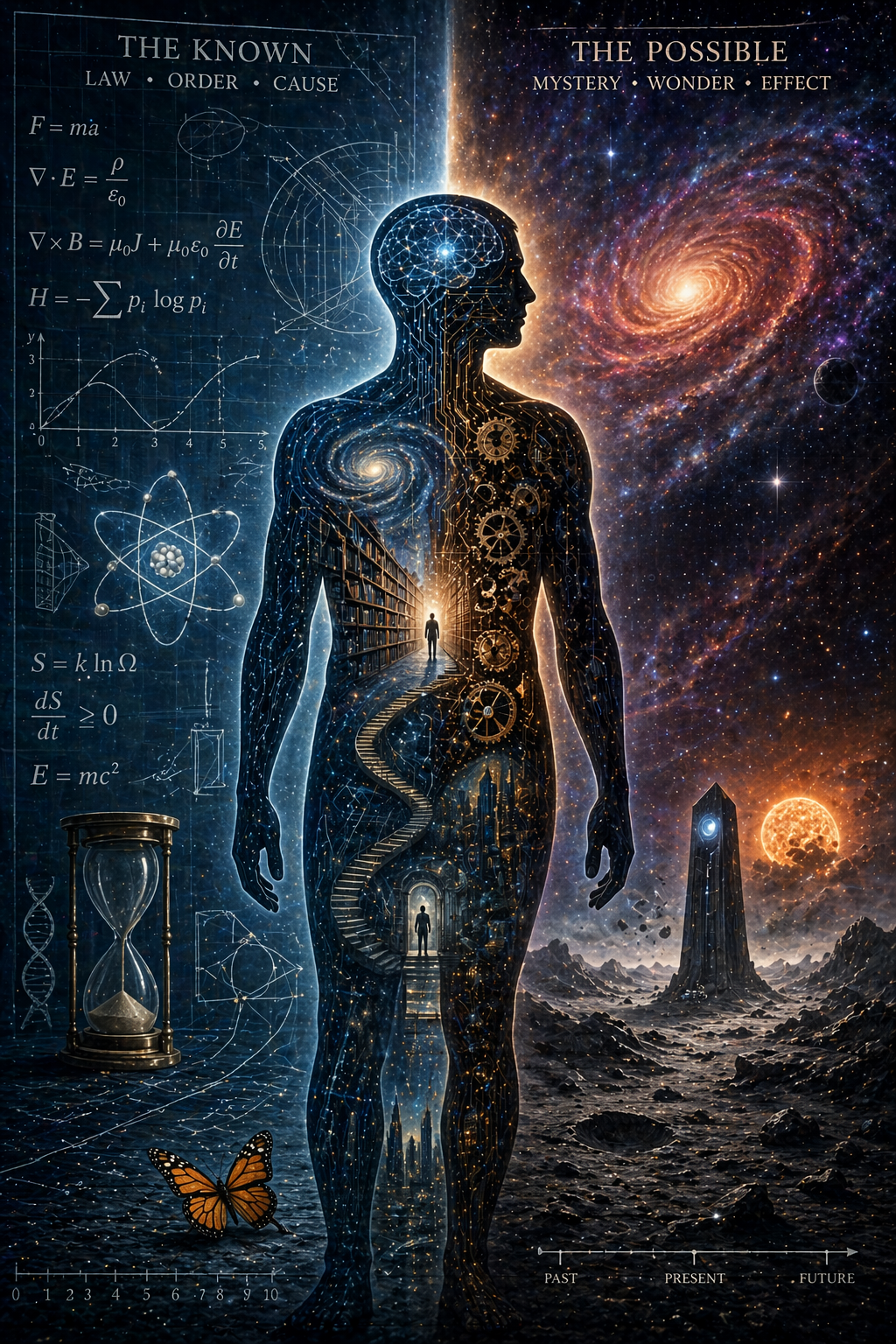
The work before us, titled Great Science Fiction Stories by the World’s Great Scientists, is not merely a collection of entertaining tales. Instead, it is a deliberate and carefully arranged sequence of voices. Each author represents a mind working at the boundary between what we know through science and what we can imagine through logic. To understand this book, one must see it as a single, continuous argument. It is an exploration of how the human mind uses the tools of reason to navigate the unknown. The editor, Isaac Asimov, does not simply gather stories; he places them in a specific order to reveal a progression of thought.
The journey begins with a fundamental premise: that the scientific imagination is a necessity. For a scientist to move forward, they must be able to imagine things that have not yet been verified. This establishes science fiction not as a flight from reality, but as a logical extension of it. The stories are testing grounds for ideas. They ask a simple question, what if, and then follow the rules of the universe to provide an answer that begins with, then this follows. This makes the collection feel orderly and grounded, even when the subjects are cosmic in scale.
As one moves through the volume, a pattern emerges. The stories move from external calculations to internal contemplations. They look at the stars, the laws of physics, the flow of time, and eventually, the nature of the human mind itself. This variety does not lead to confusion because every story is anchored in the same shared method. They begin with a logical premise and follow it to an inevitable conclusion. The book argues that the future is not a single, fixed vision, but a series of possibilities, all of which are grounded in reason.
The review of this work must focus on its structure. It is a distinctive anthology because it functions as an intellectual bridge. It shows that scientists are not abandoning their disciplines when they write fiction; rather, they are expanding them. The collection encourages the reader to compare different approaches to similar questions. It reminds us that while not all questions have immediate answers, the process of inquiry is persistent and valuable. By the end, the boundary between the known and the possible feels closer and less daunting.
To better understand this progression, we should look at the individual stories that form the pillars of this collection.
The Ideal of Scientific Imagination serves as the introduction to the book’s philosophy. It sets the tone by explaining that science requires us to look beyond current knowledge. It frames the stories that follow as explorations of possibilities that cannot yet be proven but are still rooted in the rules of logic.
The Star by Arthur C. Clarke is placed early in the collection to show the intersection of scientific data and human meaning. It tells of a discovery in deep space that forces a scientist to reconcile logical calculations with his own deeply held beliefs. It demonstrates how science fiction can move from clinical observation to a profound emotional realization.
Nightfall by Isaac Asimov examines how knowledge shapes our perception of the world. In this story, a society that has never experienced darkness is suddenly forced to confront it. It is a study of how scientists attempt to understand a phenomenon that exists entirely outside of their previous experience. It shows that even the most unsettling events can be understood through rigorous study.
The Cold Equations by Tom Godwin highlights the unyielding and indifferent nature of physical laws. It presents a situation where human emotion and compassion are in direct conflict with mathematical necessity. The story reinforces the idea that the universe does not bend its rules for human convenience, and that science fiction must remain true to those constraints.
The Last Question by Isaac Asimov expands the scope of the collection to the furthest reaches of time and space. It follows the evolution of intelligence as it attempts to answer a fundamental question about the nature of energy and entropy. The story is a logical progression that traces the persistence of human inquiry across billions of years.
A Sound of Thunder by Ray Bradbury explores the complexity of cause and effect. It illustrates how small actions within a system can lead to significant changes elsewhere. It serves to show that all systems, whether they are ecological or temporal, are interconnected. It uses a narrative about the past to explain how the present is shaped.
Flowers for Algernon by Daniel Keyes shifts the focus from the external universe to the internal landscape of the human mind. After a scientific procedure increases a man’s intelligence, the story examines how his perception of the world changes. It explores how awareness can be both a source of great insight and a heavy burden.
The Sentinel by Arthur C. Clarke is a quiet and contemplative story about a discovery on the Moon. It suggests that there is a larger presence in the universe without providing immediate answers. It is used in the collection to remind the reader that the edge of understanding is a place of mystery, and that restraint in storytelling can be just as powerful as a full explanation.