How Did We Find Out About the Speed of Light
Asimov chronicles how thinkers moved from assuming light is instantaneous to discovering its finite speed and fundamental role in physics through centuries of scientific discovery.
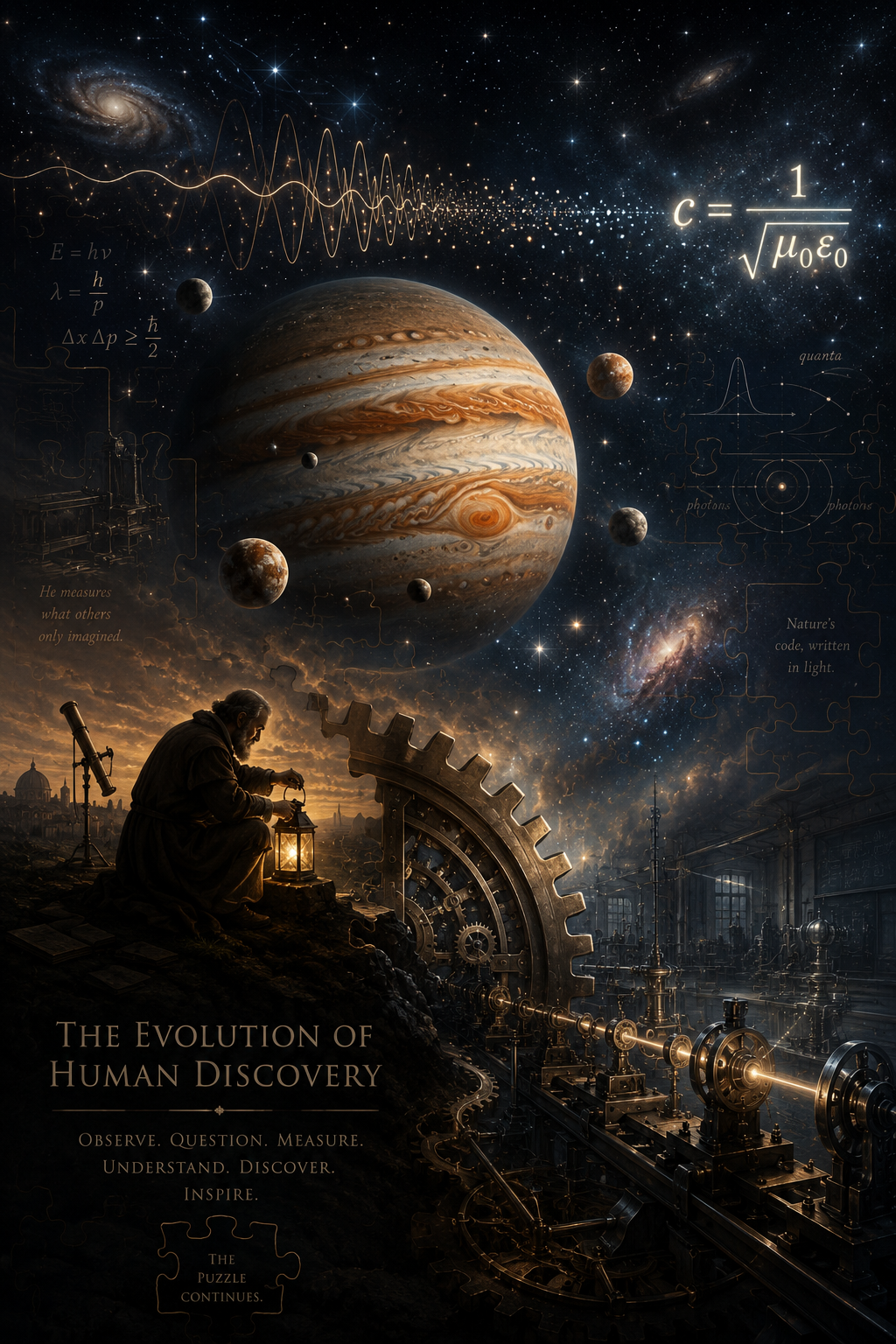
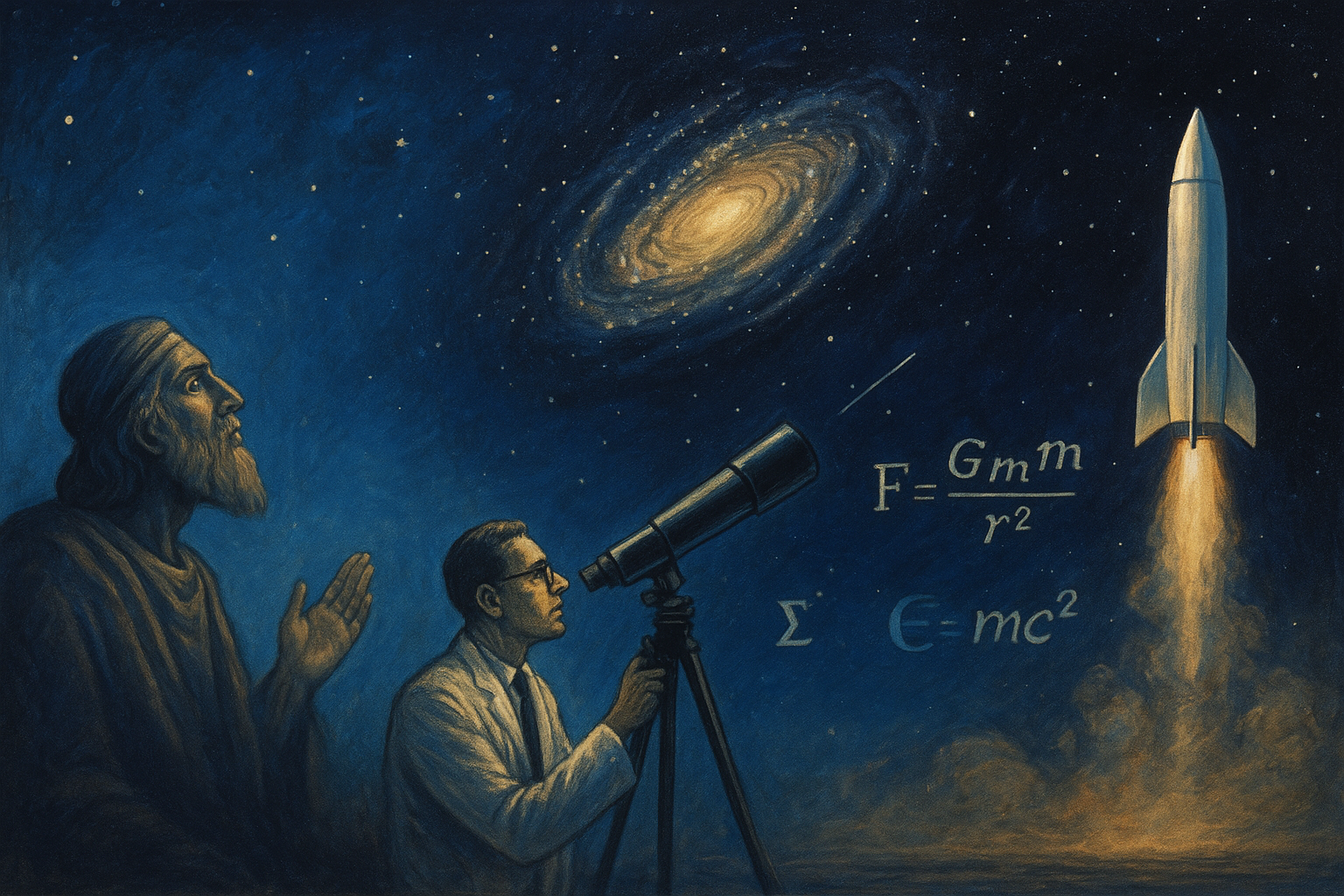
For a long time, humanity lived in a world where light seemed to be a ghost everywhere at once, yet impossible to touch or measure. In How Did We Find Out About the Speed of Light, Isaac Asimov presents the history of this mystery as if it were a grand detective story, one where the suspects are the laws of nature and the detectives are patient thinkers spanning thousands of years. As with so much of Asimov’s work, from his Foundation series to his countless science essays, he approaches the subject with a belief that the universe is a puzzle that can be solved if we are only logical enough to ask the right questions. He begins by showing us that for most of human history, the answer to how fast is light? was simply instant. To a person in the ancient world, lighting a lamp or watching the sun rise suggested no delay at all; light was seen not as a traveling thing, but as a condition of the world itself.
Story 1: The Ancient Greeks and the Mechanics of Vision The first mini story in this history concerns the ancient Greeks and their struggle to understand the basic mechanics of vision. It is a story of how even the most brilliant minds can be led astray by their own assumptions. Some philosophers believed that light traveled from the object to the eye, while others argued the opposite that the eye sent out invisible rays to touch the world. To us, the idea of eye rays sounds like science fiction, but Asimov explains it with such clarity that we see the logic behind it: when you open your eyes, you see the distant stars immediately. If the eye were not reaching out, how could the information arrive so fast? This era was defined by a deep ignorance of what light actually was, and without precise clocks or a sense of the vastness of space, the Greeks had no way to challenge the idea that light was instantaneous.
Story 2: Galileo Galilei and the Scientific Method The narrative then shifts to the Scientific Revolution, introducing a mini story centered on Galileo Galilei. Galileo represents the moment humanity stopped merely arguing and started experimenting. Galileo took two lanterns and two people to opposite hillsides, hoping to time the delay between one lantern being uncovered and the next. This experiment is a classic example of what Asimov calls an intelligent failure. Galileo did not find the speed of light, but he proved that light was far too fast for any human on a hillside to measure. This failure narrowed the search and forced the detectives to look toward a larger laboratory: the solar system itself.
Story 3: Ole Romer and the Moons of Jupiter This leads to the remarkable mini story of Ole Romer and the moons of Jupiter. While watching Jupiter’s moons disappear in eclipses, Romer noticed a strange pattern: when Earth was farther from Jupiter, the eclipses happened later than they should. Asimov reconstructs Romer’s logic so that we feel the shock of his discovery: light was not instant; it took time to cross the void. For the first time, the universe acquired depth. We learned that when we look at the heavens, we are looking at the past, seeing the sun as it was minutes ago and the stars as they were years ago. It was a discovery that made the universe feel both larger and more mysterious.
Story 4: James Bradley and Stellar Aberration The next chapter of the story introduces James Bradley and his stellar aberration. This mini story explains how Bradley noticed that telescopes had to be tilted slightly to catch the light of stars because the Earth was moving through space. Asimov uses one of his signature analogies here, comparing the effect to a person tilting an umbrella forward while walking through the rain to keep from getting wet. This provided a second, independent proof that light had a finite speed and confirmed that Romer’s astronomical observations were no fluke.
Story 5: Armand Fizeau and the Rotating Wheel As the centuries passed, the story moved from the stars back down to Earth, where the quest for precision became a matter of mechanical craftsmanship. This mini story features Armand Fizeau and his elegant rotating toothed wheel. By shining a light through the gaps of a spinning wheel toward a distant mirror, Fizeau could calculate the speed of light based on how fast the wheel had to spin before the returning light was blocked by a tooth. It is a moment where the unimaginably swift becomes something mechanical and understandable. Soon after, Leon Foucault improved this by using rotating mirrors, steadily reducing the uncertainty of the measurement and proving that light obeyed fixed, predictable laws.
Story 6: Newton, Huygens, and the Nature of Light But knowing the speed was only half the battle; the scientists still had to figure out what light was. This mini story explores the long running debate between Isaac Newton, who thought light was made of particles, and Christiaan Huygens, who argued it was a wave. Asimov shows how science often moves in circles rather than straight lines; Newton’s fame kept the particle theory alive for years, but eventually, experiments with interference and diffraction made the wave theory undeniable. This period serves as a reminder that truth in science is something that emerges gradually through constant correction and refinement.
Story 7: James Clerk Maxwell and the Electromagnetic Wave The climax of the story arrives with James Clerk Maxwell. In this mini story, the mystery of light is suddenly linked to the mysteries of electricity and magnetism. Maxwell’s equations showed that electromagnetic waves traveled at a specific speed a speed that happened to match exactly the measured speed of light. The puzzle pieces finally slid into place: light was an electromagnetic wave. This was a moment of grand unification, connecting the way we see the world to the deepest forces of nature.
Story 8: Albert Einstein and the Boundary of Reality Finally, the story leads to Albert Einstein, the figure who transformed the speed of light from a mere number into the foundation of reality itself. In the final mini story, Asimov explains how Einstein’s relativity turned our understanding of the universe upside down. While time, distance, and mass could change depending on how fast someone was moving, the speed of light remained the one constant that never wavered. It became a cosmic boundary, a limit built into the very fabric of space and time.
In reviewing this work, it is clear that Asimov has done more than write a history of physics; he has written a biography of human perception. He takes concepts that are almost beyond imagination and grounds them in lanterns, spinning wheels, and umbrellas. The scientists in his telling are not distant geniuses, but patient explorers who learned as much from their mistakes as from their successes. The book leaves the reader with the sense that while we began by assuming light was simple and instant, we discovered a universe that is far stranger and more beautiful than common sense could ever have predicted. Asimov’s great gift was making us feel that we, too, are part of this long, logical journey toward the light.