Science Fiction by Asimov
This 1986 anthology maps Isaac Asimov’s diverse imagination, blending humor, robotics, and philosophy to explore how human intelligence and logical reasoning confront the mysterious unknown.
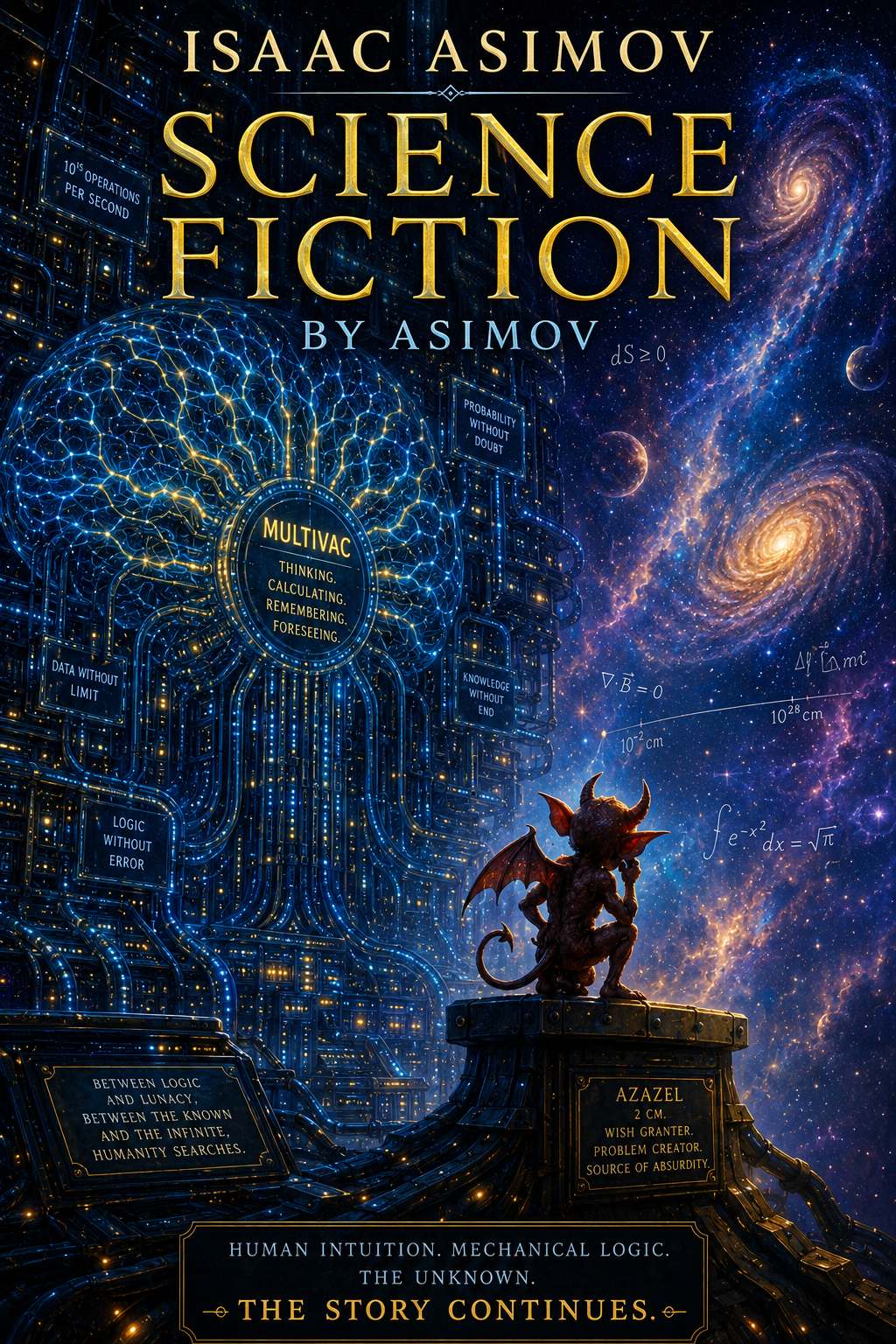
In 1986 a small book was published that felt much larger than its physical size suggested. It was titled Science Fiction by Asimov and it acted as a special anthology connected to a famous magazine. This book gathered several stories from different parts of the long career of Isaac Asimov and placed them side by side like windows into the many directions his mind could travel. To read it was like looking at a map of a great imagination that moved through many different moods including humor and sadness and logic.
The collection starts with the name of stories like More Things in Heaven and Earth. This story introduces a very small demon named Azazel who is only two centimeter tall. Although it sounds like fantasy the story is built on a very logical foundation that is common to all the works of this author. It shows that people often do not understand what will happen when their wishes come true. The demon tries to help a friend but every solution leads to a new and more ridiculous problem. It shows the reader that even great intelligence cannot always save humans from their own foolishness.
Next the reader finds a piece called Rejection Slips. This is a short poem rather than a story but its presence in the book is very important. It gives a look into the life of an author who spent his days writing and his nights waiting for answers from editors. It reminds us that even famous writers started in small magazines and faced many difficulties in uncertain markets. It is a quiet moment in the book that feels very personal as if the author is pausing to speak directly to the reader about the importance of staying focused on a goal despite dismissal.
The story titled Death of a Foy follows this poem. It is a mystery that focuses on a society where systems and rules are more important than individuals. There is no loud action or violence in this story but instead the mystery is solved through careful deduction and gradual realization. It asks a very serious question about whether a very advanced civilization must eventually become cold and impersonal. The tragedy in the story is not just the end of a life but the idea that a human being could become less important than the bureaucracy they live in.
Another story featuring the tiny demon is called Dashing Through the Snow. This one is a more cheerful tale but it still uses the same logical structure as the more serious stories. Asimov places normal people in very strange situations to see how they will react. The supernatural part of the story is less important than the vanity of the people involved. It is an old fashioned holiday tale that has been filtered through a rational mind. It teaches that humans suffer because they do not think clearly about what they really want in life.
The story known as Potential is one of the most important in the book because it features the great machine called Multivac. In this world the study of Robotics and high technology are a normal part of life. Multivac is not a scary monster but is instead an extension of what humans can think and do. This story examines the concept of Intelligence as both a great power and a difficult burden. It follows a young person with a mind that works differently than others. It suggests that even in a world filled with Automation there is still a need for the special spark of human intuition that machines cannot perfectly copy.
A very different kind of story is titled Eyes Do More Than See. This is a very short and thoughtful piece that moves away from machinery and into the world of philosophy. It explores the nature of Consciousness and how we understand the universe around us. The main idea is that seeing is not just a physical act of the eyes but is also an act of interpretation. It looks at forms of life that might not look like humans at all. It shows that Perception is what creates our reality. This story has a grand scale that makes the reader feel very small but also very curious about the stars.
The book ends with a story called The Dim Rumble which brings the reader back to the comedy of Azazel. Even though it is a funny story it leaves the reader with a deep thought. The title refers to the big forces that move underneath the surface of our quiet lives. The author uses his humor to show sympathy for human weakness. He does not mock his characters for being confused or vain but instead shows that these small mistakes are what make us human. It is a warm ending that stays away from big empires and focuses on the small absurdities of daily existence.
This collection is a perfect example of why the author was so successful for so many years. He believed that a good idea was enough to make a story interesting without needing fancy words. He used simple language to explain complex things and he always trusted reason to carry the drama. His writing is very clear and it moves the reader along through thought rather than ornament. This book shows his range because it includes everything from funny demons to deep space philosophy. It shows that he was always curious about what happens when a thinking mind meets the unknown.