Encounters
Isaac Asimov's Encounters illustrates how ivilization advances through cultural, scientific, and intellectual meetings, proving that every discovery begins when human curiosity meets a profound myster.
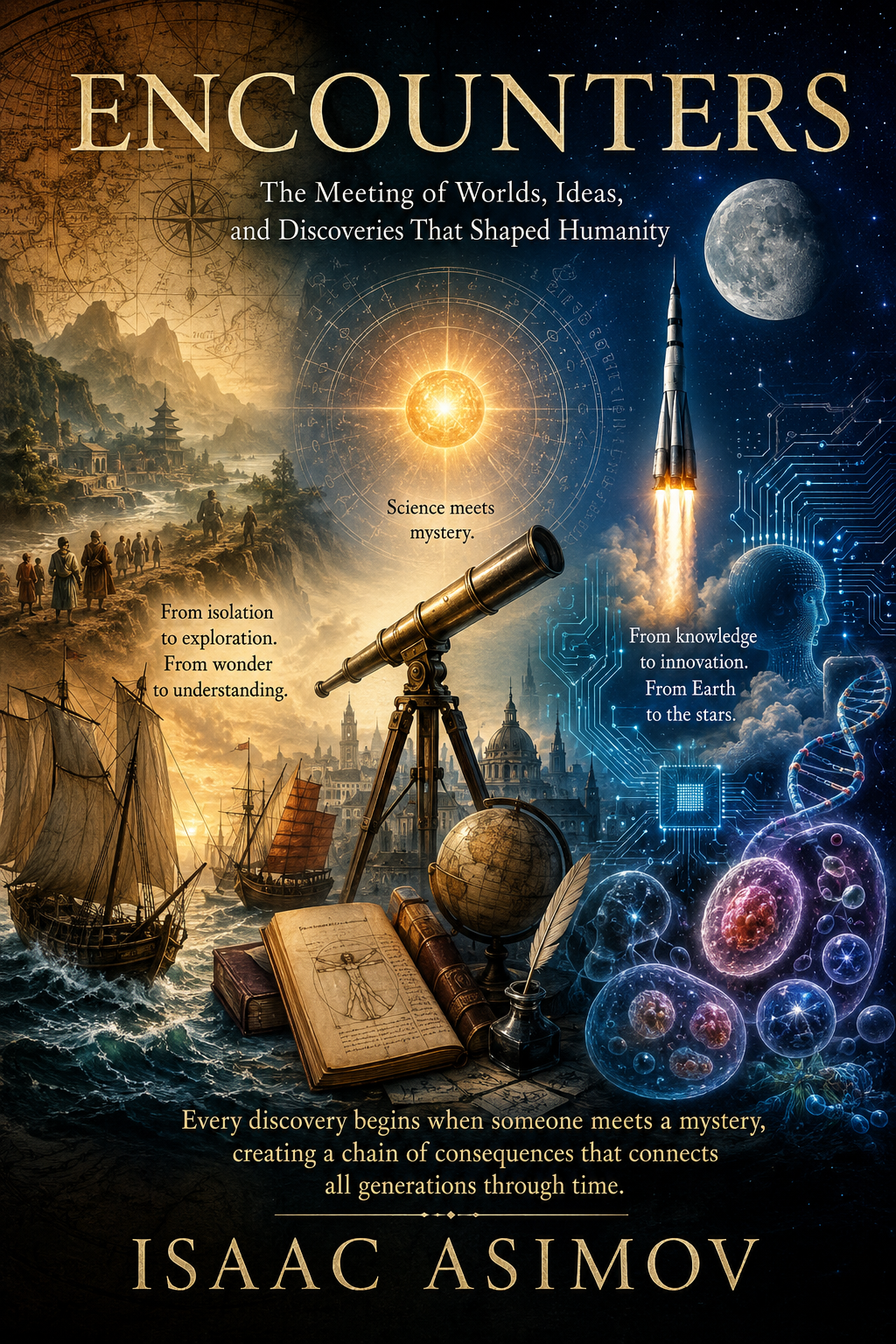
The story of human civilization is not a list of dates or a collection of dusty artifacts, but a grand narrative of meetings. In his work, Encounters, Isaac Asimov treats history as a living architecture built upon the moments when two worlds, be they physical, cultural, or intellectual, first cross paths. He approaches these events not as a dry historian, but as a storyteller who understands that every discovery begins when someone meets a mystery. To understand this work is to see it as a continuation of Asimov’s lifelong fascination with the rational mind’s journey from isolation toward a unified understanding of the universe.
In the story titled Humanity's first encounters with the unknown world, the world was a collection of small, isolated valleys and forests. Primitive humans lived in these tiny pockets, believing their immediate surroundings were the entire universe. The story of our species truly began when curiosity finally overcame fear, leading hunters across mountains and sailors beyond familiar shores. These first mini stories of encounter introduced new languages, tools, and beliefs, proving that every meeting transforms both sides forever, regardless of whether the initial result is friendship or conflict. Asimov shows that humanity advanced precisely because we refused to stay alone.
As the narrative of discovery expanded in the story called The great age of exploration, the Earth was revealed to be a patchwork of civilizations that had evolved independently for thousands of years. The arrival of Europeans in the Americas is presented as a profound encounter with consequences no one could have predicted, involving the collision of foreign technologies and ancient political systems. Asimov avoids simple labels of heroes and villains, choosing instead to illustrate how history produces opportunities and tragedies in the same breath.
In the story regarding Encounters between East and West, the flow of ideas often followed the flow of trade, and the Silk Road serves as a perfect example of a highway for the mind. Along this path, it was not just silk and spices that traveled, but mathematics, philosophy, and the very inventions, like paper and gunpowder, that would reshape the world. Asimov emphasizes a logical truth: once an idea is born, it ignores political borders and begins its own journey across civilizations.
The story of The encounter between science and ignorance contains some of the most dramatic encounters in the book. For centuries, accepted beliefs stood like fortresses against the tide of new discoveries. When observers like Copernicus and Galileo dared to question why the Earth seemed to be the center of the universe, they encountered a reality that nature itself refused to change. This development in Astronomy showed that religious and political authorities could not persuade nature to change, and reality ultimately wins every argument.
The book also explores internal encounters in the story of Encounters between different branches of science. Here, one branch of science meets another to create something new. Chemistry was born from the meeting of alchemy and experimentation, while medicine slowly separated itself from the shadows of superstition. Asimov delights in showing that even mistakes are necessary stages in this journey. Humanity moves forward because every incorrect theory eventually encounters better evidence that demands a new way of thinking.
This spirit of transformation reached a peak in the story of The Industrial Revolution. This was a story of ingredients coming together: steam engines meeting factories, and coal meeting engineering. These encounters created an entirely new kind of civilization, turning villages into cities and increasing wealth, though they also introduced the modern burdens of pollution and social unrest. To Asimov, technological progress is a double edged sword; every new advance brings with it a set of new responsibilities.
In the story of Encounters with the microscopic world, the narrative lens shifts to the invisible. Before the discovery of microbes, disease was a mystery attributed to spirits or bad air. The growth of Microbiology changed everything, replacing fear with the logic of vaccination and sanitation. This shift from the unknown to the understood is a recurring motif, showing how understanding replaces fear.
The story of Humanity's encounter with electricity describes how what was once worshipped as a divine power in lightning became a fundamental force. Through the understanding of Electricity, figures like Franklin and Faraday allowed humans to control power for a global civilization, changing communication, transportation, and manufacturing forever.
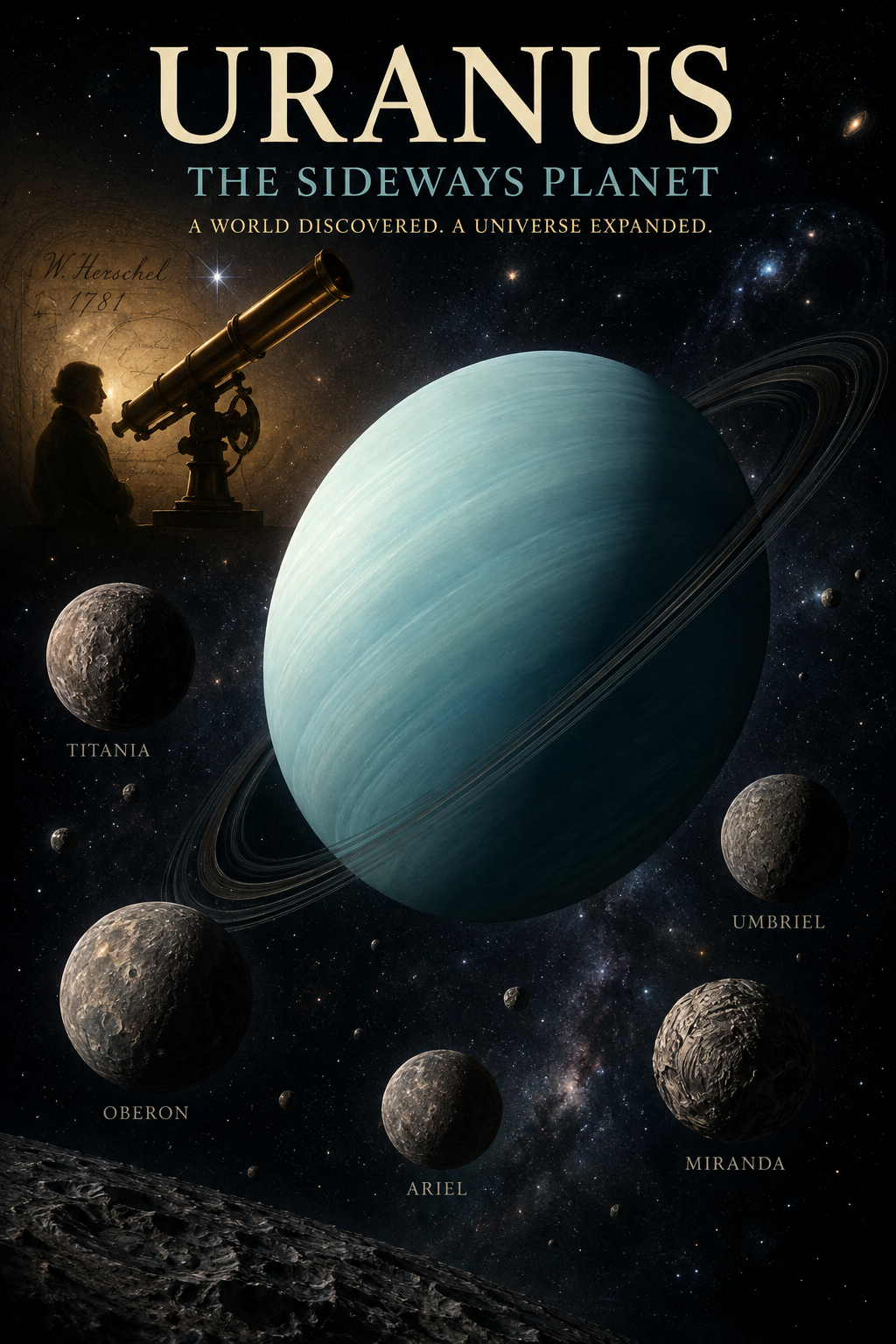
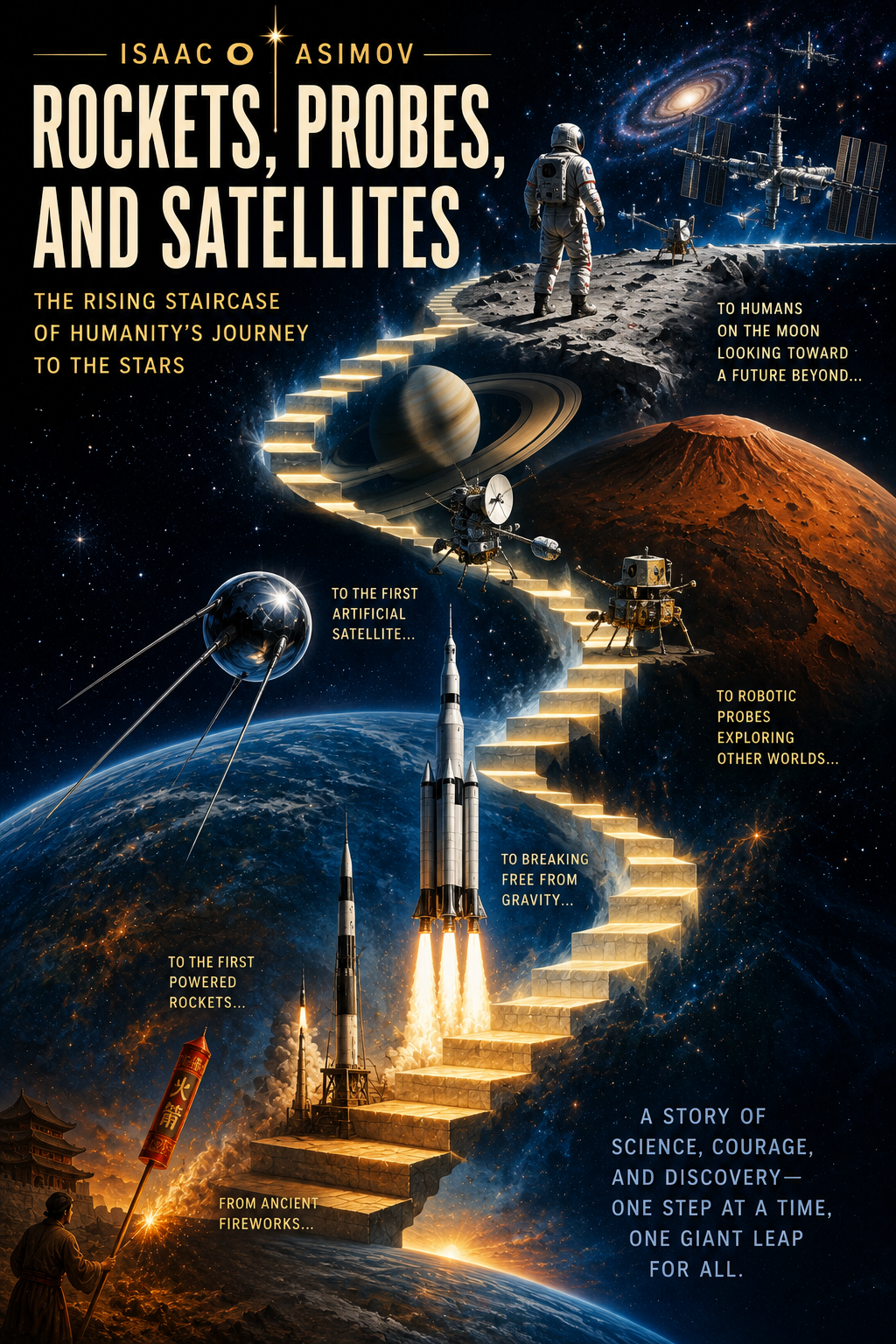
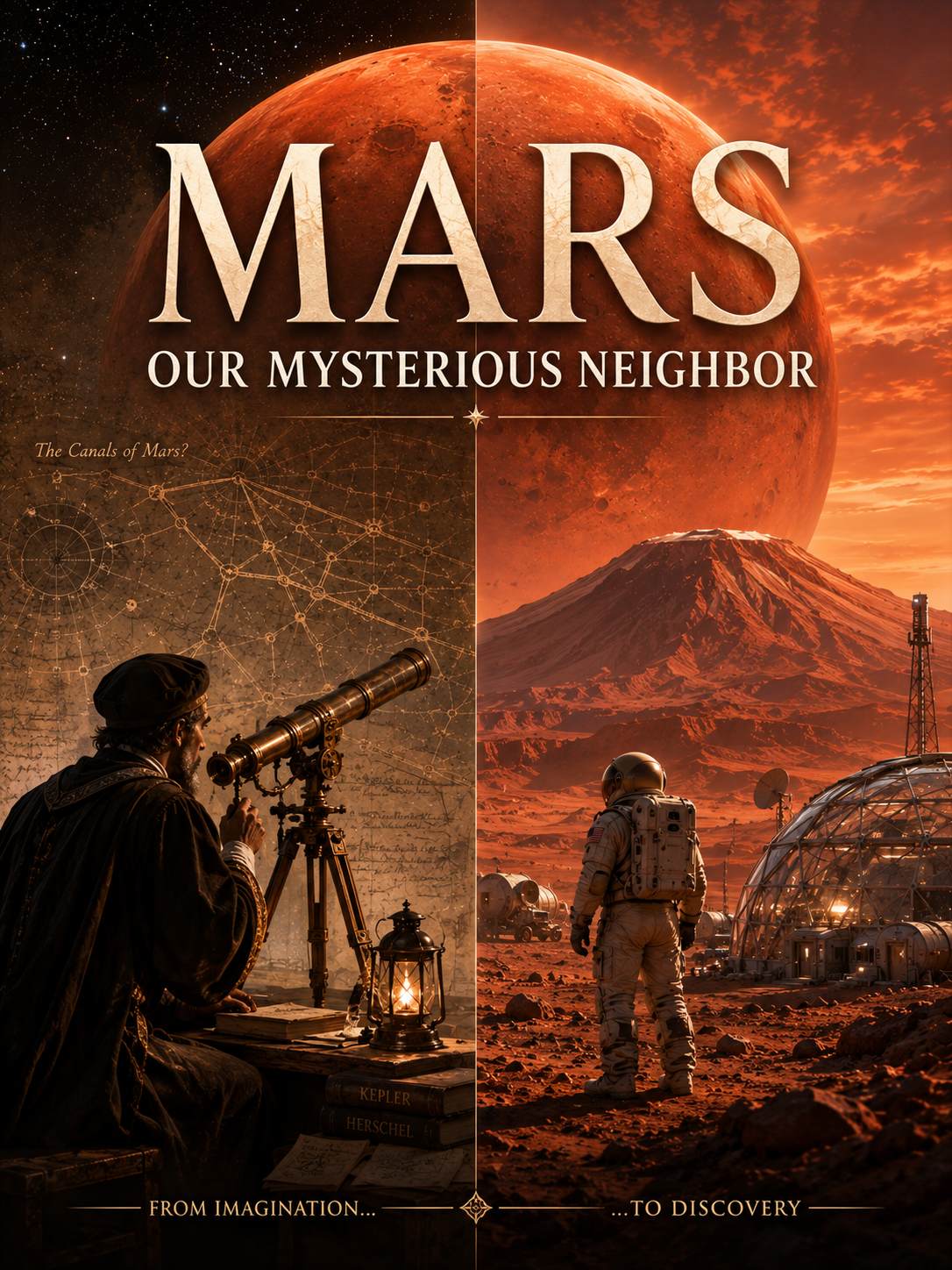
In the story of The encounter between humanity and the universe, the narrative reaches for the stars. From the first telescopes that revealed galaxies to the rockets that carried humans to the Moon, the narrative describes our species stepping beyond its home atmosphere. He reflects on the silent universe and the possibility of meetings that have not yet occurred, approaching extraterrestrial life with scientific probability rather than wild speculation.
The story of The meeting between generations addresses the encounter that sustains all others. Education is the bridge where a child meets the accumulated knowledge of thousands of years. Books allow a reader to encounter an author who may have lived centuries ago, ensuring that ideas live on. This continuity is what allows civilization to survive.
Finally, the story of Encounters between ethics and technology warns that scientific power must be met with equal wisdom. The field of Nuclear physics illustrates this tension perfectly, as the same understanding of atomic structure that produces power also created devastating weapons. Technology is neutral; it is human choice that determines whether discoveries become instruments of progress or destruction.