How Did We Find Out About the Brain
Asimov chronicles humanity’s scientific journey from ancient heart myths to modern neural mapping, revealing the brain as the complex source of thought and identity.
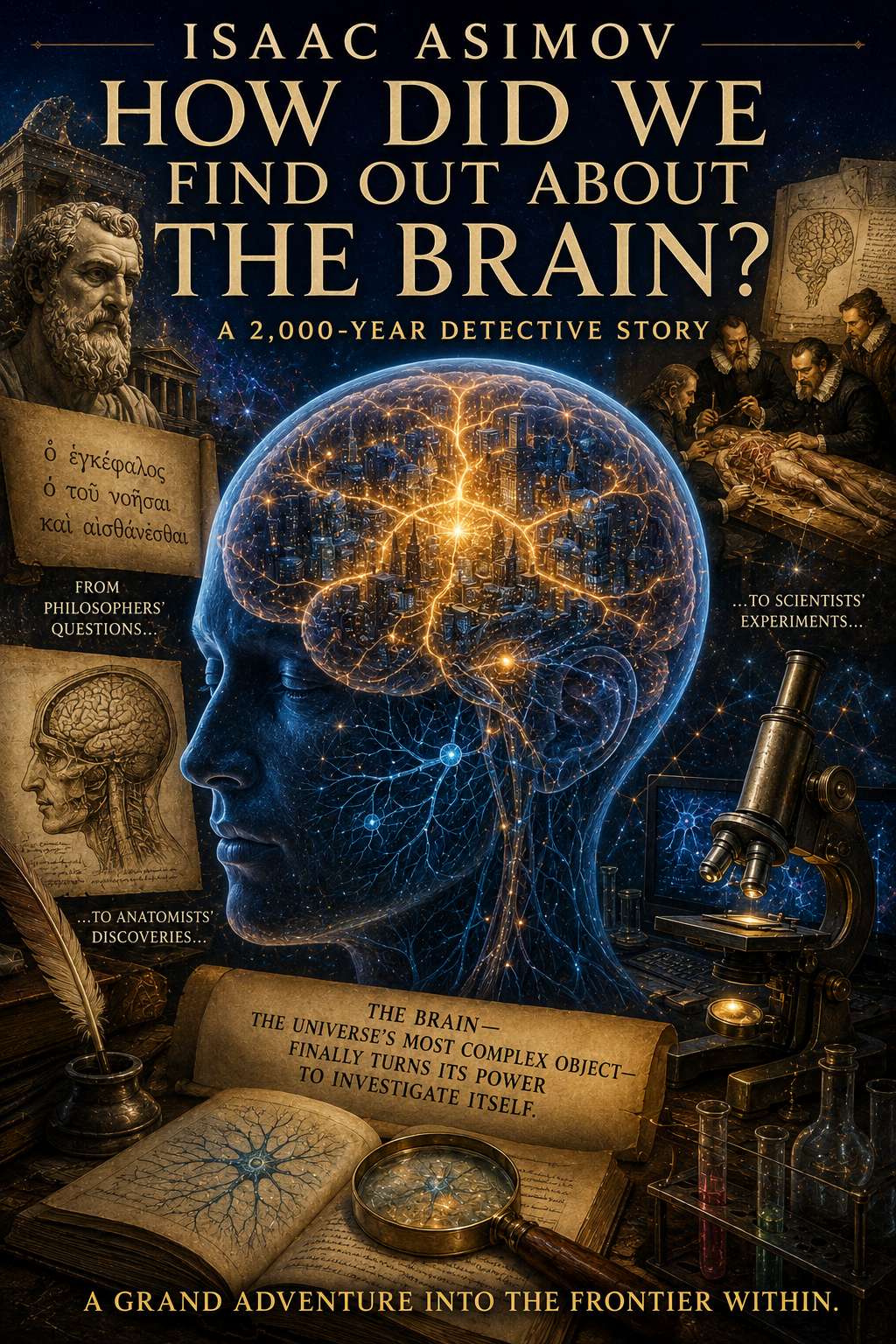
In How Did We Find Out About the Brain? Isaac Asimov invites readers on one of the most remarkable scientific journeys in human history: the gradual discovery of the organ that makes discovery itself possible. Rather than merely presenting a dry collection of facts, Asimov crafts a narrative centered on human curiosity, mistakes, and brilliant insights that have accumulated over thousands of years.
The book is structured like a detective story, following humanity's persistent quest to understand the mysterious three-pound organ hidden within the protective cage of the skull. It serves as a chronicle of a long expedition into unknown territory, where explorers ranging from ancient philosophers to modern neurologists strive toward the singular goal of understanding the very organ that allows for understanding itself. By showing how each breakthrough builds upon earlier work, Asimov demonstrates that scientific knowledge is not handed down fully formed but is constructed piece by piece through evidence and reason.
The Architecture of Discovery
In How Did We Find Out About the Brain, Isaac Asimov takes readers on one of the most remarkable scientific journeys in human history, which is the gradual discovery of the organ that makes discovery itself possible. Like many books in his series, Asimov does not merely present facts. Instead, he tells a story of curiosity, mistakes, observations, experiments, and brilliant insights accumulated over thousands of years. The book unfolds like a detective story in which humanity seeks to understand the mysterious three pound Brain hidden inside the skull.
Ancient Clues and the Silent Organ
The story begins in the distant past when human beings knew almost nothing about Anatomy. Early people recognized that injuries to the head could cause strange changes in behavior, memory, and movement, but they did not understand why. Many ancient civilizations believed that the heart was the center of thought and emotion. The heartbeat could be felt easily, while the brain remained hidden and silent. To early observers, it seemed obvious that the heart controlled life itself. The ancient Egyptians provide one of the first chapters in this story. During the process of mummification, they carefully preserved the heart but often discarded the brain. This reveals how little importance they assigned to the organ. Yet even then, evidence was quietly accumulating. People noticed that severe head wounds could affect speech, memory, and personality. The clues existed, but no one yet understood their meaning.
The Greek Debate and the Seat of Intelligence
The next important chapter introduces the ancient Greeks. Here the mystery begins to take shape. Some philosophers argued that the brain must be the seat of intelligence because the organs of sensation, such as the eyes, ears, nose, and tongue, were all located close to it. Others continued to favor the heart in a debate that lasted for centuries. Among the earliest scientific thinkers was the Greek physician Hippocrates, who proposed that the brain played a central role in sensation and thought. He observed that injuries to one side of the head often affected the opposite side of the body. This was one of the first important clues connecting the brain to bodily control.
Brilliant Mistakes and the Network of Communication
Later came Aristotle, one of the greatest thinkers of the ancient world. Yet even Aristotle made mistakes. He believed the heart was the center of thought and that the brain functioned primarily as a cooling system for the blood. Asimov uses this example to demonstrate an important lesson in science, which is that even brilliant individuals can be wrong and authority alone does not determine truth. The Roman physician Galen moved understanding forward through careful observation. Working with wounded gladiators and studying animals, he gathered evidence that the brain controlled movement and sensation. He noticed that damage to specific Nerves produced specific effects. Gradually, the idea emerged that nerves carried messages between the brain and the rest of the body.
The Renaissance and the Turn toward Direct Observation
For centuries afterward, progress slowed. Scientific knowledge often advanced in small increments. Scholars preserved earlier discoveries but rarely challenged traditional beliefs. The mystery of the brain remained largely unsolved. The Renaissance brought a revival of anatomical study. Artists and scientists began examining the human body directly rather than relying solely on ancient texts. Detailed dissections revealed the structure of the brain with increasing accuracy. Yet understanding structure was easier than understanding function. Scientists could see the organ but still did not know how it worked.
The Microscope and the Network of Cells
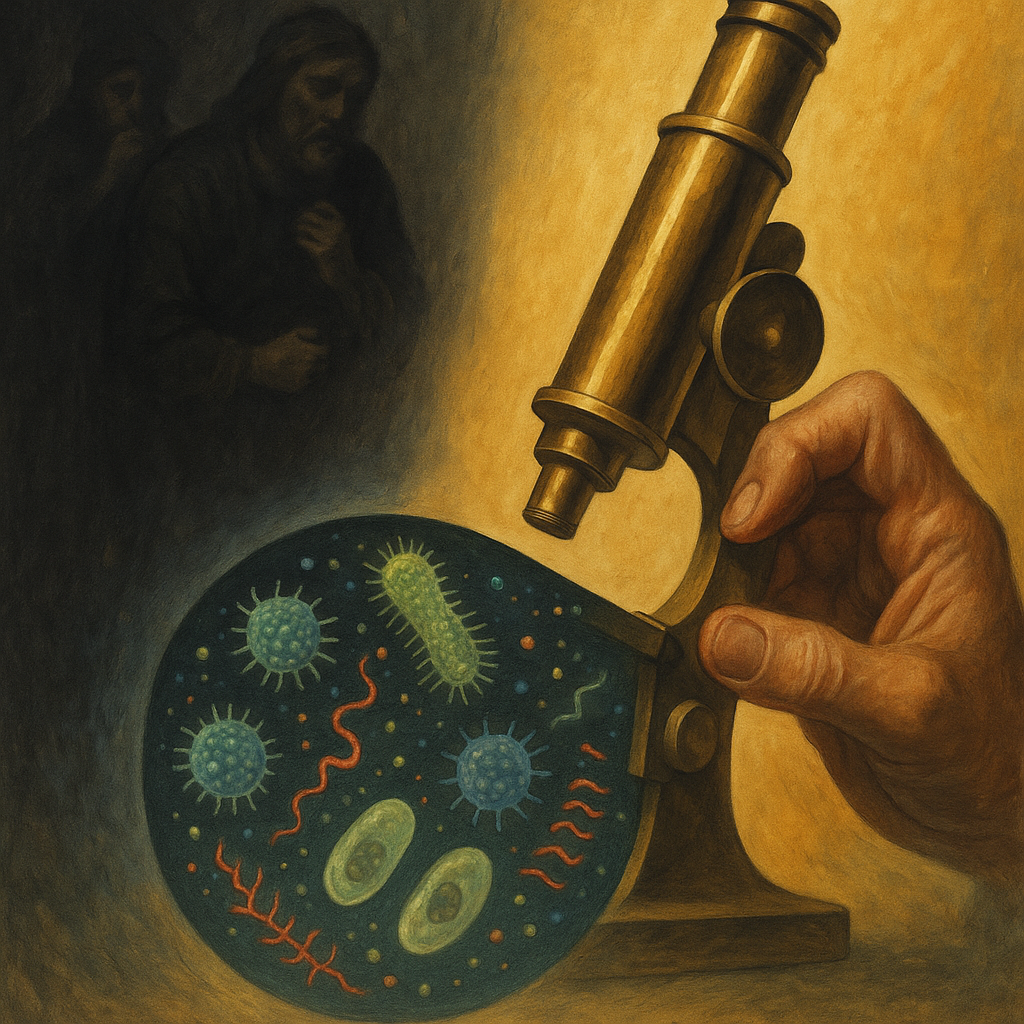
The invention of the microscope transformed the investigation. Suddenly, structures invisible to the naked eye became accessible. Researchers discovered that nervous tissue was composed of countless tiny cells. This revelation marked a turning point. The brain was not a homogeneous mass but an intricate network of specialized components. One of the most important developments involved understanding neurons. Scientists gradually learned that these cells formed communication pathways throughout the body. Signals traveled along nerves with extraordinary speed, carrying information from sensory organs to the brain and commands from the brain to muscles. Asimov carefully explains how researchers uncovered these facts. They stimulated nerves electrically, observed the resulting movements, and measured the transmission of signals. Each experiment answered one question while raising several more.
Localization and the Map of the Brain
The story then moves to the discovery of localization. Scientists noticed that different regions of the brain appeared responsible for different functions. Damage to one area might impair speech while leaving memory intact. Injury elsewhere could affect movement without disturbing intelligence. The famous work of Paul Broca provides one of the most fascinating episodes in the book. Broca studied patients who had difficulty speaking but could understand language. After their deaths, he examined their brains and found damage in the same region. This discovery demonstrated that specific mental functions could be linked to specific physical structures. Other researchers expanded this map of the brain. Areas associated with vision, hearing, movement, and sensation gradually emerged. The brain increasingly resembled a vast city whose districts performed specialized tasks while remaining interconnected.
Electrical Signals and the Modern View
As scientific tools improved, understanding deepened further. Electrical recordings allowed researchers to observe brain activity directly. They discovered that neurons communicate through electrical impulses and chemical signals. The brain became less mysterious but more astonishing. Asimov devotes considerable attention to the complexity of this network. The human brain contains billions of neurons, each connected to thousands of others. The resulting web of communication surpasses any machine humanity has ever constructed. Thought, memory, imagination, and consciousness emerge from this immense system of interactions. The book also explores the study of reflexes. Scientists learned that not every action requires conscious thought. Some responses occur automatically through simpler neural circuits. These discoveries revealed that the nervous system operates on multiple levels simultaneously. Research into memory introduced yet another layer of complexity. Scientists found that experiences physically alter the brain. Learning changes connections between neurons, creating patterns that store information. Memory is not stored in a single location but distributed throughout networks of cells.
The Ongoing Journey
One of the greatest strengths of Asimov is his ability to connect discoveries into a coherent narrative. Rather than presenting isolated facts, he shows how each breakthrough builds upon earlier work. Every generation inherits questions from its predecessors and contributes new answers for the future. The final chapters emphasize that the story remains unfinished. Despite centuries of investigation, many mysteries persist. Scientists continue to study consciousness, creativity, emotions, and intelligence. The brain remains the most complex object known in the universe. Reading the book feels like accompanying humanity on a long expedition into unknown territory. The explorers are philosophers, physicians, anatomists, chemists, physicists, and neurologists. Their tools evolve from simple observation to microscopes, electrical instruments, and sophisticated imaging technologies. Yet their goal remains unchanged, which is to understand the organ that allows understanding itself. As a scientific history, the book succeeds brilliantly because it transforms abstract discoveries into a compelling human story. Mistakes become as important as successes because they reveal how science progresses through correction and refinement. The narrative demonstrates that knowledge is not handed down fully formed but constructed piece by piece through evidence and reason. In the end, the book delivers a message that is quintessentially Asimov. The greatest achievement of science is not that it provides final answers but that it continually expands the boundaries of understanding. The brain enabled humanity to investigate the universe, and then, with remarkable irony, turned its investigative powers upon itself. The result is one of the grandest adventures in intellectual history, which is a journey into the very source of thought, memory, imagination, and discovery. The story of finding out about the brain is ultimately the story of humanity learning who it is.