Rockets, Probes, and Satellites
Asimov chronicles humanity's cumulative scientific journey to overcome Earth's gravity, detailing the evolution of rockets, satellites, robotic space probes, human spaceflight, and future planetary exploration.
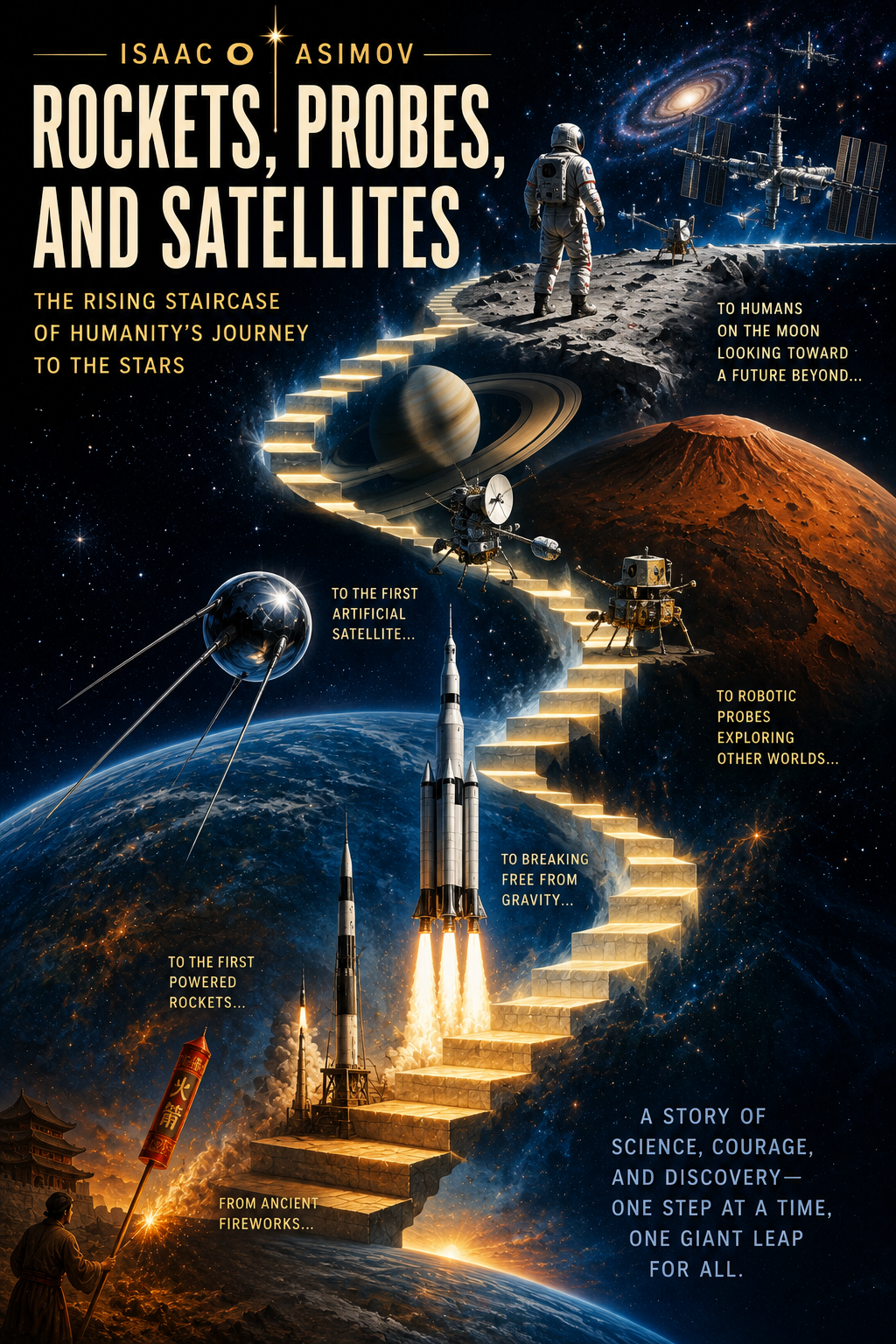
Isaac Asimov's Rockets, Probes, and Satellites tells the story of humanity's greatest transition since the age of ocean exploration. For thousands of years, people looked upward at the stars with curiosity but remained prisoners of Earth's gravity. The Moon, planets, and stars inspired myths, calendars, and dreams, yet they remained forever out of reach. Then, within a single century, science transformed those dreams into engineering. The journey began not with astronauts but with a simple realization: if a machine could move fast enough, it could escape Earth's grip entirely. From that insight grew rockets, artificial satellites, unmanned probes, and eventually the exploration of the Solar System itself.
Asimov begins by reminding the reader that space is not difficult because it is far away. It is difficult because Earth refuses to let anything leave. Gravity, which keeps our feet firmly on the ground, becomes the greatest obstacle to exploration. Every journey into space is first a struggle against Earth's attraction. Once that challenge is overcome, the vast emptiness of space becomes a highway rather than a barrier.
The first story, The Birth of the Rocket, reaches back centuries before the Space Age. Early rockets were little more than fireworks powered by black powder, developed in ancient China. Their military usefulness remained limited because they lacked both power and accuracy. For centuries they were regarded as curiosities rather than serious machines.
Everything changed when scientists began studying motion itself. Isaac Newton demonstrated that every action has an equal and opposite reaction. A rocket does not push against the ground or the air. Instead, it throws hot gases backward, and the rocket moves forward. This simple law means that rockets work equally well in a vacuum, where airplanes cannot fly. Long before engineers built practical rockets, physics had already explained how they would function.
Asimov introduces pioneers whose ideas seemed impossible in their own time. Visionaries imagined reaching the Moon when powered flight itself barely existed. Konstantin Tsiolkovsky calculated the mathematics of space travel, showing that sufficiently powerful rockets could escape Earth. Robert Goddard built the first successful liquid fueled rockets, proving that controlled rocket flight was practical despite widespread ridicule. Hermann Oberth expanded these ideas further, inspiring a new generation of engineers. Their work laid the scientific foundation for modern astronautics long before governments became interested.
The story then turns to The Rocket Becomes Reality.
The development of liquid fuels transformed rockets from simple fireworks into sophisticated machines. Unlike solid fuel, liquid propellants could be carefully controlled, allowing engines to burn longer and produce far greater thrust. During the Second World War, Germany developed the V 2 rocket, the first ballistic missile capable of reaching the edge of space. Although built for destruction, it demonstrated technologies that would later serve peaceful exploration.
After the war, both the United States and the Soviet Union recruited German scientists and accelerated rocket development. Military competition unexpectedly became the driving force behind space exploration. Asimov carefully notes that scientific progress often emerges from unexpected circumstances. The same engines designed to deliver weapons could instead launch instruments toward the planets.
The next chapter, Artificial Satellites, marks one of the greatest turning points in history.
For centuries every object placed into the sky eventually fell back to Earth. A satellite changed that forever. If launched fast enough sideways, it continually falls toward Earth while constantly missing it. The result is orbit.
This idea seems almost magical but follows directly from Newton's laws. A satellite is not escaping gravity; it is endlessly falling around the Earth.
The Soviet Union demonstrated this principle dramatically with Sputnik 1 in 1957. Though little more than a polished metal sphere transmitting radio beeps, Sputnik shocked the world. Humanity had placed its first artificial moon into the heavens. Space was no longer unreachable.
Soon afterward came larger and more capable satellites carrying scientific instruments. They measured Earth's atmosphere, magnetic field, radiation belts, and weather. They became the first laboratories beyond our planet.
Asimov explains that satellites rapidly evolved beyond scientific experiments. Communication satellites relay television, telephone calls, and radio signals across continents. Weather satellites observe storms from above, allowing meteorologists to predict hurricanes and cyclones more accurately. Navigation satellites provide precise positioning anywhere on Earth. Military satellites monitor global events, while astronomical satellites avoid atmospheric distortion to observe the universe with unprecedented clarity.
The reader gradually realizes that satellites have become invisible partners in everyday life. Modern civilization depends upon machines quietly circling hundreds or thousands of kilometers overhead.
The story continues with Space Probes, perhaps Asimov's favorite subject.
Sending humans into space captures public imagination, but unmanned probes can travel farther, remain active longer, and survive harsher environments. They require no food, air, or return journey. Instead, they carry scientific instruments designed to answer specific questions.
The earliest probes flew past the Moon, photographing regions never before seen. Others landed gently on its surface, proving that the lunar soil could support spacecraft. These robotic explorers prepared the way for human landings by eliminating many uncertainties.
Attention then shifted toward the planets.
Venus, long hidden beneath thick clouds, appeared to many astronomers as a possible tropical paradise. Space probes shattered that illusion. They discovered crushing atmospheric pressure, scorching temperatures hot enough to melt lead, and clouds rich in corrosive chemicals. Venus proved less like Earth than a warning of what an extreme greenhouse world could become.
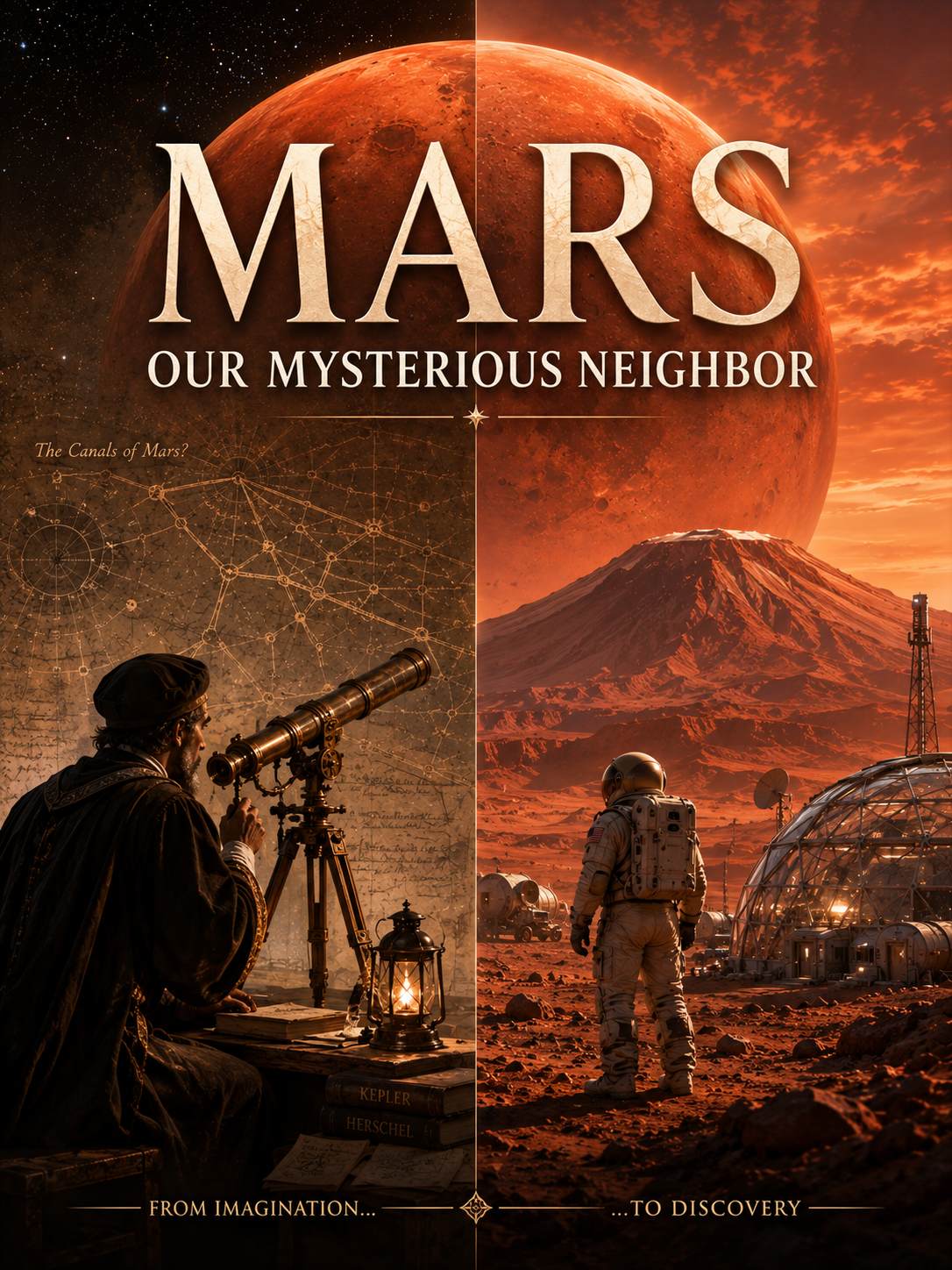
Mars inspired different expectations. Through telescopes, astronomers had imagined canals and perhaps intelligent civilizations. Robotic spacecraft revealed a cold desert marked by giant volcanoes, immense canyons, dry river valleys, and polar ice caps. While no advanced civilization existed, Mars proved far more geologically interesting than anyone expected. Every mission replaced fantasy with measurable reality.
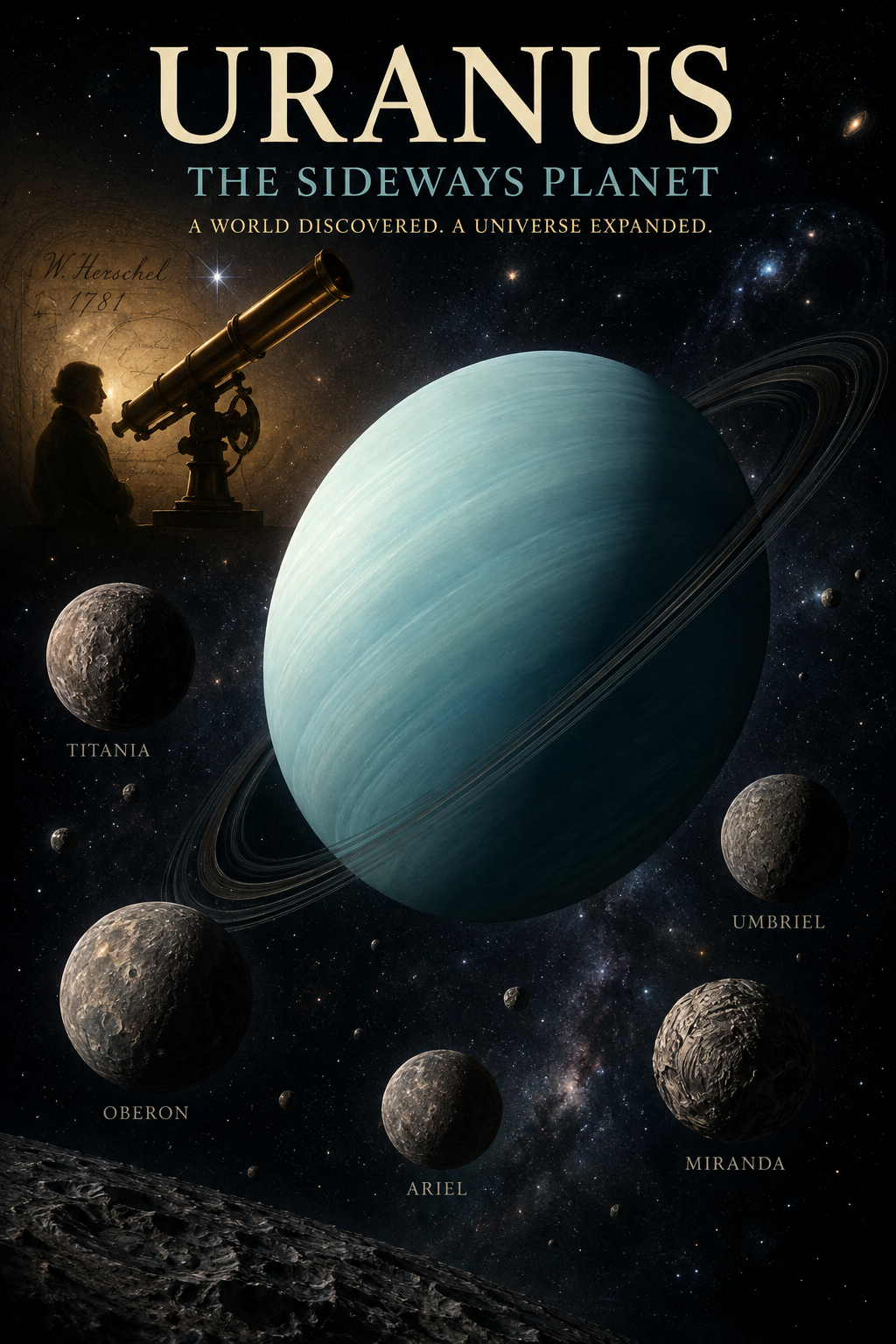
The giant planets offered even greater surprises. Jupiter's immense magnetic field, powerful radiation belts, colorful cloud bands, and numerous moons revealed a miniature planetary system. Saturn astonished observers with the intricate beauty of its rings. Uranus and Neptune demonstrated that the Solar System extended far beyond the familiar inner planets.
Asimov emphasizes that each successful mission answered only a handful of questions while creating dozens of new ones. Scientific exploration never reaches a final destination.
The next story examines Human Spaceflight.
Robotic missions could gather information, but humans possess flexibility, judgment, and creativity unmatched by machines. Before astronauts could travel safely, scientists had to determine whether people could survive weightlessness, cosmic radiation, and prolonged confinement.
Early space missions answered these questions step by step. Yuri Gagarin became the first human to orbit Earth, demonstrating that spaceflight itself was possible. Soon astronauts remained in orbit for days rather than minutes, learning how the human body adapts to weightlessness.
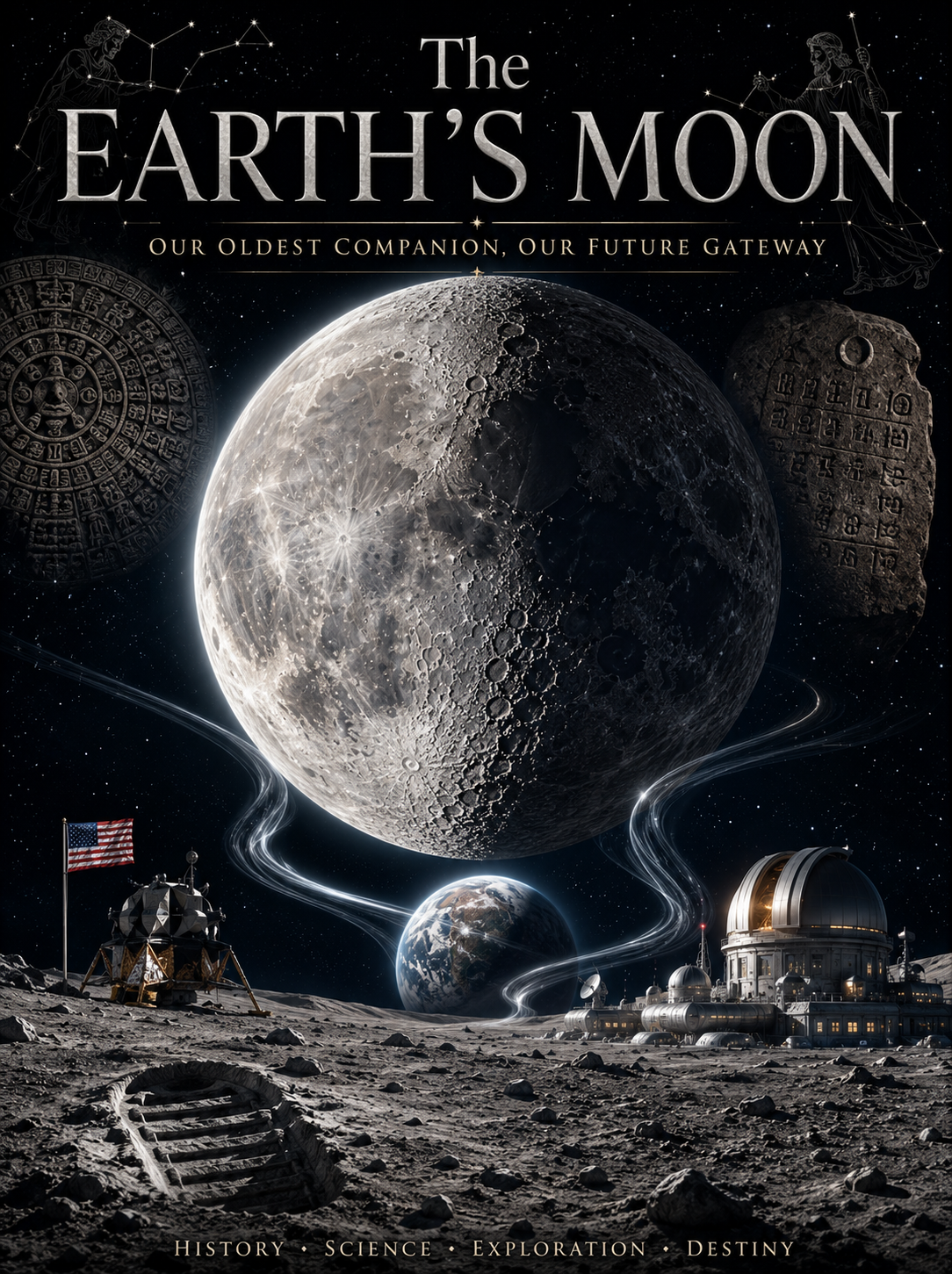
The greatest achievement came with the Apollo program. Guided by increasingly sophisticated rockets, spacecraft, and computers, astronauts traveled nearly a quarter million miles to the Moon. Landing on another world transformed humanity forever. The Moon ceased being merely an object in the night sky and became a place where human beings had walked, worked, collected rocks, and returned safely.
Asimov presents the Moon landing not simply as a political victory but as the logical outcome of centuries of accumulated scientific knowledge. Every discovery from Newton's laws to liquid fueled rockets formed one indispensable step toward that achievement.
The book then explores The Future of Space Exploration.
Earth orbit is only the beginning. Permanent space stations allow scientists to conduct experiments impossible under gravity. Reusable spacecraft promise more economical access to orbit. Future probes may land upon comets, explore asteroids, and eventually leave the Solar System entirely.
Asimov also considers the possibility of colonies beyond Earth. The Moon could serve as a scientific outpost. Mars might someday support carefully constructed settlements. Space manufacturing could exploit the weightless environment to produce materials difficult to create on Earth. Although these possibilities remain speculative, each rests upon principles already demonstrated by existing technology.
One of the book's recurring themes is that exploration proceeds in stages. Rockets make satellites possible. Satellites enable communication and observation. Probes investigate distant worlds. Human missions follow where machines have prepared the way. Each accomplishment becomes the foundation for the next.
Throughout the narrative, Asimov repeatedly returns to the relationship between science and engineering. Scientists ask questions about nature. Engineers build machines capable of answering those questions. Neither discipline can succeed alone. Every successful mission represents thousands of interconnected discoveries in mathematics, chemistry, metallurgy, electronics, computing, and physics.
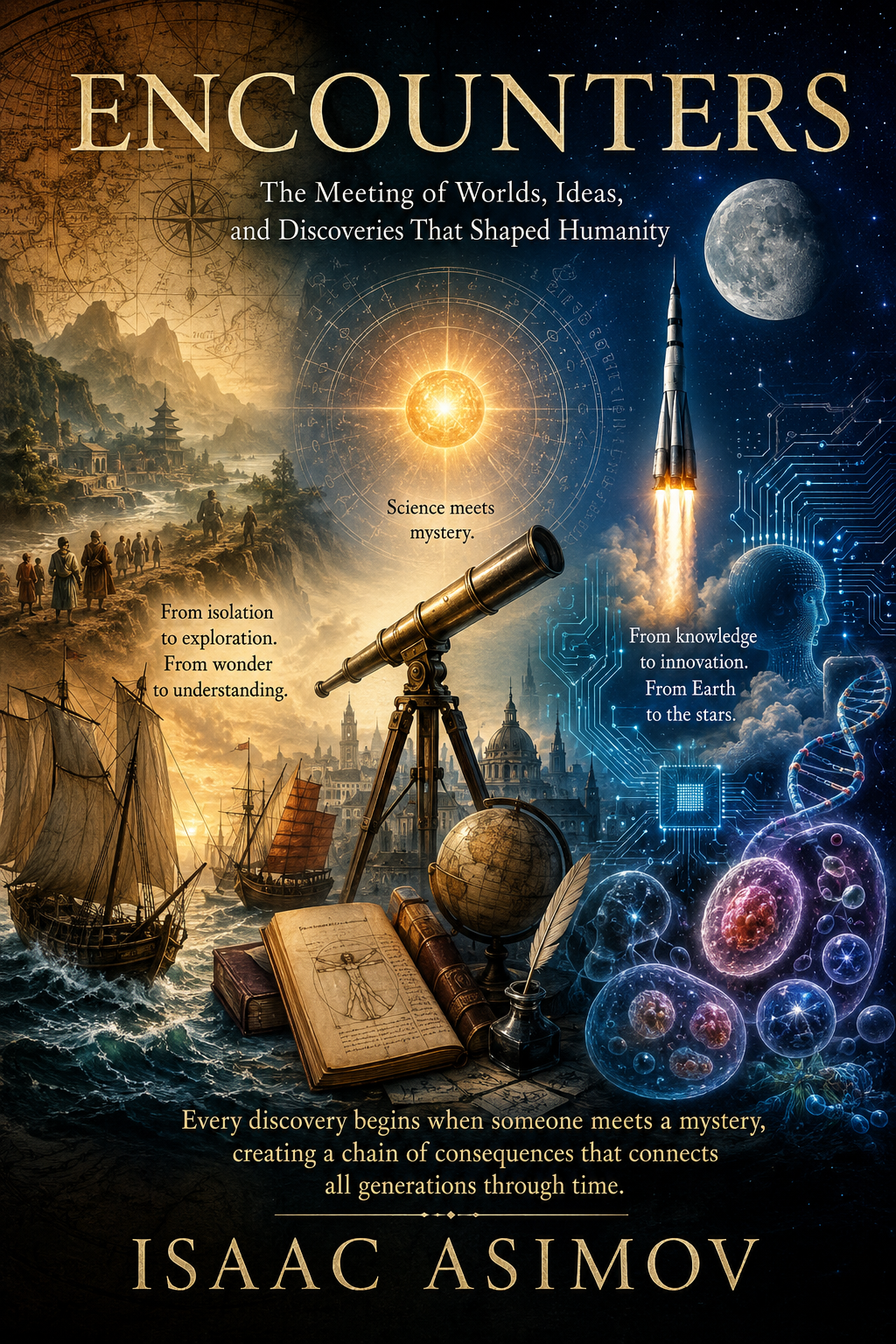
The historical perspective remains equally important. Humanity did not leap suddenly into space. Every rocket carries within it centuries of accumulated knowledge. Every satellite embodies generations of scientific curiosity. Every planetary probe is the heir to countless earlier experiments, failures, revisions, and improvements. Scientific progress resembles a steadily rising staircase rather than a miraculous leap.
In reviewing Rockets, Probes, and Satellites, one finds another excellent example of Isaac Asimov's gift for transforming technical subjects into compelling narratives. Instead of concentrating on spectacular launches or dramatic astronauts, he focuses on the underlying ideas that made space exploration inevitable. The reader learns not only how rockets work but why they work, not only what satellites accomplish but why orbits behave as they do, and not only what probes discovered but how each discovery reshaped humanity's understanding of the Solar System. The book celebrates exploration without exaggeration, presenting science as a patient, cumulative enterprise built upon observation, reason, and engineering. Although later missions have vastly expanded our knowledge, Asimov's central message remains timeless: every spacecraft launched from Earth represents humanity's determination to replace imagination with knowledge, extending our senses across the vastness of space one carefully planned mission at a time.